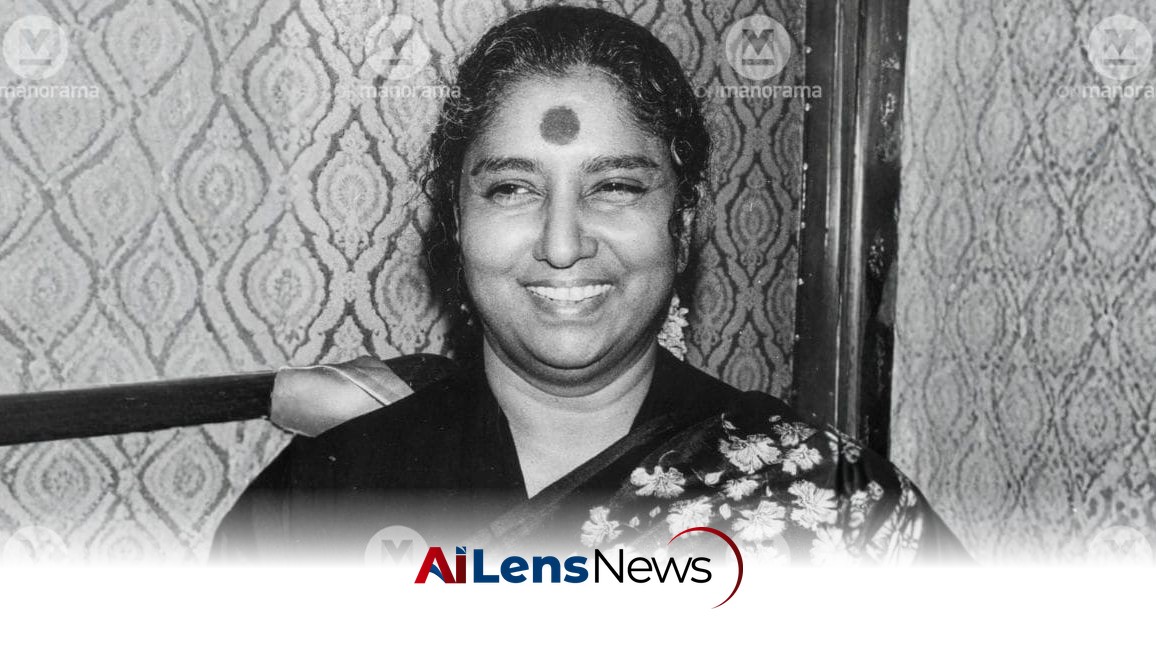


S Janaki's iconic voice transcended language for over six decades, giving soul to emotions in South Indian cinema. Her collaborations with legendary composers left an indelible mark on the music industry.
Doha, Qatar Jul 12, 2026 ALN: Kozhikode: When she sang "Thenum Vayambum Navil Thoovum Vaanampadi..." and "Nirangal Than Nritham...", love seemed to bloom effortlessly. When her voice floated through "Chirikkumpol Koode Chirikkan Aayiram Per Varum...", it carried the quiet wisdom of life. And when she poured her soul into "Nadha Nee Varum...", "Moham Kondu Njan Doore Etho..." and "En Jeevane Engane Nee...", every note became the language of longing and heartbreak.
Love found its tenderness, heartbreak its deepest ache, and motherhood its warmest embrace in the voice of S Janaki. For more than six decades, her honeyed, soul-stirring voice transcended language and geography, becoming an inseparable part of the emotional landscape of millions across South India. Her contributions to the world of music, especially in the realm of playback singing, have left an indelible mark, making her a beloved figure in the hearts of music lovers.
Janaki's influence on Indian music is profound, as she did not merely sing songs; she gave voice to emotions that words alone could never contain. Whether it was the innocence of first love, the quiet pain of separation, the playful sparkle of happiness, or the boundless affection of a mother's heart, Janaki Amma made every emotion profoundly human. This ability to connect with listeners on an emotional level is what set her apart from her contemporaries and solidified her status as a legendary figure in the industry.
Among her collaborations, her association with M S Baburaj remains one of the most iconic. Baburaj recognized very early that Janaki possessed the rare ability to blend Hindustani nuances with deep emotional expression. Their partnership, which began in the early 1960s, produced timeless classics such as "Thaliritta Kinakkal Than...", "Anuragini...", "Anjanakkannezhuthi...", "Avidunnen Gaanam Kelkkan...", "Oru Kochu Swapnathin...", "Kalindi Thadathile Radha..." and "Thane Thirinjum Maranjum...". Each of these songs showcases not only Janaki's vocal prowess but also Baburaj's remarkable ability to craft melodies that resonated with the soul.
Janaki herself often spoke with immense admiration for Baburaj, saying that his compositions gave her extraordinary scope for emotional expression. Music historians continue to regard the Baburaj–Janaki partnership as one of the greatest composer-singer collaborations in cinema. Their songs often depicted themes of love and longing, encapsulating the essence of human emotions in a way that resonated deeply with audiences.
V Dakshinamoorthy was among the earliest major composers to encourage Janaki. His classically rooted compositions played a significant role in establishing her reputation in Kerala during the formative years of her career. Songs such as "Govardhana Giri...", "Pournami Chandrikayil...", "Oru Chumbanam...", "Mullappoom Pallilo..." and the classical masterpieces "Sindooraaruna Vigraham..." and "Maanasa..." remain shining examples of the Dakshinamoorthy–Janaki combination. Dakshinamoorthy trusted her ability to render intricate ragas with impeccable diction, sensitivity, and emotional depth, which allowed her to bring a unique touch to each piece she performed.
Although Janaki sang comparatively fewer songs for G Devarajan than for some of his contemporaries, every collaboration left a lasting impression. Devarajan often turned to different female voices, but whenever he chose Janaki, it was for compositions demanding exceptional emotional intensity. Songs such as "Kaanaan Nalla Kinaavukal...", "Maanasa Saarasa Malar...", "Vidoorayaaya Thaarake..." and "Kayampoo Kannil Vidarum..." remain among the finest examples of the Devarajan–Janaki partnership, showcasing her ability to deliver nuanced performances that captured the essence of the lyrics and the mood of the music.
Interestingly, Janaki recorded the highest number of songs under Shyam. Throughout the 1970s and 1980s, they created an extraordinary body of romantic melodies, devotional songs, and vibrant commercial hits. Shyam repeatedly explored the astonishing versatility of her voice across musical styles, demonstrating her adaptability and skill as a vocalist. Songs including "Mareechike Mareechike...", "Thurakkoo Mizhi Thurakkoo...", "Adithottu Mudiyolam...", "Mouna Raaga Painkiliye...", "Kanathe Nee Vannu...", "Manje Vaa Madhuvidhu Vela..." and "Premaraagam Paadi Vannoru..." continue to enjoy immense popularity, reflecting the timeless appeal of their collaboration.
Shyam often remarked that Janaki's voice lay at the heart of his melodic imagination, and many of his finest compositions were written specifically with her expressive range in mind. For many music lovers, the Shyam–Janaki partnership stands alongside the Baburaj–Janaki combination as one of cinema's defining composer-singer collaborations. Their work together not only defined a musical era but also shaped the soundscape of South Indian cinema, influencing countless artists who followed in their footsteps.
Raveendran found the ideal interpreter for his rich, raga-based melodies in Janaki. She sang one of his earliest memorable compositions, "Sindhoora Sandhyakku Mounam...", before going on to immortalise numerous songs marked by classical elegance and emotional intensity. Her ability to convey deep feelings through her voice made her the perfect choice for Raveendran's intricate compositions, further solidifying her reputation as a leading playback singer.
With Johnson, Janaki discovered another composer whose understated orchestration and lyrical melodies perfectly complemented her voice. Their collaborations during the 1980s and 1990s produced several deeply evocative songs where subtle emotion took precedence over vocal display. This partnership exemplified Janaki's ability to adapt to different musical styles while maintaining her unique emotional expression, showcasing her versatility as an artist.
Renowned lyricist Sreekumaran Thampi described Janaki as one of India's greatest singers and said her voice remained among his most cherished sounds in Indian music. "Janaki Amma never underwent formal classical training. Yet she rendered even the most demanding compositions with astonishing perfection. It was P. S. Raghavan who first recognised her talent and encouraged her to pursue a career in playback singing," he remarked. This acknowledgment highlights not only Janaki's innate talent but also the importance of mentorship in nurturing her career.
Janaki's legacy is not just in the songs she sang but in the emotions she evoked. Her voice will continue to resonate in the hearts of those who cherish the rich tapestry of South Indian cinema and its music. The impact of her work transcends generations; many young artists today cite her as an inspiration, and her songs continue to be celebrated in various forms, from film soundtracks to live performances. As the world evolves, so does the appreciation for her artistry, ensuring that her contributions to music will echo forever.
To learn more about the latest developments in Music, stay updated with our exclusive reports and analyses on AiLensNews.

