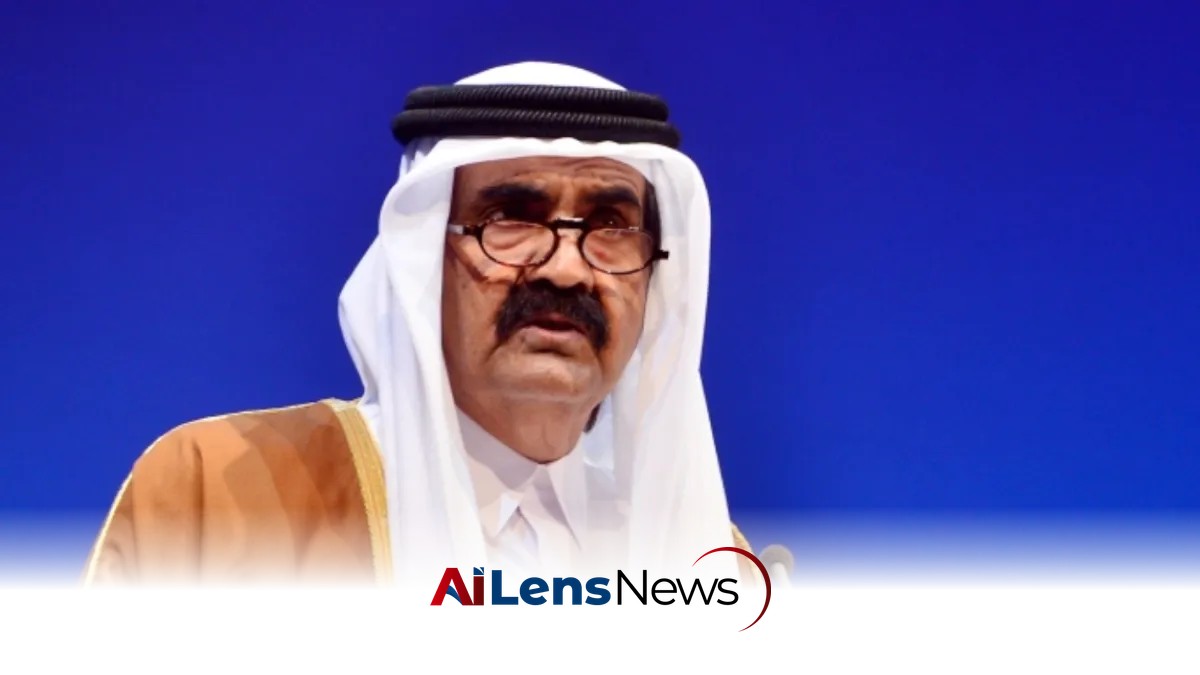


Sheikh Hamad bin Khalifa Al Thani, who transformed Qatar during his reign from 1995 to 2013, has died at the age of 74, prompting national mourning.
Riyadh, Saudi Arabia Jul 12, 2026 ALN: DOHA — Former Qatari Emir Sheikh Hamad bin Khalifa Al Thani died on Sunday at the age of 74, the Amiri Diwan announced.
"With hearts that believe in God's will and decree, the Amiri Diwan mourns the passing of the nation's esteemed leader, His Highness the Father Amir Sheikh Hamad bin Khalifa Al Thani, who passed away this morning," the Diwan said in a statement. His death marks the end of an era for Qatar, a nation that has undergone substantial transformation under his leadership.
Qatar declared four days of national mourning beginning Sunday, reflecting the profound impact Sheikh Hamad had on the nation and its people. This period of mourning is customary in Gulf states, where the passing of a leader is a significant event, prompting widespread public reflection and remembrance.
Funeral prayers will be held after the Maghrib prayer on Sunday at the Imam Muhammad ibn Abd al-Wahhab Mosque in Doha, followed by his burial at Lusail Cemetery. This mosque, named after a prominent Islamic scholar, is one of the largest mosques in Qatar and serves as a central place for religious gatherings, making it a fitting location for the funeral of a leader who played a pivotal role in shaping modern Qatar.
Qatari Emir Sheikh Tamim bin Hamad Al Thani will receive condolences from heads of state, members of the ruling family, dignitaries, and citizens at Lusail Palace from Monday through Wednesday. This gathering of national and international figures underscores the respect and influence Sheikh Hamad commanded both domestically and abroad.
Sheikh Hamad ruled Qatar from June 27, 1995, until June 25, 2013, when he voluntarily transferred power to his son, Sheikh Tamim bin Hamad Al Thani. This transition of power was notable for its peaceful nature, which is relatively rare in the region's history of leadership changes. Sheikh Hamad's decision to step down was seen as a strategic move to ensure continuity and stability in governance while allowing the younger generation to take the reins.
During his 18-year reign, Qatar underwent sweeping political, economic, and social reforms that reshaped the country's global standing. Sheikh Hamad was instrumental in transforming Qatar from a small, relatively obscure nation into a significant player on the global stage, particularly in the energy sector. His leadership coincided with the rapid development of Qatar's liquefied natural gas industry, which became a cornerstone of the nation's economy.
According to official figures, Qatar's gross domestic product increased more than 24-fold during his rule, while GDP per capita rose nearly sixfold. The hydrocarbon sector expanded dramatically, with its value growing from about $3 billion to more than $110 billion. This economic boom allowed for substantial investments in infrastructure, education, and healthcare, significantly improving the quality of life for Qatari citizens.
Sheikh Hamad also oversaw the adoption of Qatar's permanent constitution in 2004, a landmark achievement that established a framework for governance and civil rights in the country. This constitution was a crucial step towards modernizing Qatar's political landscape and promoting greater civic engagement among its citizens.
In addition to the constitution, Sheikh Hamad launched Qatar National Vision 2030, the country's long-term strategy for sustainable development and economic diversification. This vision aimed to reduce Qatar's dependence on oil and gas revenues by fostering growth in other sectors, such as education, health, and tourism. The plan has been pivotal in guiding Qatar's development trajectory and ensuring its resilience in a rapidly changing global economy.
Born in Doha in January 1952, Sheikh Hamad graduated from the Royal Military Academy Sandhurst in the United Kingdom in 1971 before returning to serve in Qatar's armed forces, eventually rising to the rank of lieutenant general. His military background informed his leadership style and approach to governance, emphasizing both security and development.
He was appointed crown prince and defense minister in 1977 and later chaired the Supreme Planning Council, helping shape Qatar's economic and social policies before assuming power. His early experiences in government provided him with a deep understanding of the challenges and opportunities facing Qatar, which he leveraged during his reign.
Under his leadership, Qatar introduced democratic reforms, including the country's first municipal elections in 1999, in which women were allowed to vote and run for office for the first time. This was a significant milestone in the region, where women's participation in politics has historically been limited. Sheikh Hamad's commitment to empowering women and promoting equality was a hallmark of his governance, reflecting broader trends towards modernization and reform in Qatari society.
His investment strategy also helped secure Qatar's successful bid to host the 2022 FIFA World Cup, awarded in December 2010. This achievement marked a significant moment in Qatar's history and showcased its ambition to become a global sports hub. The World Cup is expected to bring substantial economic benefits and enhance Qatar's international profile, further solidifying its status as a key player in global affairs.
Sheikh Hamad received numerous Arab and international honors during his lifetime in recognition of his contributions to diplomacy, development, and international cooperation. His efforts in mediating regional conflicts and fostering dialogue among nations have earned him respect and admiration across the globe. As a leader, he was known for his pragmatic approach to foreign policy, focusing on building alliances and promoting stability in a volatile region.
In summary, the passing of Sheikh Hamad bin Khalifa Al Thani marks a significant moment in Qatari history. His leadership not only transformed Qatar into a prosperous nation but also left a lasting legacy on the global stage. As the country enters a period of mourning, it reflects on the profound impact of his vision and governance, which will continue to shape Qatar's future for years to come.
To learn more about the latest developments in Culture & Society, stay updated with our exclusive reports and analyses on AiLensNews.

