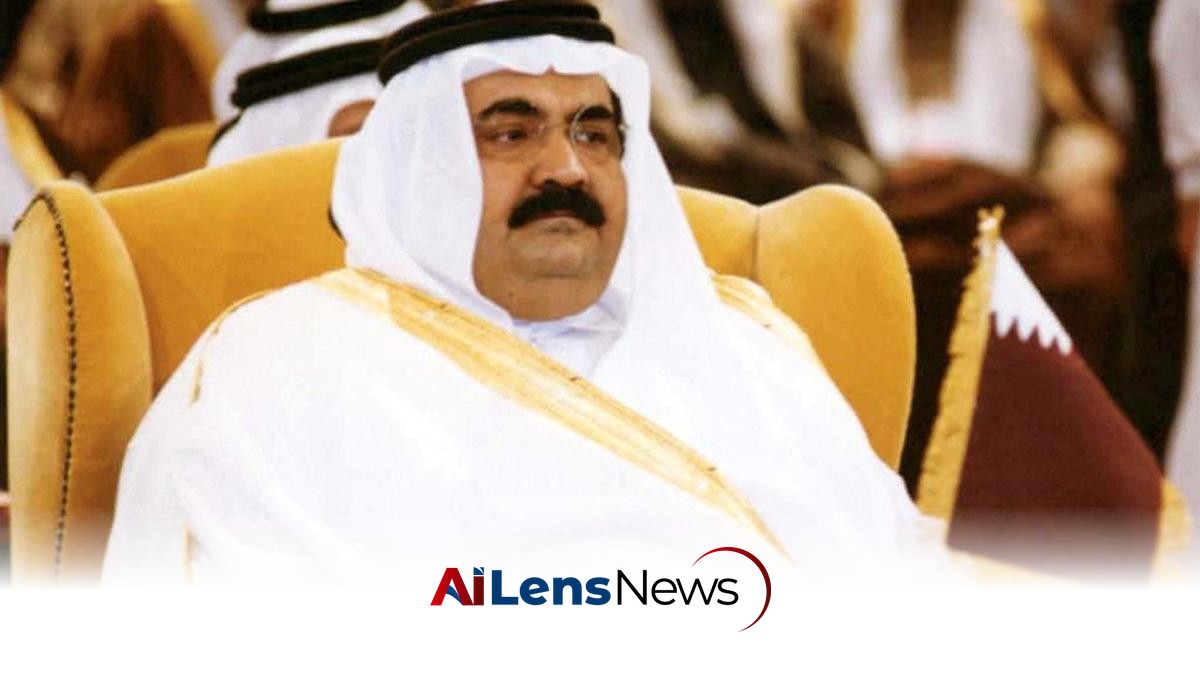


Sheikh Hamad bin Khalifa Al Thani, who transformed Qatar's economy and diplomacy, has died at the age of 74, leaving a significant legacy.
Doha, Qatar Jul 12, 2026 ALN: Qatar’s government announced the death of former leader Sheikh Hamad bin Khalifa Al Thani on July 12, 2026. He was 74 years old, as confirmed by a government website. Sheikh Hamad was a pivotal figure in shaping modern Qatar, leading the nation from 1995 to 2013 during a time of rapid economic growth and increasing international influence.
“With hearts steadfast in faith in God’s decree and destiny, the Bureau of the Emir mourns the great loss to the nation of the late — may God have mercy on him — His Highness the Father Amir Sheikh Hamad bin Khalifa Al Thani,” stated the emir’s office on social media. This announcement reverberated through the nation, as Sheikh Hamad was not only a ruler but also a father figure to many Qataris who witnessed the transformation of their country under his leadership.
Sheikh Hamad ascended to power in June 1995 through a bloodless coup against his father, Sheikh Khalifa bin Hamad Al Thani, while the latter was abroad. This transition was significant as it marked the beginning of a new era for Qatar, which had previously been characterized by a more conservative and less proactive foreign policy. Under Sheikh Hamad's leadership, Qatar expanded its political influence significantly, reaching from North Africa to Afghanistan. His vision and policies transformed Qatar into a modern state with a strong economy, driven largely by its vast oil and gas reserves.
One of the hallmarks of Sheikh Hamad's rule was the hosting of the 2022 FIFA Cup, a monumental event that showcased Qatar's capabilities on the global stage. Despite being out of power for years, Sheikh Hamad received a warm welcome from Qataris during the tournament's opening match, illustrating his lasting legacy and the affection many hold for him. The Cup not only highlighted Qatar's modern infrastructure but also its cultural heritage, as the country sought to present itself as a vibrant and welcoming nation.
However, Sheikh Hamad's independent foreign policy, which included close ties with Iran, Hamas, and the Muslim Brotherhood, sometimes strained relations with regional and Western allies. His approach often placed Qatar at odds with its neighbors, particularly Saudi Arabia and the United Arab Emirates, which viewed some of his alliances as a threat to regional stability. This complex web of alliances and enmities characterized much of Sheikh Hamad's foreign policy, as he sought to position Qatar as a mediator and a key player in Middle Eastern politics.
The establishment of Al Jazeera, a news network that he helped found, became a significant player in global media. While it provided a platform for diverse voices and often challenged the norms of Arab media, it also faced criticism for its editorial stance, particularly from governments that viewed its reporting as biased against them. Al Jazeera played a crucial role in shaping public opinion and discourse in the Arab , particularly during events like the Arab Spring, where it provided extensive coverage of protests and uprisings across the region.
“The future lies ahead of you, the children of this homeland, as you usher into a new era where young leadership hoists the banner,” Sheikh Hamad remarked during his abdication, signaling a transition to his son, Sheikh Tamim bin Hamad Al Thani, who was then 33. This peaceful transfer of power was notable in a region where such changes often result from violence. Sheikh Hamad himself had taken control through a coup against his father, making the transition to Sheikh Tamim all the more significant as it represented a shift towards stability and continuity.
His abdication in 2013 was viewed as a proactive step to address calls for reform in light of the Arab Spring, aiming to align leadership with the aspirations of Qatar's youthful population. Sheikh Tamim has since continued many of his father’s policies while also pursuing his own vision for the country, emphasizing youth engagement and diversification of the economy beyond oil and gas.
Prime Minister Narendra Modi expressed condolences, calling Sheikh Hamad a visionary leader who significantly contributed to Qatar's development. Modi remembered him as a true friend and conveyed his sympathies to the Amir of Qatar and the royal family. International leaders and dignitaries from various countries also expressed their condolences, recognizing Sheikh Hamad's impact on global affairs and his role in fostering international relations.
Sheikh Hamad, who attended the British military academy Sandhurst, became commander of Qatar’s armed forces and defense minister before rising to crown prince in the late 1970s. His military background played a crucial role in shaping Qatar’s defense policies and in managing the country’s oil and gas resources, which became the backbone of its economy. Under his leadership, Qatar invested heavily in its military capabilities while also focusing on diplomatic solutions to regional conflicts.
After taking power, Sheikh Hamad opened Qatar to global influences, exemplified by the establishment of Al Jazeera, which often challenged the norms of Arab media. His efforts to gain international prestige included hosting major sporting events, such as the Asian Games in 2006 and the Gulf Cup, and expanding Qatar Airways into a global carrier. The Doha International Airport, which cost around $15 billion, is named in his honor, symbolizing the rapid modernization and expansion of Qatar’s infrastructure during his reign.
Sheikh Hamad envisioned Qatar as a diplomatic broker, mediating conflicts in regions such as Darfur and Lebanon, and engaging with both Hamas and Israel. His willingness to engage with various factions, including those often viewed as adversaries, underscored his commitment to finding peaceful resolutions to conflicts. In October 2012, he became the first head of state to visit Gaza since Hamas took control, pledging significant investments aimed at rebuilding the region, which further solidified his reputation as a mediator in the Middle East.
Qatar also maintained a trade office for Israel until it was closed amid tensions, showcasing the delicate balance Sheikh Hamad sought to maintain in his foreign policy. During the Arab Spring, Qatar supported NATO missions in Libya and provided aid to Syrian opposition forces, although its support for Islamist groups created regional tensions and led to criticism from some neighboring countries.
Before his abdication, Sheikh Hamad opened an office for the Taliban in Qatar, facilitating discussions that led to the U.S. withdrawal from Afghanistan in 2021. This move was controversial but highlighted Qatar's emerging role as a mediator in complex international negotiations.
Sheikh Hamad's death marks the end of an era for Qatar, a nation that has undergone significant transformation under his leadership. His legacy is characterized by a blend of economic development, ambitious foreign policy, and a commitment to modernizing the state. As Qatar continues to navigate the complexities of regional and global politics, the foundations laid by Sheikh Hamad will likely continue to influence the country's trajectory for years to come.
To learn more about the latest developments in Regions & Countries, stay updated with our exclusive reports and analyses on AiLensNews.

