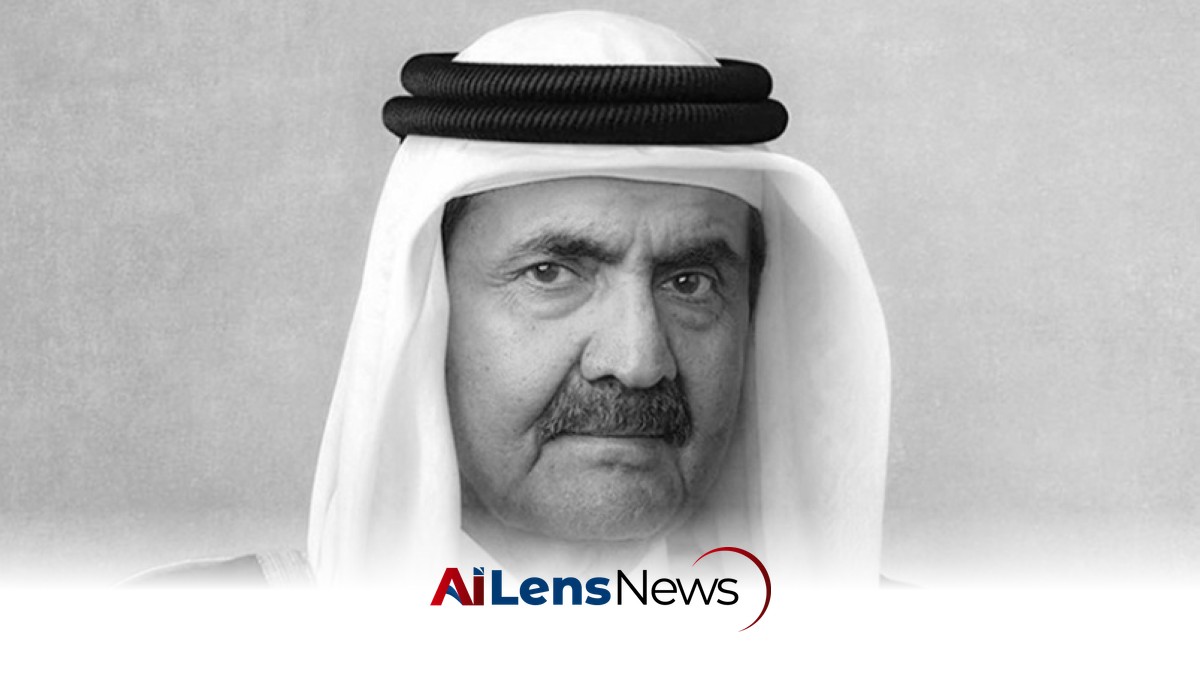


The Amiri Diwan of Qatar announced the death of Sheikh Hamad bin Khalifa Al Thani, the Father Amir, at the age of 74.
Kuwait City, Kuwait Jul 12, 2026 ALN: The Amiri Diwan of the State of Qatar mourned the passing of the Father Amir Sheikh Hamad bin Khalifa Al Thani on Sunday morning at the age of 74. His death marks the end of an era in Qatari history, as Sheikh Hamad was not only a ruler but also a transformative leader whose vision and policies reshaped the nation.
Sheikh Hamad bin Khalifa Al Thani ascended to the throne in 1995 after a bloodless coup that saw him depose his father, Sheikh Khalifa bin Hamad Al Thani. This transition was significant as it indicated a shift towards a more progressive and modern governance style. Sheikh Hamad was a proponent of reforms that aimed to develop Qatar into a modern state, emphasizing the importance of education, health care, and infrastructure, which were crucial for the nation’s growth.
During his reign, Qatar witnessed unprecedented economic growth, largely fueled by its vast natural gas reserves, which positioned the country as one of the wealthiest nations in the world on a per capita basis. The revenues from natural gas allowed Sheikh Hamad to invest heavily in both domestic infrastructure and international projects, leading to the construction of state-of-the-art facilities, including the Hamad International Airport and the expansion of Doha’s urban landscape.
Education was a cornerstone of Sheikh Hamad's vision for Qatar. He established the Qatar Foundation for Education, Science and Community Development, which aimed to foster a knowledge-based economy. The foundation has been instrumental in creating educational institutions, including branch campuses of prestigious universities from around the world, such as Weill Cornell Medicine and Georgetown University. This initiative has not only improved local educational standards but has also attracted international talent to Qatar.
Healthcare also saw significant improvements under his leadership. The establishment of the Hamad Medical Corporation and the introduction of various health initiatives transformed the healthcare landscape, making it more accessible and efficient for citizens and residents alike. These advancements contributed to a higher quality of life and demonstrated the government's commitment to the well-being of its people.
In the realm of international relations, Sheikh Hamad positioned Qatar as a key diplomatic player in the Middle East and beyond. His foreign policy was characterized by a willingness to engage with various factions and nations, often serving as a mediator in regional conflicts. This approach allowed Qatar to enhance its diplomatic relations and assert its influence on the global stage.
One of Sheikh Hamad's most notable contributions was the establishment of Al Jazeera in 1996. This media network revolutionized news broadcasting in the Arab world and beyond, providing a platform for diverse voices and perspectives. Al Jazeera has played a critical role in shaping public discourse, especially during pivotal events such as the Arab Spring, highlighting Sheikh Hamad's commitment to freedom of expression and information dissemination.
The legacy of Sheikh Hamad extends beyond his tangible achievements. He was known for his charisma and ability to connect with people, earning him the affectionate title of "Father Amir" among the citizens of Qatar. His leadership style was often described as inclusive, fostering a sense of national pride and unity. This personal connection with the populace is evident in the widespread expressions of grief and condolences following his passing.
As the nation grieves, plans for memorial services and tributes are expected to be announced in the coming days. The mourning period will likely involve various ceremonies and gatherings, allowing citizens to pay their respects and celebrate the life of a leader who significantly impacted their lives.
The implications of Sheikh Hamad's passing are profound. His death raises questions about the future direction of Qatari leadership and policy. Although his son, Sheikh Tamim bin Hamad Al Thani, has been in power since 2013 and has continued many of his father’s initiatives, the transition of leadership often brings changes in priorities and approaches. Sheikh Tamim’s leadership has already seen a continuation of the modernization efforts initiated by his father, but the challenges ahead, including regional tensions and economic diversification, will require careful navigation.
Sheikh Hamad's legacy will undoubtedly continue to influence Qatar's future. His vision for a modern, educated, and prosperous nation has set a foundation that future leaders will build upon. As Qatar continues to evolve in the global arena, the principles instilled by Sheikh Hamad will remain a guiding force for the nation.
In conclusion, the passing of Sheikh Hamad bin Khalifa Al Thani is a significant moment in Qatari history. His contributions to the country's development, international standing, and cultural identity will be remembered and celebrated for generations to come. As the nation reflects on his life and legacy, it is clear that Sheikh Hamad's impact will resonate not just within the borders of Qatar, but across the broader Arab world and beyond.
Sheikh Hamad's reign was marked by a commitment to modernization and reform, which transformed Qatar from a relatively small, less influential state into a major player on the global stage. Under his leadership, Qatar not only improved its domestic infrastructure and social services but also enhanced its international profile as a mediator in conflicts and a supporter of various humanitarian initiatives.
His approach to governance was characterized by a blend of traditional values and modern practices. While he maintained the monarchy's authority, he also embraced democratic principles to some extent, allowing for a more participatory governance structure. This included the establishment of the Advisory Council, which provided citizens with a platform to voice their concerns and opinions on national issues. Such reforms were seen as steps towards greater political engagement, even if the country did not adopt a fully democratic system.
Sheikh Hamad's foreign policy was particularly noteworthy for its pragmatism and flexibility. He was known for his ability to navigate complex geopolitical landscapes, often engaging with both Western nations and regional adversaries. This approach not only elevated Qatar's status but also contributed to a more stable environment in the region, albeit amidst ongoing challenges such as the Arab-Israeli conflict and tensions with neighboring countries.
The establishment of Qatar as a host for international events, including the FIFA World Cup 2022, is another testament to Sheikh Hamad's vision. His foresight in investing in sports and culture has positioned Qatar as a key player in the global sports arena, attracting attention and tourism to the country. The World Cup is expected to leave a lasting legacy, enhancing Qatar's infrastructure and international reputation.
Sheikh Hamad's impact on culture and the arts cannot be overlooked. He championed various cultural initiatives, including the development of museums and cultural institutions that celebrate Qatari heritage while also embracing global culture. This has fostered a vibrant arts scene in Qatar, contributing to the country's identity as a cultural hub in the region.
As Qatar navigates the post-Hamad era, the leadership of Sheikh Tamim bin Hamad Al Thani will be crucial in determining the future trajectory of the nation. Sheikh Tamim has already demonstrated a commitment to continuing his father's legacy, focusing on economic diversification and social development. However, he will also face the challenge of addressing the changing dynamics in the Middle East, particularly in relation to regional rivalries and the need for sustainable development.
In the wake of Sheikh Hamad's passing, discussions about succession and the future of Qatari governance are likely to intensify. The stability of the ruling family and the broader political landscape will be under scrutiny as the nation seeks to maintain the progress achieved during his reign. It will be essential for the new leadership to build on Sheikh Hamad's achievements while also addressing contemporary challenges and the aspirations of a younger generation.
In summary, the passing of Sheikh Hamad bin Khalifa Al Thani represents a pivotal moment for Qatar. His contributions to the nation’s development, international standing, and cultural identity will be remembered and celebrated for generations to come. As the nation reflects on his life and legacy, it is clear that Sheikh Hamad's impact will resonate not just within the borders of Qatar, but across the broader Arab world and beyond. The future of Qatar will undoubtedly be shaped by the foundations he laid and the vision he instilled in his people.
To learn more about the latest developments in Regions & Countries, stay updated with our exclusive reports and analyses on AiLensNews.

