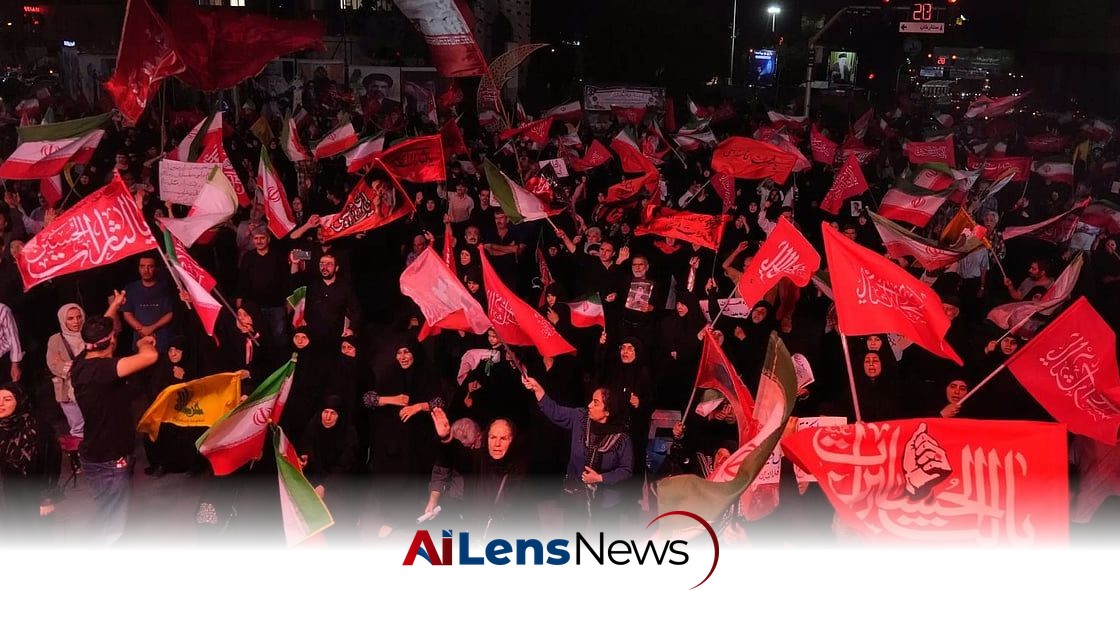


The US launched attacks on Iran after an Iranian strike on a vessel in the Strait of Hormuz, escalating tensions in the region.
New Delhi, India Jul 12, 2026 ALN: The United States launched a military strike against Iran early Sunday morning in direct response to an Iranian attack on a vessel in the strategically vital Strait of Hormuz. This incident, which involved the Iranian military setting a container ship ablaze, forced its crew to abandon the vessel, marking a significant escalation in tensions in the region. In retaliation, Iran has targeted locations in Bahrain, Qatar, and the United Arab Emirates, further intensifying the already volatile situation in the Gulf.
The Strait of Hormuz is a crucial maritime chokepoint through which approximately one-fifth of the world’s traded oil and natural gas flows. The geopolitical importance of this strait cannot be overstated, as it serves as a vital artery for energy supplies to numerous countries. During periods of conflict, Iran's control over the strait has led to heightened tensions and a global energy crisis, though it is worth noting that oil prices have significantly decreased from wartime highs of USD 120 a barrel to more manageable levels in recent weeks.
The U.S. military's Central Command reported that the strikes targeted around 140 sites in Iran, marking a substantial increase in the scale of military operations compared to previous engagements. These strikes focused on critical infrastructure, including missile and drone launch sites, ammunition depots, and communication facilities. The objective of these military actions, as stated by U.S. Central Command, is to “degrade Iran's ability to attack civilian mariners and commercial vessels freely transiting the strait.” This reflects a broader strategy to ensure the safety of international shipping routes that are vital for global trade.
This escalation in hostilities in the Persian Gulf follows a recent declaration by U.S. President Donald Trump, who stated that an interim deal in the ongoing conflict with Iran was “over.” This declaration has been interpreted as a signal that the U.S. is willing to take more aggressive military action to counter Iranian threats in the region.
U.S. Defense Secretary Pete Hegseth took to social media to comment on the situation, stating: “Iran made a poor choice. Now they pay.” This statement underscores the U.S. administration's stance that Iran's aggressive actions will be met with decisive military responses, highlighting the precarious nature of U.S.-Iran relations.
In the aftermath of the U.S. strikes, the United Arab Emirates issued a public warning regarding incoming missile and drone attacks from Iran, with explosions reported in nearby Qatar. A missile alert was activated in Qatar shortly after the blasts, and the Qatari military confirmed that it successfully intercepted the incoming Iranian fire. This development indicates the broader regional threat posed by Iran’s military capabilities and its willingness to extend its military reach beyond its borders.
Missile alerts were also triggered in Bahrain, which is home to the U.S. Navy's 5th Fleet. The specific locations targeted in the UAE remain unclear, raising concerns about the potential for further escalation in a nation that had not previously been a target in this latest wave of Iranian attacks. The last attack on the Emirates occurred in May when a drone ignited a fire near the country’s sole nuclear power plant, highlighting the precarious security situation in the region.
In the incident involving the container ship, which was flagged in Cyprus, significant damage was reported to the engine room, and a civilian crew member is currently missing. According to U.S. Central Command, the ship was navigating a route close to the shoreline of Oman, a tactic often employed by vessels to avoid Iranian territorial waters. As the crew abandoned the burning ship, the situation underscored the dangers faced by maritime operations in this critical area.
Iran's paramilitary Revolutionary Guard claimed that multiple vessels “disregarded our warnings and instructions to correct their course and proceed along the approved route.” Reports indicate that one vessel was struck by a warning shot and subsequently brought to a halt, illustrating Iran's aggressive posture in the region and its willingness to enforce its claims over the strait.
In a striking declaration, Iran announced that the Strait of Hormuz would remain closed “until further notice” and threatened to target “additional enemy bases in the region” if further attacks occur. This statement is indicative of Iran's broader strategy to assert its influence and deter perceived threats from the U.S. and its allies.
The U.S. strikes reportedly targeted key locations such as Bandar Abbas and Sirik, along with other strategic sites along the shores of the strait. Iranian state media has yet to provide immediate information regarding casualties or damage resulting from these attacks, leaving the international community in a state of uncertainty about the full implications of the military engagement.
This recent outbreak of violence follows a meeting between the foreign ministers of Iran and Oman, which took place on Saturday to discuss the situation in the Strait of Hormuz. This meeting was intended to address the escalating Iranian attacks on shipping and the U.S. retaliations that have undermined the interim deal aimed at resolving the ongoing conflict. The narrow strait lies within both Iranian and Omani territorial waters but has traditionally been regarded as an international waterway, complicating the legal and diplomatic landscape.
Oman announced that it and Iran agreed to continue discussions about the Strait of Hormuz “at the technical and political levels.” However, Iran did not issue a statement affirming that the strait would be open to all vessels, a condition that has been a significant point of contention sought by the Trump administration. This lack of clarity raises questions about the future of maritime security and the potential for further diplomatic engagements.
In a show of defiance, Iran's new supreme leader, who has remained largely out of the public eye since the onset of the war, vowed in his first statement following the funeral of his father, Ayatollah Ali Khamenei, that Iranians would seek to avenge his death in the initial strikes of the conflict on February 28. Supreme Leader Ayatollah Mojtaba Khamenei declared that such revenge “is the will of our nation and must certainly be carried out,” indicating a commitment to a hardline stance in the face of U.S. military actions.
U.S. officials, speaking on the condition of anonymity, have suggested that the resumption of strikes against Iranian targets, even prior to the latest round of hostilities, was the result of what they describe as a rogue faction of Iranian hard-liners attempting to undermine any potential ceasefire. This assertion raises questions about the internal dynamics within Iran’s leadership and the extent to which hardline factions may be influencing the country’s foreign policy and military actions.
Iran has consistently maintained that its theocracy is unified under the new supreme leader, despite the apparent divisions that may exist within its ranks. Following the U.S. completion of strikes on Thursday, additional attacks reportedly targeted Iran, leading to speculation about who else may be involved in targeting the Islamic Republic. The lack of clarity surrounding these attacks has heightened tensions and uncertainty in the region.
While Israel has not claimed responsibility for these attacks, there is speculation that Gulf Arab states may have initiated them as a deterrent against further Iranian aggression. This potential for a broader conflict involving multiple regional actors complicates the already intricate geopolitical landscape in the Middle East.
In the wake of the U.S. strikes, Iran retaliated by targeting Bahrain, Jordan, Kuwait, and Qatar, further demonstrating its willingness to engage in military actions across the region. The strikes in Iran over the course of two rounds last week resulted in at least 17 fatalities and 115 injuries, according to Iranian Health Ministry spokesperson Hossein Kermanpour. This escalation of violence underscores the urgent need for diplomatic efforts to de-escalate tensions and seek a peaceful resolution to the ongoing conflict.
To learn more about the latest developments in Wars & Conflicts, stay updated with our exclusive reports and analyses on AiLensNews.

