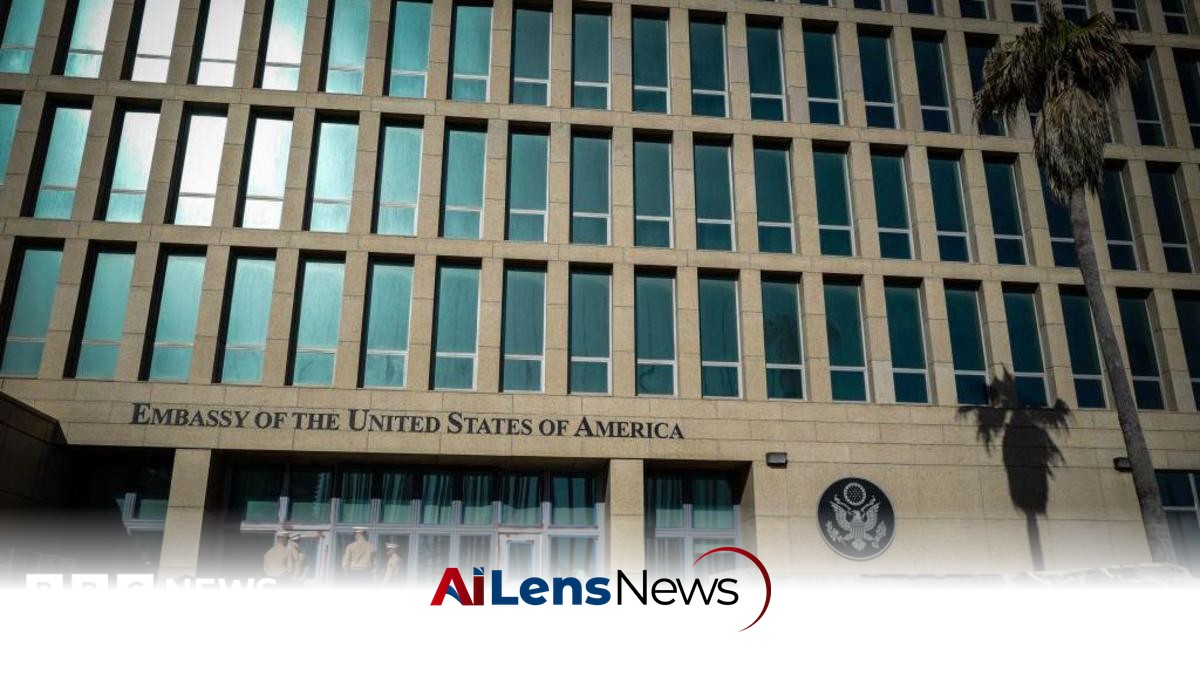


The US government compensates victims of Havana Syndrome, a mysterious illness affecting diplomats and spies, with nearly $3 million in payouts.
New Delhi, India Jul 11, 2026 ALN: The US government has paid nearly $3 million (£2.2 million) in compensation to victims of so-called Havana Syndrome, a mysterious neurological condition reported by spies, diplomats, and their families.
The payments mark the first compensation to US agency staff in relation to this illness, which first emerged about a decade ago among CIA officers in Cuba. The decision to provide financial assistance illustrates the serious nature of the reported health incidents and the government's acknowledgment of the challenges faced by affected personnel.
Since then, American personnel stationed in various countries, including China, have reported experiencing "anomalous health incidents." These incidents have raised significant concern among government officials and health professionals alike, prompting investigations and discussions about the potential implications for national security and the wellbeing of US personnel abroad.
Victims have described a range of symptoms, including hearing a low hum, clicks, squeals, and the sound of "grinding metal." Others have reported intense pressure on the skull, dizziness, and nausea. The variety and severity of these symptoms have led to widespread anxiety among those stationed in high-risk areas, as well as their families, who fear for their loved ones' health and safety.
The US Department of Defense has stated that it will continue to prioritize "the care of affected personnel" as it announced the compensation, which was paid out under the Havana Act signed into law in 2021. This act was designed to provide support and resources to those who have suffered from Havana Syndrome, reflecting a growing recognition of the need for ongoing medical care and psychological support for the victims.
For years, there has been widespread speculation regarding the cause of Havana Syndrome. Some have suggested that the illness may be linked to microwave exposure, leading to theories that a foreign power could have used some form of sonic weapon to target US personnel and their families. The idea of a directed energy weapon has captured the imagination of both the public and the media, further complicating the narrative surrounding the syndrome.
Former CIA analyst Erika Stith expressed her frustration in a 2022 interview, stating, "My brain is broken. We got this as a result of serving our country. And we deserve to be taken care of." Stith's remarks highlight the emotional toll that the condition has taken on individuals who feel they have been abandoned by their government after risking their health in service to the nation.
Despite the ongoing speculation, last year, most US intelligence agencies concluded that it was "very unlikely" that a foreign actor had used a novel weapon or prototype device to harm US personnel. However, a small faction within the intelligence community did not entirely dismiss this theory. This division within the intelligence community reflects the complexity of the situation, as investigations continue to explore various hypotheses about the origins and causes of the syndrome.
A report by the National Intelligence Council acknowledged that none of the agencies questioned the experiences or suffering of US workers and their families. They believed that these individuals "experienced genuine, sometimes painful and traumatic, physical symptoms and sensory phenomena and honestly and sincerely reported those events as possible anomalous health incidents." This statement underscores the seriousness with which the government is treating the claims of those affected, even in the absence of a clear understanding of the syndrome's cause.
Havana Syndrome was first publicly reported in 2016 when US diplomats in Cuba began experiencing illness and reported hearing piercing sounds at night. The initial reports led to speculation about an attack by a foreign power using a mysterious sonic weapon. In 2017, the US government withdrew more than half of its staff from its embassy in Havana after employees and their families reported symptoms such as dizziness, nausea, and difficulty concentrating. This withdrawal was a significant diplomatic move, reflecting the seriousness of the health concerns raised by the affected personnel.
Canada's government also received reports of similar symptoms from its embassy employees in Cuba, prompting a significant reduction in personnel in Havana in 2019. The international dimension of Havana Syndrome has drawn attention from various governments, leading to a collaborative effort to understand and address the phenomenon. While cases of Havana Syndrome began to emerge around a decade ago, some experts believe the illness may have existed for much longer, dating back to the Cold War era, where similar unexplained health issues were reported among diplomats and intelligence officers.
As investigations continue, the mystery surrounding Havana Syndrome remains unsolved, leaving many questions unanswered about its origins and implications for those affected. The uncertainty surrounding the syndrome has also raised concerns about the future of US diplomatic missions and the safety of personnel stationed abroad. There is an ongoing need for comprehensive research and analysis to determine the best course of action for protecting those who serve their country in challenging environments.
The implications of Havana Syndrome extend beyond individual health concerns; they touch on national security, diplomatic relations, and the psychological wellbeing of those who serve in high-stress roles. The government's response, including the recent compensation, reflects an acknowledgment of these broader issues and a commitment to addressing them as more information becomes available.
In terms of national security, the potential for directed energy weapons or other forms of targeted attacks raises alarm bells within intelligence circles. The fear that US personnel could be deliberately targeted creates an atmosphere of unease, not only among those who serve but also among their families and the broader public. The psychological impact of such a threat can lead to increased stress and anxiety, which may affect job performance and overall morale.
Furthermore, the international ramifications of Havana Syndrome can strain diplomatic relations. Countries where incidents have occurred may face scrutiny and pressure to investigate thoroughly, which could lead to diplomatic tensions. The situation is complicated by the fact that many nations are also grappling with their own security concerns and may be hesitant to engage fully in collaborative efforts to address the syndrome.
In light of these complexities, the US government has committed to ongoing research and investigation into the causes of Havana Syndrome. This includes funding for medical studies and the establishment of protocols for monitoring and treating affected personnel. Additionally, there is a growing emphasis on mental health support, recognizing that the psychological toll of such incidents can be as debilitating as the physical symptoms.
As the government continues to navigate these challenges, there is hope that further research will yield answers that not only clarify the origins of Havana Syndrome but also lead to improved safety measures for US personnel abroad. The recent compensation payments are a step in the right direction, signaling that the government is taking the concerns of affected individuals seriously and is committed to providing the necessary support and resources.
In conclusion, while the exact nature and cause of Havana Syndrome remain elusive, the US government's acknowledgment of the issue through financial compensation highlights the importance of addressing the health and safety of its personnel. The ongoing investigations, coupled with a commitment to care and support, reflect a broader understanding of the complexities involved in ensuring the wellbeing of those who serve the nation in challenging environments.
To learn more about the latest developments in International Politics, stay updated with our exclusive reports and analyses on AiLensNews.

