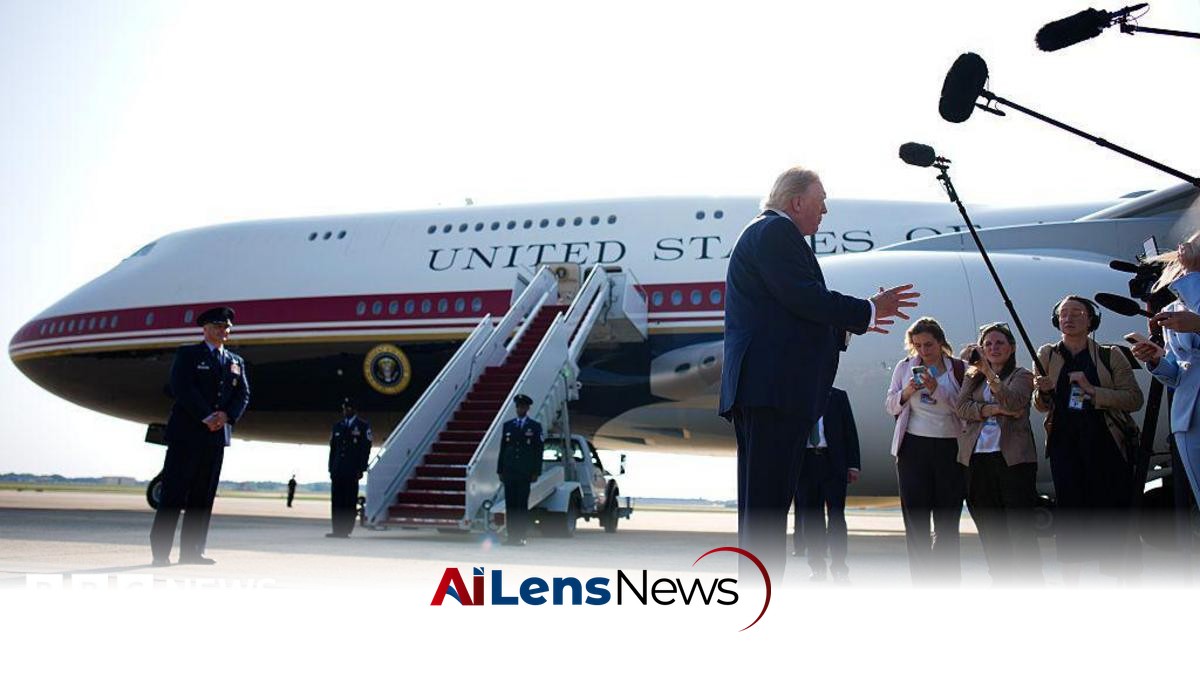


The Trump administration has issued subpoenas to New York Times journalists regarding their reporting on security issues with the new Air Force One plane.
New Delhi, India Jul 11, 2026 ALN: Several New York Times journalists were summoned to testify under oath after they reported alleged security concerns involving President Donald Trump's new Air Force One plane, the US paper said.
Federal agents delivered subpoenas to some reporters' homes demanding they appear before a federal grand jury investigating a potential crime, the Times said.
The paper had published stories alleging that the Qatari-gifted plane was not secure enough, and the Secret Service urged Trump to switch planes on his way home from a NATO summit in Turkey.
The Justice Department told the BBC it was investigating illegal leaks, adding: "Reporters are not the targets, those leaking classified information are."
David McCraw, the Times's top lawyer, called the summons a "brazen act" and "nothing more than an attempt to prevent the public from knowing what is happening in their country by intimidating journalists from doing their jobs."
The subpoenas—a legal requirement from a court or government agency that compels a person to appear or produce records or evidence—state that the reporters' testimony is required "in regard to an alleged violation of federal criminal law," the Times reported.
The summonses require the reporters to appear before a grand jury in Manhattan on Wednesday, the Times said. Grand juries are composed of members of the public and convened by the US government to examine evidence and decide if there is enough to charge a person or persons with a crime.
The New York Times reported on security concerns about the president's plane citing unnamed sources. While speaking to media about classified information is a crime, the US Constitution protects the freedom of the press to report information in the public interest.
"We value and appreciate the important role that the press plays in this country, but the Department of Justice also plays an important role to make sure that the people entrusted with our nation's secrets do what they're supposed to do with that information, which means not sharing classified information," the Justice Department (DoJ) said in a statement provided to the BBC.
The Times reported on Wednesday that while Trump flew to the NATO summit in Turkey on the new Air Force One, he left the summit on an older plane on the advice of the Secret Service. The next day, the paper reported that security officials were concerned the newer plane did not have advanced security features, including antimissile capabilities.
"Our journalists report the facts and advance the American public's right to know how their government is operating and their taxpayer dollars are being used," McCraw, the Times' lawyer, said.
Other outlets published similar reports, including CBS, the BBC's US partner. A former US government official told CBS that there was not enough time or money for the plane to be updated with the security requirements to serve as Air Force One.
While these reports were surfacing, tensions with Iran over a negotiated ceasefire deal were growing, and the US was launching strikes.
Trump brushed off concerns about the plane when asked by reporters this week and said: "I have a threat all the time. I'm No. 1 on their list."
Last month, Trump unveiled the new Boeing 747-8 jet that the Qatari government donated last year as an "unconditional" gift to the US to act as the new Air Force One.
The luxury jumbo jet was modified to transport the president and included upgrades in security, mission communications, logistics support, and advanced technology, the Air Force said. Any potential threats identified with the use of previously owned aircraft were "neutralized" in the new one, it added.
It has been valued at an estimated $400 million (£300 million).
The recent developments regarding the subpoenas and the investigation into the reporting by the New York Times have ignited discussions surrounding press freedom and the implications of government actions on journalistic practices. In the United States, the First Amendment guarantees freedom of the press, which is a cornerstone of democracy. However, the tension between national security and press freedom often leads to complex legal and ethical dilemmas.
The subpoenas issued to the journalists reflect a broader trend where the government has increasingly sought to investigate leaks of classified information. This trend has been particularly pronounced during the Trump administration, which was marked by a contentious relationship with the media. The administration often criticized outlets for reporting on sensitive issues, which they claimed undermined national security.
In this case, the reporting by the New York Times raised significant questions about the security of the new Air Force One plane, a matter of public interest given the president's high-profile status and the potential risks associated with air travel for a sitting president. The Qatari government’s donation of the plane and the subsequent concerns raised by security officials about its readiness to serve as Air Force One added layers of complexity to the situation.
Moreover, the implications of the investigation extend beyond the immediate legal ramifications for the journalists involved. They raise concerns about the chilling effect that such government actions may have on the press as a whole. Journalists may become more hesitant to report on sensitive issues if they fear legal repercussions for doing so. This could potentially lead to a less informed public and a decrease in accountability for government actions.
As the investigation unfolds, it will be essential for media organizations, legal experts, and civil rights advocates to monitor the situation closely. The outcome of the subpoenas and the broader implications for press freedom will likely influence future interactions between the government and the media. The balance between protecting national security and ensuring a free and independent press will continue to be a contentious issue in American society.
Furthermore, the discourse surrounding this case is occurring against a backdrop of heightened scrutiny of government transparency and accountability. In an era where information is often disseminated rapidly through social media and other platforms, the role of traditional journalism remains crucial in verifying facts and presenting nuanced narratives. The challenge will be to navigate the delicate balance of safeguarding national security while upholding the fundamental principles of a free press.
In conclusion, the subpoenas issued to New York Times journalists regarding their reporting on Air Force One not only highlight the ongoing tensions between the government and the media but also underscore the critical importance of protecting press freedoms in a democratic society. As the situation develops, it will be vital to engage in open discussions about the implications for journalism and the public's right to know, ensuring that the principles of transparency and accountability remain at the forefront of national discourse.
To learn more about the latest developments in International Politics, stay updated with our exclusive reports and analyses on AiLensNews.

