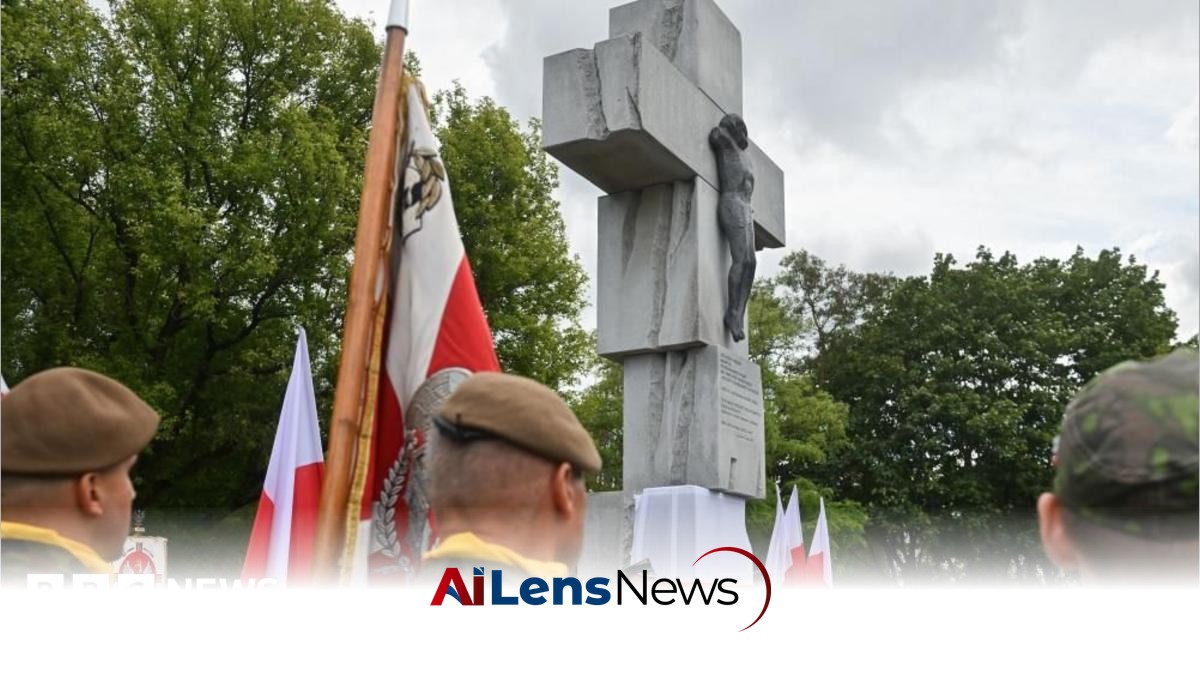


Poland's Prime Minister Donald Tusk has announced a national memorial for victims of a genocide committed by Ukrainian nationalists during War II, reigniting historical tensions between Poland and Ukraine.
New Delhi, India Jul 12, 2026 ALN: Polish Prime Minister Donald Tusk has announced the creation of a national memorial to the victims of a "genocide committed by Ukrainian nationalists" during War II.
Tusk's announcement coincides with the anniversary of what Poland refers to as the "massacre" in Volhynia, a region that was part of Poland before War II but is now located in Ukraine. This tragic event involved the systematic killing of Polish civilians by the Ukrainian Insurgent Army (UPA), with estimates suggesting that around 100,000 ethnic Poles lost their lives between 1943 and 1945. The Volhynia massacre is a deeply painful chapter in Polish-Ukrainian history, marked by violence and suffering that has left lasting scars on both nations.
The UPA, which was formed during War II, is a contentious subject in both Poland and Ukraine. Many Ukrainians view the UPA as national heroes who fought for Ukraine's independence against both Nazi Germany and Soviet oppression, as well as against Polish authorities. This perception contrasts sharply with the Polish view, which frames the actions of the UPA as acts of genocide against the Polish population. This divergence in historical interpretation has fueled tensions between the two countries for decades, complicating their bilateral relations.
The historical context of the Volhynia massacre is crucial to understanding the current diplomatic climate. The events occurred during a chaotic period when borders were shifting, and national identities were being fiercely contested. The UPA's campaign against Polish civilians was part of a broader strategy to establish a Ukrainian state free from foreign domination, which included violent actions against various ethnic groups, including Poles. However, it is also important to recognize that the conflict led to significant loss of life on both sides, with estimates suggesting that up to 10,000 Ukrainian civilians also perished during this tumultuous period.
During his address, Tusk emphasized the importance of confronting historical truths, stating: "Truth is our duty toward the victims, but also a way to overcome a painful past for the sake of a better future." His remarks highlight a growing recognition in Poland of the need to address historical grievances while also fostering a spirit of reconciliation. Tusk underscored that "Memory cannot be the servant of hatred. The answer to nationalism cannot be more nationalism," which reflects a desire to move beyond historical animosities and build a more collaborative future. He urged Ukraine to "embrace this truth" if it wishes to join the European Union, indicating that acknowledgment of historical wrongs is essential for future cooperation.
The announcement of the memorial comes amid a backdrop of ongoing diplomatic tensions between Poland and Ukraine. Last month, Ukrainian President Volodymyr Zelensky faced significant backlash in Poland after he named a Ukrainian military unit after the UPA, which led to him being stripped of Poland's highest state honor. This incident is emblematic of the fragile nature of Polish-Ukrainian relations, where historical memory continues to influence contemporary political dynamics.
Polish President Karol Nawrocki, in response to the controversy, acknowledged the need for action but also reassured the public that the dispute would not compromise Poland's support for Ukraine amid the ongoing Russian invasion that began in 2022. This statement reflects the complex balancing act that both nations must navigate as they confront their historical grievances while also addressing the current geopolitical landscape.
In a show of solidarity with Zelensky, three former Ukrainian presidents returned their White Eagle awards to Poland in a gesture of support. This act underscores the deep connections and shared histories between the two nations, even as they grapple with painful aspects of their past. The return of the awards can be seen as a symbolic rejection of the divisive narratives that have emerged in recent years, emphasizing a commitment to solidarity in the face of external threats.
In his video address, Zelensky acknowledged the importance of honoring the victims of the Volhynia killings, stating that "representatives of the Ukrainian state took part in joint prayers with representatives of the Polish state" in both countries. His comments reflect a recognition of the shared suffering experienced by both nations during War II and the need for mutual respect in addressing historical wounds. Zelensky also emphasized the importance of establishing the facts surrounding the killings, indicating a commitment to historical accountability.
Furthermore, Zelensky pointed out that "now... Ukraine and Poland have one common threat, and this is a mortal threat to our independence, to our states, to every city, to every village, and this threat is called Russia." This statement highlights the contemporary geopolitical realities that both nations face, as they navigate their historical grievances while also confronting external pressures. The Russian invasion of Ukraine has created a sense of urgency for both Poland and Ukraine to strengthen their ties and work collaboratively to ensure their mutual security and sovereignty.
The creation of the memorial and the ongoing discussions surrounding these historical events serve as a reminder of the complexities of national identity and memory in Eastern Europe. As Poland and Ukraine continue to address their shared past, the potential for reconciliation and cooperation may hinge on their ability to confront uncomfortable truths while also fostering a spirit of partnership in the face of common challenges. The future of Polish-Ukrainian relations will likely depend on the willingness of both nations to engage in meaningful dialogue about their history, acknowledging the pain of the past while striving for a more united and secure future.
In the broader context of European history, the Volhynia massacre and the actions of the UPA are part of a larger narrative of ethnic conflict that has characterized much of Eastern Europe throughout the 20th century. The legacy of War II continues to resonate in contemporary politics, influencing national identities, historical narratives, and diplomatic relations. As nations grapple with their pasts, the challenge remains to create a cohesive national identity that acknowledges historical grievances while promoting unity and cooperation.
Moreover, the memorial's establishment may also have implications for the European Union's approach to historical memory and reconciliation among its member states. The EU has often positioned itself as a facilitator of peace and reconciliation in a region marked by historical divisions. The Polish initiative to memorialize the victims of the Volhynia massacre could serve as a case study for how nations can confront their pasts while working towards a shared future within the EU framework.
As Poland and Ukraine navigate these complex issues, the role of civil society, historians, and educators will be crucial in shaping public understanding and dialogue regarding these historical events. Efforts to promote historical awareness and education can foster a culture of remembrance that honors the victims of past atrocities while also encouraging a spirit of reconciliation. This is particularly important in a region where historical narratives can be deeply polarized and contentious.
Ultimately, the creation of the memorial to the victims of the Volhynia massacre represents not only an acknowledgment of the past but also a commitment to building a more peaceful and cooperative future. By confronting historical truths and fostering dialogue, Poland and Ukraine may be able to pave the way for a more stable and harmonious relationship, one that recognizes their shared history while looking forward to a collaborative future in a rapidly changing geopolitical landscape.
To learn more about the latest developments in Wars & Conflicts, stay updated with our exclusive reports and analyses on AiLensNews.

