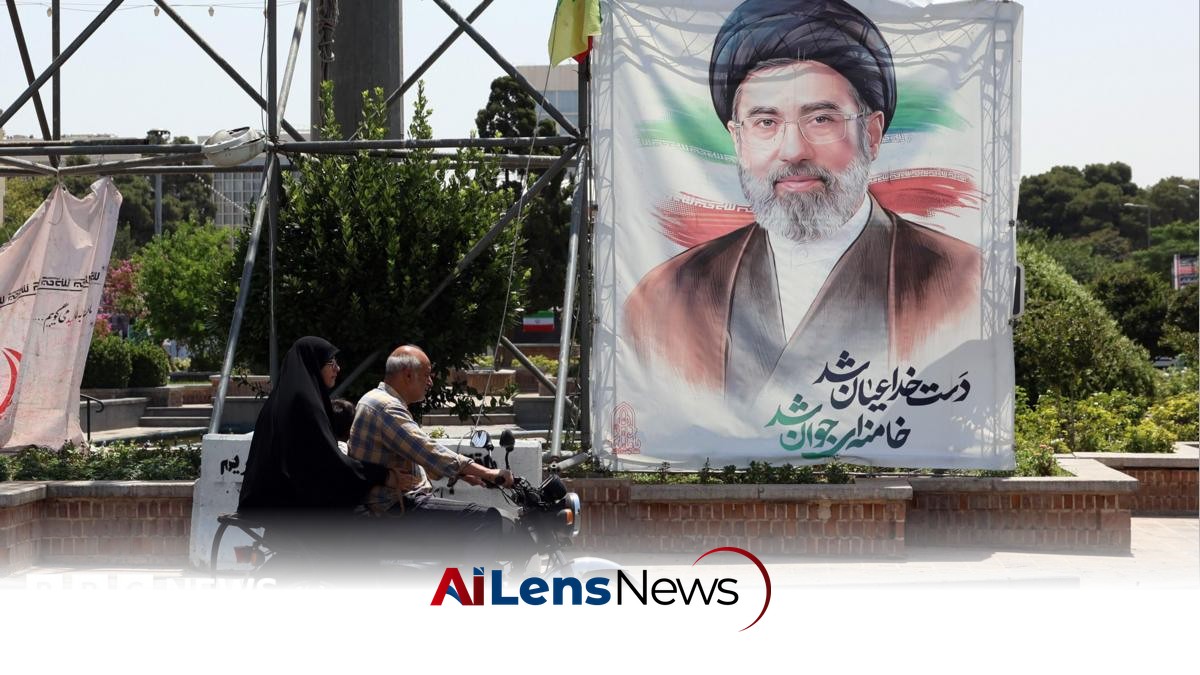


Iran has announced the closure of the Strait of Hormuz, warning of severe consequences for any U.S. aggression. This follows recent tensions involving attacks on commercial tankers.
New Delhi, India Jul 12, 2026 ALN: Iran has closed the Strait of Hormuz until further notice, or "until the end of American interference in this region," according to state media.
The Strait of Hormuz is a strategically significant waterway that connects the Persian Gulf to the Arabian Sea and is one of the most critical maritime chokepoints in the . Roughly 20% of the 's oil supply passes through this narrow strait, making it a vital route for global trade and energy security. The closure announced by Iran raises serious concerns not only for regional stability but also for the global economy, as it could disrupt oil shipments and lead to increased prices.
The Islamic Revolutionary Guard Corps (IRGC), which is a branch of Iran's Armed Forces, warned that any U.S. "aggression" as a result of the closure would be responded to with "severity" and that new bases in the region would be targeted. This statement reflects the IRGC's longstanding position of defending Iranian sovereignty and interests in the face of perceived external threats, particularly from the United States and its allies.
In a recent incident, the IRGC stated that it had targeted another "offending" ship in the strait with a warning shot after it turned off its systems and diverted from Iran's approved route. This highlights the tense maritime environment in the region, where the IRGC has been increasingly assertive in enforcing its navigation rules, especially in the context of rising tensions with the U.S.
This announcement comes after incidents earlier this week in which three commercial tankers were attacked, prompting an exchange of strikes with the U.S. The U.S. has not yet responded to the IRGC announcement, but the situation remains fluid and could escalate further depending on subsequent actions taken by both sides.
Earlier this week, three commercial tankers were attacked as they attempted to cross a U.S.-recommended route through Omani waters. Iran has repeatedly asserted that the only "safe" route is a separate path through its waters, a claim that has been met with skepticism by the international community. The attacks on these tankers, which were reportedly targeted for being in the vicinity of U.S. interests, have led to heightened military readiness among U.S. forces in the region.
The incident led to a series of U.S. strikes in which 17 people were killed and 115 injured, according to Iranian officials. These strikes were characterized by Iran as acts of aggression, further complicating the already fraught relationship between Tehran and Washington. Iran retaliated with strikes on U.S. allies in the Gulf, demonstrating its willingness to escalate the conflict in response to perceived threats.
This exchange has heightened tensions, with U.S. President Donald Trump declaring that the Iranian attacks signify the end of the ceasefire. Iran's Foreign Minister Abbas Araghchi has accused the U.S. of violating the deal, suggesting that the diplomatic framework established in previous years is now under significant strain. The rhetoric from both sides indicates a willingness to engage in military confrontation rather than diplomatic negotiations.
However, President Trump stated that talks would continue, and mediators are attempting to revive the process. The U.S. media has reported that Iran informed American officials that the attacks on tankers were a mistake and blamed a rogue internal group. This assertion raises questions about command and control within the Iranian military and the extent to which the government can regulate the actions of various factions within its armed forces.
American officials claim they have conveyed through mediators the demand that Iran publicly state that the Strait of Hormuz, a vital international shipping route, is open and pledge to cease fire on commercial ships. This demand highlights the importance of maintaining freedom of navigation in this crucial waterway, which is essential not only for oil transport but also for the broader stability of global trade.
The closure follows a call for revenge from Iranian Supreme Leader Ayatollah Mojtaba Khamenei, in his first public statement since taking leadership. His father and predecessor, Ali Khamenei, was killed in an airstrike on February 28, the first day of the U.S.-Israeli war against Iran. The death of such a prominent figure has undoubtedly intensified feelings of nationalism and calls for retaliation among the Iranian populace.
Reading a statement on state television, the new ayatollah declared that vengeance was the "will of the nation." This statement resonates deeply with many Iranians, particularly those who view the U.S. and its allies as aggressors in a long-standing conflict. The call for vengeance may also serve to consolidate the new leadership's position domestically, rallying support around a common cause.
"We pledge to avenge the blood of the martyred leader and all the martyrs of these two wars from the criminal and disgraced killers," he was quoted as saying. This rhetoric signals a potential shift towards a more aggressive stance in Iran's foreign policy, particularly in relation to U.S. interests in the region.
"The matter depends neither on my personal existence nor on that of other officials. Whether we are present or not, it will come to pass." Such statements underscore the belief among Iranian leadership that their struggle against perceived external threats is an enduring one, transcending individual leaders.
Many Iranians participating in funeral ceremonies over the past few days carried placards calling for the killing of U.S. President Donald Trump, which illustrates the heightened emotions surrounding recent events. Trump's warning that any such plans would result in the U.S. "decimating and destroying all areas" of Iran in response reflects the precarious nature of the situation. The potential for miscalculation on either side could lead to a wider conflict.
The Wall Street Journal and other U.S. media reported this week that Israel had shared intelligence with Washington indicating that Iran had recently devised a plan to assassinate the U.S. president. This allegation, if true, raises the stakes significantly and could lead to a major escalation in military responses from the U.S. and its allies.
However, Trump denied that Tehran had made a fresh plan or that Israel was the source of any intelligence. He told the New York Post in an interview that he had been "No. 1 [on Iran's kill list] for a long time." This statement reflects the ongoing tension and the personal nature of the conflict between the U.S. and Iran, which has become increasingly intertwined with the political narratives of both nations.
As the situation continues to develop, the international community watches closely, aware that any misstep could lead to significant consequences not only for the U.S. and Iran but also for global stability and security. The closure of the Strait of Hormuz could have far-reaching implications for oil prices and international trade, making it imperative for diplomatic efforts to be prioritized in order to de-escalate tensions and find a path forward.
To learn more about the latest developments in International Politics, stay updated with our exclusive reports and analyses on AiLensNews.

