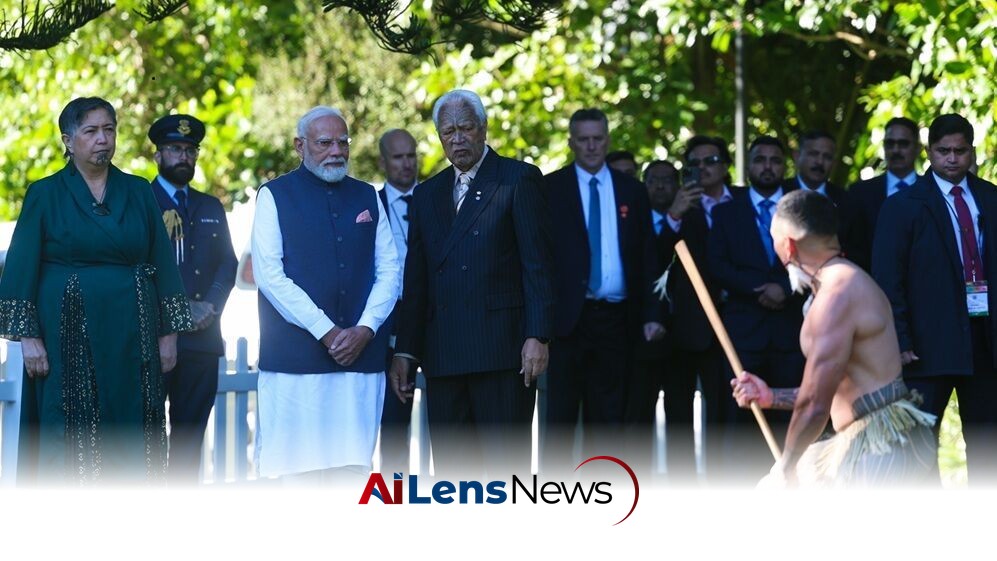


India and New Zealand elevate ties to a strategic partnership, aiming to double bilateral trade to Rs 35,000 crore by 2030, with key agreements in defence and maritime security.
New Delhi, India Jul 11, 2026 ALN: India and New Zealand, on Saturday, elevated their ties to a strategic partnership and unveiled a roadmap to deepen cooperation in trade, defence, and maritime security.
The two sides also set a target of doubling bilateral trade in goods and services to around Rs 35,000 crore by 2030. This ambitious target reflects a growing recognition of the economic potential that exists between the two nations, which have historically maintained a friendly relationship but have not fully capitalized on their trade capabilities. The economic ties between India and New Zealand have been relatively modest compared to their potential, with both countries recognizing the need to enhance their commercial interactions to better serve their respective economies.
The announcement came after wide-ranging talks between Prime Minister Narendra Modi and his New Zealand counterpart Christopher Luxon in Auckland during the final leg of Modi's three-nation tour. The discussions were characterized by a shared commitment to enhancing collaboration across various sectors, which is particularly significant given the evolving geopolitical landscape in the Indo-Pacific region. The Indo-Pacific is increasingly becoming a focal point for global politics, with various nations seeking to assert their influence and navigate the complexities of regional dynamics.
The meeting produced 18 concrete outcomes, including the signing of 10 agreements, with both sides adopting a roadmap to expand bilateral ties over the next four years. This comprehensive approach indicates a strategic alignment that goes beyond mere economic interests, encompassing security and regional stability as well. The agreements signed during this meeting are expected to lay the groundwork for future cooperation, allowing both nations to work together more effectively in addressing mutual challenges.
Among the key decisions were a framework to strengthen cooperation in the Indo-Pacific, a reciprocal logistics support agreement between the Indian Navy and the New Zealand Defence Force, and the establishment of a maritime security dialogue to boost coordination and information sharing. These initiatives are crucial as both countries seek to navigate the complexities of regional security, particularly in light of China's growing influence in the Pacific. The rise of China has prompted many countries in the region to reassess their security strategies and seek closer ties with like-minded partners to ensure a balance of power.
The two leaders agreed to work towards doubling bilateral trade in goods and services by 2030 and resolved to ensure the early entry into force of the recently signed India-New Zealand Free Trade Agreement (FTA). The FTA is expected to facilitate easier access to each other's markets, thereby encouraging investment and economic collaboration. The commitment to expedite the FTA's implementation signals a proactive approach to fostering economic ties. Trade agreements like the FTA are crucial for enhancing economic interdependence, which can lead to greater stability and cooperation in other areas.
Addressing the talks, Modi underscored the importance of stronger cooperation between the two maritime nations in maintaining stability in the Indo-Pacific. "As two maritime nations, our close cooperation lends new strength to the Indo-Pacific, and our ties can infuse fresh energy into achieving our shared goals of peace," he said. This sentiment reflects a broader recognition among countries in the region of the need for collective action to ensure a stable and secure maritime environment. Maritime security is of paramount importance in the Indo-Pacific, where vital shipping routes and resources are at stake.
A joint statement said both leaders reaffirmed their commitment to a free, open, and prosperous Indo-Pacific and stressed the importance of respecting sovereignty, territorial integrity, and a rules-based international order. This commitment is particularly relevant in the context of ongoing territorial disputes and tensions in the South China Sea, where adherence to international law is often challenged. The South China Sea has been a flashpoint for geopolitical tensions, and both India and New Zealand's commitment to a rules-based order underscores their dedication to maintaining stability in the region.
The two prime ministers also called for freedom of navigation, overflight, and other lawful uses of the seas in accordance with international law, particularly the 1982 United Nations Convention on the Law of the Sea (UNCLOS). This emphasis on maritime rights underscores the importance of international cooperation in safeguarding vital trade routes and ensuring the free flow of commerce. The UNCLOS framework provides a legal basis for resolving disputes and promoting cooperation among states regarding the use of the world's oceans.
Against the backdrop of the conflict in West Asia, Modi and Luxon expressed concern over the renewed escalation of tensions and urged all parties to exercise restraint, de-escalate the situation, and ensure the protection of civilians. The leaders' call for restraint highlights the interconnectedness of global security issues and the need for collaborative diplomatic efforts to address crises that may have far-reaching implications. The situation in West Asia has broader implications for global energy security and stability, making it a critical area of concern for both nations.
The joint statement said the leaders also called for the full restoration of freedom of navigation and the uninterrupted flow of global commerce through the Strait of Hormuz, while opposing any restrictions on international shipping. The Strait of Hormuz is a critical chokepoint for global oil shipments, and any disruption in this region could have significant economic consequences worldwide. Both leaders recognized that ensuring the security of this vital waterway is essential for maintaining global economic stability.
The two sides also pitched for "bold and effective" reforms of the United Nations, reaffirming their support for the expansion of the UN Security Council. This call for reform reflects a growing consensus among member states regarding the need to adapt international institutions to better reflect contemporary geopolitical realities and to enhance their effectiveness in addressing global challenges. The structure of the UN Security Council has been a topic of debate for years, with many countries advocating for reforms that would allow for more equitable representation and decision-making.
Modi arrived in Auckland on Friday night on the final leg of his three-nation tour, which has largely focused on strengthening India's strategic engagement in the Indo-Pacific amid growing regional geopolitical challenges. This tour underscores India's commitment to becoming a more active player in the Indo-Pacific, a region that is increasingly seen as a focal point for global power dynamics. India's growing influence in the region is marked by its efforts to forge stronger partnerships with countries like New Zealand, which share similar values and strategic interests.
In summary, the strategic partnership between India and New Zealand represents a significant step forward in their bilateral relations, with a strong emphasis on trade, defense, and maritime security. The ambitious trade target of Rs 35,000 crore by 2030, combined with a commitment to regional stability and a rules-based international order, reflects a shared vision for the future. As both countries navigate the complexities of the Indo-Pacific, their collaboration will likely play a crucial role in shaping the regional landscape in the years to come. The partnership not only enhances bilateral ties but also contributes to broader regional security and economic stability, which is vital for both nations and their interests in the Indo-Pacific.
To learn more about the latest developments in Diplomacy & Treaties, stay updated with our exclusive reports and analyses on AiLensNews.

