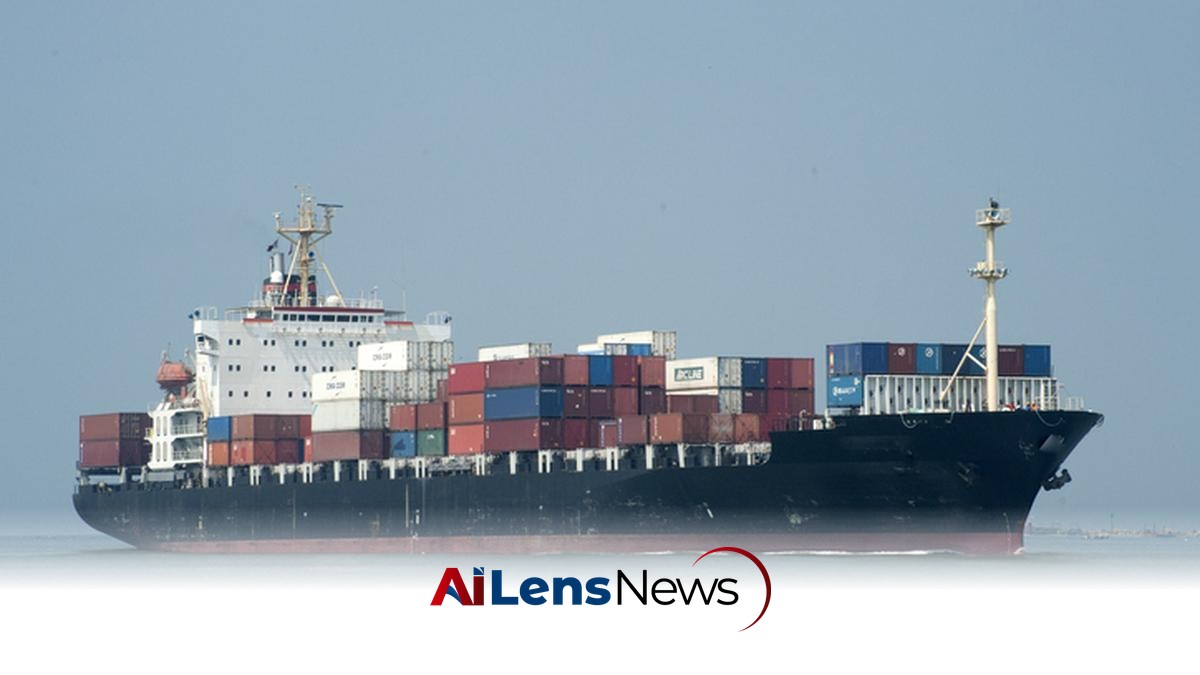


Government initiatives aim to boost India's container manufacturing and shipping capacity amid rising export challenges and global disruptions.
New Delhi, India Jul 12, 2026 ALN: In a normal year, Iran purchases nearly 4.5 million tonnes of basmati rice from India, making it one of the country's largest importers of this staple grain. However, recent geopolitical tensions have severely disrupted the shipping routes essential for this trade. “It is difficult for the ships to pass through the Strait of Hormuz now. Availability of vessels from Kandla or Mumbai to Iran is very poor,” explains Prem Garg, president of the Indian Rice Exporters Federation. The Strait of Hormuz, a narrow passage that connects the Persian Gulf with the Gulf of Oman, is a vital waterway for oil and trade shipments. Its strategic importance makes it a focal point for maritime security concerns, especially amid rising tensions in the region.
Currently, the cost of booking a 20-foot container carrying 26.5 tonnes of rice has surged to about $5,000. Garg highlights the unpredictability of vessel availability, stating, “But we never know when a vessel will be available.” This uncertainty not only affects exporters but also raises the stakes for consumers who depend on a steady supply of rice.
The ripple effects of these shipping disruptions extend to other sectors as well. R. Rajeshkumar, president of the Custom Broker and Shipping Agents Association in Coimbatore, shares a concerning example: a customer who booked a container from Kochi to Iraq for $1,500 found that the costs skyrocketed due to the scarcity of empty containers, eventually costing $50,000. Such dramatic price increases highlight the fragility of the global supply chain, particularly in times of crisis.
Coffee exporters are experiencing similar challenges. Many Indian coffee containers, which traditionally passed through the Red Sea and Suez Canal, are now being rerouted around the Cape of Good Hope due to safety concerns. Ramesh Rajah, president of the Coffee Exporters Association of India, notes that this diversion adds an additional 10 to 22 sailing days and several thousand nautical miles to the journey. Consequently, the freight cost per container has risen from approximately $1,200 before the crisis to around $3,800, while international buyers remain insistent on pre-contracted freight rates, putting further pressure on exporters.
Across various sectors, exporters are grappling with container shortages, a reduction in the number of mother vessels, and soaring freight costs. The large container ships that once frequented ports like Thoothukudi and Kochi have significantly declined since the onset of the COVID-19 pandemic. Instead, vessels capable of carrying up to 20,000 containers now predominantly dock at Nhava Sheva, which has become a more attractive option due to its lower freight costs and reduced transit times. “The freight cost from Nhava Sheva is almost 50% less compared with the ports in the south, and the time taken is also less,” explains P. Subramaniam, former Coimbatore president of the Customs Broker Association. As a result, over 40% of cargo that once moved through Thoothukudi or Kochi has shifted to Nhava Sheva, exacerbating the challenges faced by southern ports.
Infrastructure constraints have further compounded the shipping crisis. The Vallarpadam terminal, for instance, is still several years away from becoming fully operational, which limits its capacity to handle increased shipping traffic. Meanwhile, Thoothukudi will only be able to accommodate larger mother vessels after the completion of its ₹15,000 crore Outer Harbour Project. The Vizhinjam port, while strategically located, remains focused primarily on EXIM (export-import) cargo due to connectivity limitations. As freight rates continue to surge, the cost of shipping a container from Kochi to Jebel Ali has skyrocketed from $1,000-1,500 to nearly $7,000, with a sharp increase of roughly $500 in just three days. Rajeshkumar points out that Chinese exporters are able to secure containers more easily due to stronger demand, which leaves Indian exporters at a significant disadvantage as they struggle to book containers or recover empty ones stranded at major hubs like Dubai, Khor Fakkan, and Sohar.
The underlying issues are structural, according to Amitabh Kumar, former Director General of Shipping. India has faced five major shipping disruptions in the past decade, including the COVID-19 pandemic, the Suez Canal blockage, the ongoing conflict in Ukraine, Houthi attacks in the Red Sea, and now the escalating tensions around the Strait of Hormuz. Each of these disruptions has exposed vulnerabilities in India's shipping infrastructure and highlighted the need for a more resilient supply chain.
Container shipping operates on fixed schedules, which means that when routes become unsafe, ships are forced to divert, often around the Cape of Good Hope. This detour can add 10 to 12 days to voyages, further straining supply chains. Shipping lines tend to prioritize their busiest routes, particularly those connecting China with Europe and the United States, leaving routes serving India less favored. “India has lots of trade here, but these are not popular ports for container ships,” Kumar notes, referring to routes serving Africa, Iran, and Eastern Europe. Even a modest reduction in shipping capacity can lead to congestion at Indian ports, delay container turnaround times, and push freight rates even higher. Perishable exports, such as prawns, are often the first casualties in such scenarios, while agricultural and chemical exports also suffer as shipping capacity diminishes. Kumar emphasizes that India lacks the tonnage to substitute for foreign container ships when they skip Indian ports, as foreign shipping lines handle 90-95% of the country's cargo, leaving India vulnerable whenever global operators redeploy their vessels elsewhere. This situation exacerbates container shortages, as longer turnaround times further complicate logistics.
Compounding the issue is the modest level of domestic container production, which restricts options for Indian exporters. According to a Lok Sabha reply in March, India manufactured approximately 24,000 TEUs (twenty-foot equivalent units) in the fiscal year 2024, a stark contrast to China's output, which runs into several million annually. This disparity highlights the urgent need for India to bolster its domestic container manufacturing capabilities to reduce reliance on foreign imports.
In response to these challenges, the Indian government has introduced two significant initiatives aimed at reducing dependence on foreign shipping and container manufacturing. The first initiative, announced in the Union Budget for 2026-27, is a ₹10,000-crore container manufacturing scheme designed to increase domestic production tenfold. The first tangible outcome of this initiative was realized on July 3, when an India-made EXIM container, built by DCM Shriram Group, was unveiled at Dadri for Maersk, which has since placed a follow-on order for another 1,000 containers. Location plays a crucial role in this initiative; Indian-made containers typically cost around 20% more than their Chinese counterparts because Chinese containers often arrive in India already loaded with cargo, allowing transport costs to be absorbed into freight. In contrast, Indian-made containers must first be transported empty to loading points, which increases overall costs. Manufacturing containers closer to ports, such as Dadri, could help mitigate this cost disadvantage.
The challenge, as Kumar argues, is less about the manufacturing capability itself and more about closing the cost gap through supportive policies that can incentivize domestic production and streamline logistics.
The second initiative focuses on establishing a national container shipping line. In February, a Memorandum of Understanding (MoU) was signed among the Shipping Corporation of India, Container Corporation of India, and the port authorities of Jawaharlal Nehru, Tuticorin, and Chennai to create the Bharat Container Shipping Line (BCSL), India’s first national container carrier. While industry observers have welcomed this move, they caution that substantial work remains before BCSL becomes operational. This includes identifying viable trade routes, recruiting experienced personnel in liner shipping, appointing agents, acquiring vessels, and effectively managing a fleet. The successful implementation of BCSL could potentially enhance India’s shipping capabilities and lessen its dependence on foreign shipping lines.
As the global shipping landscape continues to evolve in response to geopolitical tensions, economic shifts, and environmental considerations, the Indian government’s proactive measures to address container vulnerabilities will be crucial. The implications of these initiatives extend beyond immediate economic relief; they could reshape India’s position in global trade and enhance its resilience against future disruptions. By investing in domestic manufacturing and establishing a national shipping line, India aims to secure a more stable and reliable supply chain, ultimately benefiting exporters and consumers alike.
To learn more about the latest developments in Global Economy, stay updated with our exclusive reports and analyses on AiLensNews.

