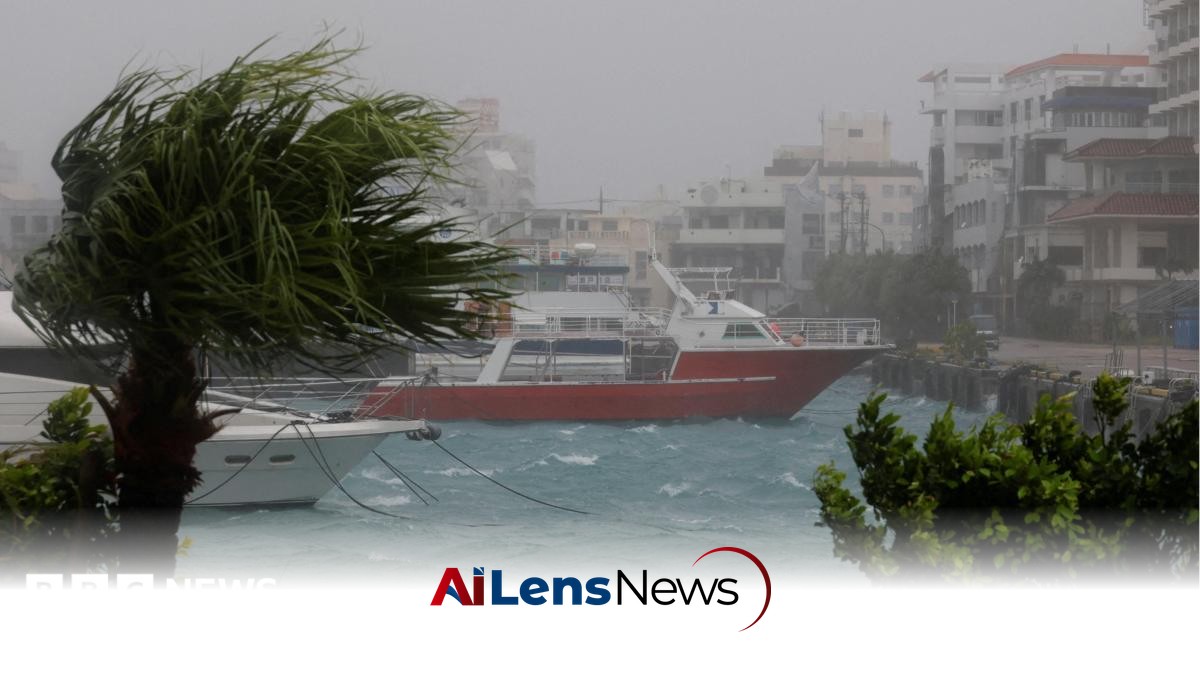


Typhoon Bavi has struck China, prompting the evacuation of nearly two million people as it approaches the city of Wenzhou.
New Delhi, India Jul 11, 2026 ALN: A powerful typhoon has made landfall in China, the second to hit the country in a week, with nearly two million people evacuated from areas in the path of the storm.
Typhoon Bavi, which spans 1,000km (620 miles) at its widest point—roughly the width of France—first came ashore in the coastal city of Taizhou on Saturday evening before making a second landfall in Wenzhou around midnight (17:00 GMT). This rapid succession of landfalls highlights the increasing frequency and intensity of tropical storms in the region, a trend that has raised concerns among meteorologists and disaster preparedness officials.
The storm initially gained strength as it traveled across the Pacific Ocean, where it was classified as a super typhoon, boasting wind speeds of up to 290km/h (180mph). It wreaked havoc on Guam and the Northern Mariana Islands last Monday, causing widespread destruction and prompting emergency responses. As Bavi moved westward, it weakened but continued to pose a significant threat as it approached the Chinese mainland.
Before making landfall in China, Typhoon Bavi brushed past Taiwan, where it brought heavy rainfall and strong winds, although the island did not experience a direct hit. Taiwanese authorities had warned residents to prepare for potential flooding, with forecasts predicting up to 1 meter (39 inches) of rainfall in some areas. This led to the evacuation of thousands of residents, particularly those living in low-lying regions susceptible to landslides and flooding.
In the Philippines, the storm's impact was felt even earlier, as landslides triggered by heavy rains resulted in the deaths of at least 17 people. The Philippines is no stranger to typhoons, often experiencing multiple storms each year, but the loss of life and property from Bavi underscores the ongoing challenges faced by the country in disaster risk management. The Philippines' geographical location makes it particularly vulnerable to tropical storms, with its archipelago structure and exposure to the Pacific Ocean exacerbating the risk.
As Typhoon Bavi made its way towards the Chinese coastline, authorities took proactive measures to mitigate the potential impact on the population. In Zhejiang province, over 1.7 million people were evacuated, with additional evacuations occurring in neighboring Fujian province. The scale of these evacuations reflects the government's commitment to safeguarding citizens from the worst-case scenarios that can arise during severe weather events. The Chinese government has a history of implementing large-scale evacuations ahead of typhoons, a strategy that has proven effective in reducing casualties.
Schools, businesses, and outdoor activities were suspended across Zhejiang, and significant disruptions to transportation were reported, including the cancellation of over 400 flights and numerous train services. The city of Wenzhou, home to approximately 10 million residents, was particularly vulnerable due to its proximity to the storm's path. The decision to evacuate and suspend activities was made in light of forecasts indicating "exceptionally heavy rains" and the risk of flooding and landslides. In urban areas, the risk of flooding is heightened due to inadequate drainage systems, which can lead to severe urban flooding even with moderate rainfall.
Despite Bavi's classification as a Category 1 typhoon, its vast rain bands contain a substantial volume of moisture, which can lead to intense rainfall over a short period. Meteorological experts emphasize that even weaker storms can cause significant damage, particularly in urban areas where drainage systems may be overwhelmed. The phenomenon of urban flooding has become increasingly common in many cities around the , and this event serves as a reminder of the need for improved urban planning and infrastructure resilience.
In addition to the immediate impacts of Typhoon Bavi, parts of southern China are still reeling from the devastation caused by Typhoon Maysak earlier in the week. Maysak resulted in at least 39 fatalities and extensive agricultural losses, particularly affecting livestock. The storm also triggered rare tornadoes in central Hubei province, further complicating recovery efforts in the aftermath of the typhoon. The dual impact of these storms within such a short timeframe poses significant challenges for disaster response teams and local governments, which must allocate resources effectively to address immediate needs while also planning for long-term recovery.
The occurrence of two major typhoons within such a short timeframe raises questions about climate patterns and the increasing frequency of extreme weather events in the region. Experts have noted that climate change may be contributing to the rising intensity of tropical storms, with warmer ocean temperatures providing more energy for storms to develop and strengthen. As a result, the need for enhanced disaster preparedness and response strategies has become more pressing than ever. Climate models indicate that regions like Southeast Asia may experience more frequent and severe weather events as global temperatures continue to rise, underscoring the importance of proactive measures.
In light of these recent events, local and national governments are urged to invest in infrastructure improvements, including better drainage systems and early warning systems, to protect communities from future storms. Public awareness campaigns can also play a crucial role in educating residents about the risks associated with typhoons and the importance of preparedness. Community engagement in disaster planning can enhance resilience and ensure that vulnerable populations are adequately supported during emergencies.
As recovery efforts continue in the wake of Typhoon Maysak and as communities brace for the impacts of Typhoon Bavi, the resilience and adaptability of the affected populations will be put to the test. The aftermath of these storms will likely prompt discussions about the need for sustainable development practices that take into account the increasing risks posed by climate change and natural disasters. Policymakers and urban planners must consider integrating climate resilience into their strategies to ensure that communities can withstand future shocks.
In conclusion, the landfall of Typhoon Bavi serves as a stark reminder of the vulnerability of coastal regions to severe weather events. As the region grapples with the challenges posed by climate change, the experiences of those affected by typhoons in China and the broader Asia-Pacific region highlight the urgent need for comprehensive disaster risk reduction strategies and international cooperation to enhance resilience against future storms. The need for collaborative efforts in research, resource allocation, and community engagement is paramount as nations work together to address the growing threat of climate-related disasters.
To learn more about the latest developments in Climate & Environment, stay updated with our exclusive reports and analyses on AiLensNews.

