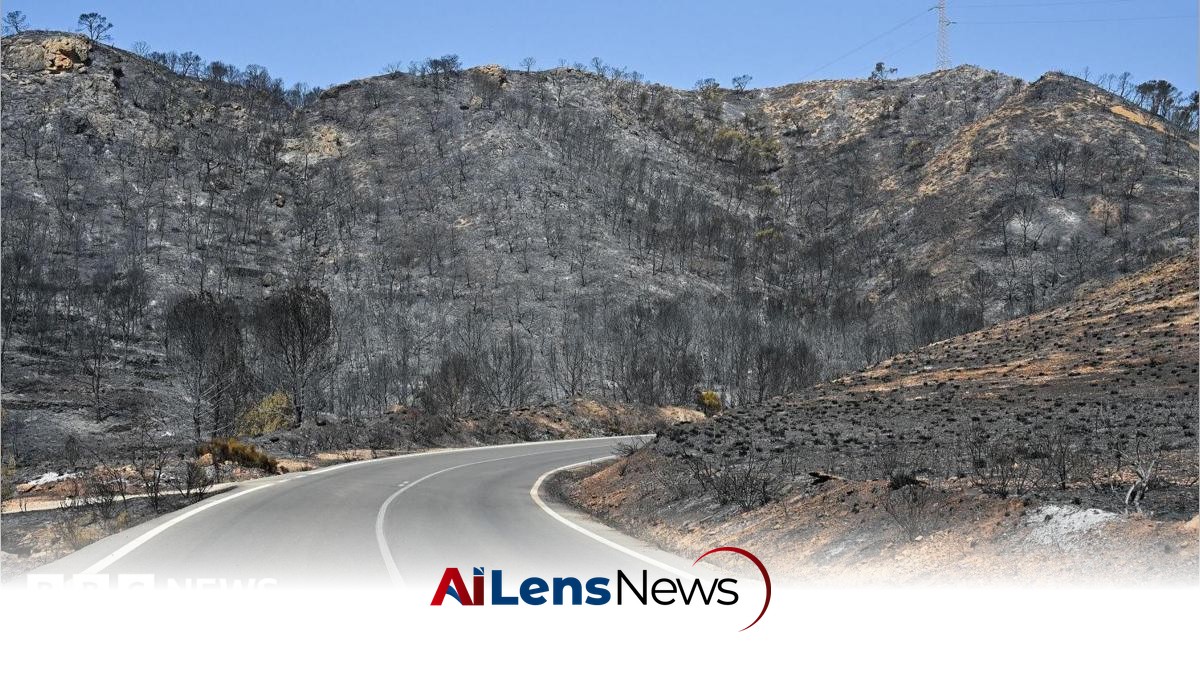


A British couple was found severely burned in a ravine after being trapped by wildfires in Almeria, Spain, which have claimed 12 lives.
New Delhi, India Jul 12, 2026 ALN: A British couple have been found down a ravine, badly burned and semi-conscious, after being caught up in the deadly wildfires that tore through Spain's Almeria province, according to local media.
The pair are thought to have been out hiking when they were caught up in the blaze, which spread rapidly through the province on Thursday. They were evacuated and taken to hospital where they are in intensive care. The wildfires in Spain have become a recurring tragedy in recent years, exacerbated by climate change and extreme weather conditions. This incident highlights the dangers faced by individuals in affected areas, especially those engaging in outdoor activities during such perilous times.
Hundreds of firefighters have been battling the fires, which have claimed the lives of 12 people, including four believed to be Britons, and burned through 6,600 hectares (16,300 acres), local authorities said. The scale of destruction is staggering, and the loss of life is a stark reminder of the potential consequences of wildfires, which have been increasing in frequency and intensity in many parts of the .
The identities of those killed have not yet been officially confirmed, but the situation has raised concerns among the expatriate community in Spain, particularly among British nationals who often visit or reside in popular areas like Almeria. The local authorities have been working hard to manage the crisis, but the emotional toll on families and communities affected by the fires is profound.
The couple were discovered by Civil Guard officers searching for survivors near the worst-hit village of Bedar in the early hours of Friday morning. This search and rescue operation underscores the commitment of emergency services in Spain, who often put themselves at great risk to save others. One of the rescuers, Sergeant Pedro Barre, said they heard distant cries for help. "As you gain more experience, something inside you tells you, 'Look again, try one more time,'" he told Spain's TVE state broadcaster. Such sentiments reflect the dedication and resilience of those involved in emergency services, who often face harrowing conditions in their line of duty.
The rescue team followed the sound and climbed down a hillside. They found the couple in critical condition, semi-conscious and with severe burns covering 40% of their bodies. "Being able to call out in the condition they were in was a titanic effort," said Rafael Zea, another of the officers involved in the operation. Their survival is a testament to both their will to live and the effectiveness of the search and rescue teams, who are often the first line of defense in disaster situations.
"We'll never forget that look of surprise and emotion on their faces," Barre added, highlighting the emotional impact of such rescues on the first responders as well. The psychological effects of witnessing such traumatic events can be significant for rescuers, who often carry the weight of their experiences long after the immediate crisis has passed.
On Sunday, Andalusia's regional government head, Juan Manuel Moreno Bonilla, said that "the fire has been contained and its perimeter secured," adding in a social media post that the overall alert had been downgraded. This development provides a glimmer of hope for residents and those affected by the fires, as it indicates that the immediate threat has been mitigated. Firefighters had made significant progress in getting the fires under control on Saturday, when calmer winds and higher air humidity prevailed. Such weather conditions can be crucial in firefighting efforts, as they can help reduce the spread of flames and allow crews to establish control over the situation.
About 600 of the nearly 1,500 people evacuated from the fire zone in Almería province were told they could return, regional emergency chief Antonio Sanz said. This return process is often complicated, as many residents are anxious about the condition of their homes and the safety of their neighborhoods. On Sunday, dozens of people gathered at a roundabout beneath the village of Bédar, hoping to be allowed back to their homes. Many said they had no idea if their properties had survived the fire, which adds to the emotional strain of the situation.
Among those waiting anxiously were Mike and Belinda Lithgoe from Cornwall, who have a holiday property nearby. They have slept since the fires in their camper van alongside their dog, Rocket. The Lithgoes' experience illustrates the uncertainty faced by many homeowners in the region, as they grapple with the aftermath of the fires and the potential loss of their property. They said they would be allowed to check on their home during a one-hour window later that afternoon, following a meeting attended by the village mayor and the emergency services. "We're waiting to see if our house is still there," said Belinda. This sentiment resonates with many who have been forced to leave their homes in the face of such disasters.
Emma Mitchell and her husband were also waiting nearby. Emma challenged an earlier statement by local authorities that some of those killed had not taken a designated evacuation route. "We've lived here for three years full time and there has never been information that you should take this road if there is a fire, never," she said. This highlights the importance of clear communication and emergency preparedness in wildfire-prone areas, as residents rely on accurate information to make critical decisions during crises.
Emma also condemned the decision not to send a text message to all phones in the area. "I think they should have done the mobile alert, as they do for earthquakes. I know they said that it was too technical and complex… but the reality is, out here in Bédar, there are very few officials." Her concerns reflect a growing demand for improved emergency response systems, especially in rural areas where resources may be limited. The ability to alert residents quickly and effectively can be a matter of life and death in situations like this.
A sustained heatwave with temperatures of around 40C (104F) has caused wildfires across Southern Europe this summer, particularly in France, Portugal, and Spain. The impact of climate change on weather patterns is increasingly evident, as regions that were once considered safe from such natural disasters are now facing unprecedented challenges. On Friday, Los Gallardos mayor Francisco Miguel Reyes told Spanish radio station Cadena SER said "it feels like a bomb has fallen" on the area. "This is the first time we've faced a fire as devastating as this." His statement underscores the severity of the situation and the need for comprehensive strategies to address the growing threat of wildfires in the region.
Forensic scientists in Madrid are using samples from the bodies of the victims and DNA samples from the families of those reported missing to try to identify the dead. The identification process has been slowed because collecting DNA samples from relatives has proved difficult, with family members traveling from other countries. This aspect of the tragedy highlights the human cost of such disasters, as families are left to navigate the grief and uncertainty that follows the loss of loved ones.
With at least 12 people dead, this is already among the deadliest wildfires in Spanish history. Climate change is driving up temperatures around the globe, and Europe is the fastest warming continent, heating up twice as fast as the global average, according to the Copernicus climate service. The implications of this trend are dire, as communities must adapt to increasingly volatile weather patterns and the associated risks of natural disasters.
Wildfires have also plagued France over the summer months. On Monday, over 10,000 people were evacuated from their homes in the foothills of the French Pyrenees. The scale of evacuations in both Spain and France reflects a growing trend across Europe, as governments grapple with the challenges posed by climate change and its impact on public safety. However, French authorities said on Saturday 32 people had been arrested on suspicion of starting the fires. This raises critical questions about accountability and the role of human actions in exacerbating natural disasters, emphasizing the need for stricter regulations and proactive measures to prevent future incidents.
To learn more about the latest developments in Regions & Countries, stay updated with our exclusive reports and analyses on AiLensNews.

