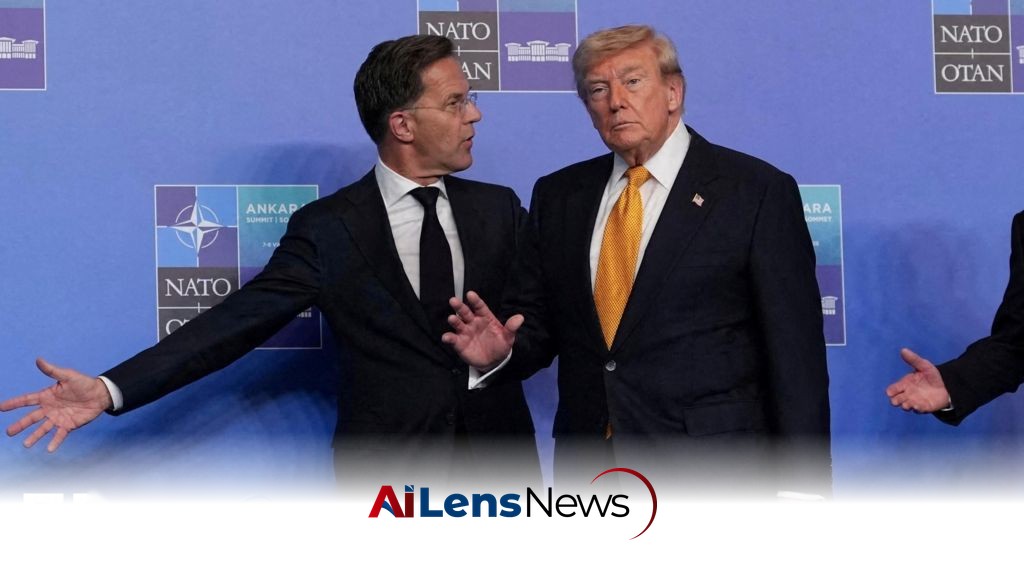


NATO Secretary General Mark Rutte claims unity among member nations, but questions arise regarding the alliance's cohesion amid ongoing criticisms from former U.S. President Donald Trump.
New Delhi, India Jul 9, 2026 ALN: NATO Secretary General Mark Rutte recently emphasized the "unity" among member nations during a press conference at the NATO summit in Turkey. However, this assertion was met with skepticism from BBC's security correspondent Frank Gardner, who questioned whether true unity exists, especially in light of former U.S. President Donald Trump's ongoing criticisms of the alliance.
The NATO summit in Turkey has become a focal point for discussions on pressing global issues, including Russia's ongoing war with Ukraine and the escalating conflict in the Middle East. These discussions are crucial as they shape the future of NATO's strategic direction and member cooperation. The summit serves as a platform for leaders to assess the current geopolitical landscape, address security concerns, and reinforce commitments to collective defense, which is a cornerstone of the NATO alliance.
The backdrop of the summit is particularly significant given the ongoing conflict in Ukraine, which has drawn NATO's attention and resources. Since the onset of the war, NATO has increased its military presence in Eastern Europe and has been actively involved in providing support to Ukraine. This situation has tested the alliance's unity and resolve, as member countries must balance their national interests with the collective goals of NATO.
In addition to military support, NATO has also engaged in extensive diplomatic efforts to rally international support for Ukraine. The alliance has worked to coordinate sanctions against Russia, aiming to diminish its economic capabilities while providing military aid to Ukraine. Such actions reflect NATO's commitment to collective defense and its role in the international security framework.
Trump's remarks, often described as "verbal grenades," have raised concerns about the stability of NATO's unity. His criticisms have not only affected the perception of NATO in the U.S. but have also reverberated across Europe, leading to questions about the alliance's effectiveness and cohesion. During his presidency, Trump frequently questioned the value of NATO, suggesting that member countries were not contributing their fair share to the alliance's budget. This rhetoric has led to uncertainty among European allies about the United States' commitment to NATO, particularly in the event of a crisis.
The implications of Trump's comments extend beyond mere rhetoric; they challenge the fundamental principle of collective defense that underpins NATO. Article 5 of the NATO treaty states that an attack on one member is an attack on all, and this assurance has historically been a deterrent against potential aggressors. However, doubts sown by influential political figures can undermine this principle, leading to hesitance among member states to fully commit to collective defense measures.
Furthermore, the political landscape in the United States is crucial for NATO's future. With the potential for shifts in U.S. foreign policy depending on electoral outcomes, European allies may find themselves in a precarious position, having to prepare for varying levels of American support. This uncertainty can lead to increased military spending among European nations as they seek to bolster their own defenses in light of the unpredictable nature of U.S. commitment to NATO.
During the summit, leaders from various NATO countries expressed their commitment to the alliance. Countries such as the United Kingdom, Germany, and France reiterated their support for NATO's collective defense strategy and emphasized the importance of solidarity among member states. However, the underlying tensions created by Trump's statements cannot be overlooked. Many leaders are aware that maintaining a united front is essential for addressing the challenges posed by adversaries like Russia.
Moreover, the summit provided an opportunity for leaders to engage in direct dialogue about their individual contributions to NATO. Some member states have increased their defense budgets in response to perceived threats, while others are still grappling with domestic pressures that may limit their ability to do so. This disparity in defense spending and military readiness can create friction within the alliance and complicate discussions about unity.
For instance, some Eastern European countries have been vocal about the need for increased military presence and support from NATO, particularly in light of Russian aggression. These nations view NATO not only as a military alliance but also as a necessary security guarantee. On the other hand, Western European nations often emphasize diplomatic solutions and may be less inclined to escalate military spending, leading to potential rifts within the alliance.
As NATO continues to navigate these complex dynamics, the emphasis on unity will be tested. The upcoming discussions and decisions made at this summit will play a significant role in determining how effectively NATO can respond to global threats while maintaining internal cohesion. The alliance faces a multifaceted landscape of challenges, including not only traditional military threats but also emerging issues such as cybersecurity, climate change, and international terrorism.
In addition to external threats, NATO must also contend with internal divisions that may arise from differing national priorities. Some member states may prioritize military spending, while others focus on diplomatic solutions. Balancing these divergent approaches will be essential for maintaining a cohesive strategy moving forward.
Furthermore, the increasing significance of non-state actors in global conflicts, as well as the rise of hybrid warfare tactics, necessitates a re-evaluation of NATO's strategic priorities. The alliance must adapt to these evolving threats while ensuring that all member states are on board with a unified approach. This will require robust dialogue and negotiation among member nations to align their strategies and expectations.
While Rutte's assertion of unity among NATO members is a hopeful sentiment, the reality is more nuanced. The influence of external factors, particularly from influential figures like Trump, poses challenges that NATO must address to ensure its long-term stability and effectiveness. The alliance's ability to adapt to changing geopolitical circumstances, reinforce its commitments to collective defense, and foster cooperation among member states will ultimately determine its future success.
In the coming months, it will be crucial for NATO to not only reaffirm its commitment to collective defense but also to engage in open dialogue about the challenges it faces. This includes addressing the concerns raised by member states regarding their contributions and responsibilities within the alliance. By fostering an environment of trust and cooperation, NATO can work towards overcoming the skepticism surrounding its unity and emerge as a stronger, more resilient alliance capable of facing the complexities of the modern geopolitical landscape.
To learn more about the latest developments in International Politics, stay updated with our exclusive reports and analyses on AiLensNews.

