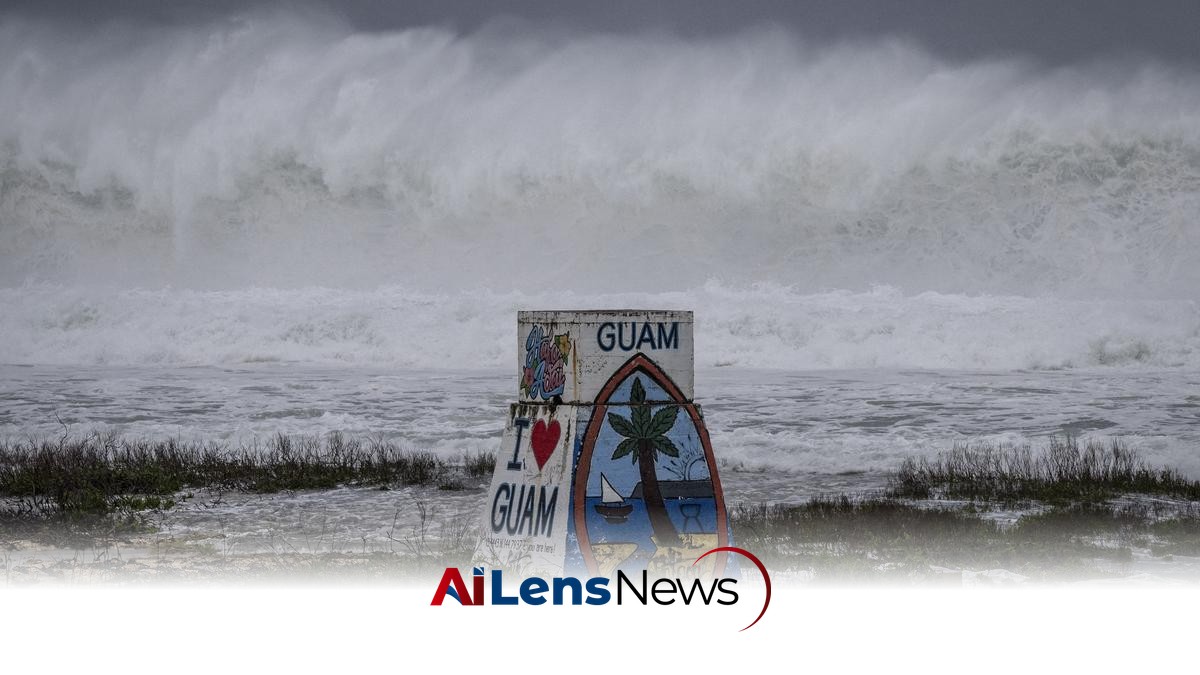


Super Typhoon Bavi, a dangerous Category-5 storm, approaches U.S. Pacific islands, threatening catastrophic damage and power outages.
Washington DC, United States Jul 6, 2026 ALN: Howling winds and lashing rains battered Guam and the Northern Marianas late on Sunday, hours before the projected arrival of a “super typhoon” with equivalent force to a category-5 hurricane over the U.S. Pacific territories. This extreme weather event, known as Super Typhoon Bavi, is part of a growing trend of increasingly severe tropical storms that have been observed in recent years, particularly in the Pacific region, raising concerns about climate change and its impact on weather patterns.
Super Typhoon Bavi was forecast to roar westwards over the area early on Monday with maximum sustained winds of up to 280 kilometres (173 miles) per hour and gusts of 333 km/h, according to the Joint Typhoon Warning Centre. Such wind speeds place Bavi in the upper echelon of tropical cyclones, capable of causing catastrophic damage to infrastructure, homes, and natural environments. The National Weather Service (NWS) called the typhoon “very dangerous”, warning of possible “catastrophic wind damage” near the eye as well as storm surges and “hazardous” surf conditions that could further complicate rescue and recovery efforts.
Already on Sunday afternoon, there were few cars on the roads in Guam or the Northern Marianas — between them home to some 210,000 people — with police driving around warning people to take care. The local authorities had initiated emergency protocols, urging residents to secure their homes and prepare for possible evacuations. The atmosphere was tense, with many residents taking precautions to safeguard their properties against the impending storm. Pinky Cubacub, 55, said as she boarded up the windows of her eatery that she had lined up early on Saturday to buy $500 worth of plywood at a lumber store. This highlights the urgency and seriousness with which locals were treating the situation, as they braced for the worst.
“I cannot afford to lose so many days. It hurts,” she expressed, reflecting the economic anxiety that accompanies such natural disasters. For many small business owners in the region, prolonged closures can mean significant financial losses. Call center employee Arabella Paulino, 48, shared her own thoughts on the storm, saying, “My girls were saying to me it’s scary. But it will be okay.” Her comments underscore a common sentiment among residents, balancing fear with a sense of resilience. “My house is concrete, so the worst that can happen is a window could blow in,” she added, illustrating the varying levels of preparedness and confidence among the population.
Japanese tourist Miku Sakurai, 25, was supposed to fly back to Tokyo with her friends, but their flight was cancelled. “We will stay in the hotel when the storm comes. I am scared,” the office worker said. This situation highlights the challenges faced by travelers during extreme weather events, as airlines often cancel flights in anticipation of dangerous conditions, leaving tourists to navigate their own safety amidst uncertainty. Around a dozen surfers, however, were making the most of the windy conditions at one beach in Guam’s Talofofo Bay, demonstrating a mix of bravado and recklessness in the face of impending danger. “There’s quite a lot of debris in the water but it’s a lot of fun,” said one of them, showcasing the diverse responses to the storm, from cautious preparation to adventurous defiance.
The Northern Marianas in the western Pacific have a population of around 40,000, and nearby Guam — a separate U.S. territory, although both are part of the Marianas archipelago — about 170,000. The close-knit communities in these islands often rely on one another during times of crisis, and local leaders have been vocal about the importance of collective action in ensuring safety. Super Typhoon Sinlaku, which hit the region in mid-April, knocked out power for tens of thousands of inhabitants, uprooted trees, overturned cars, and ripped metal roofs off buildings. This recent history of severe weather events has heightened public awareness and preparedness for storms like Bavi.
Bavi was forecast to pass nearest the small island of Rota, the southernmost part of the Northern Marianas, at around 8:00 a.m. on Monday. If Bavi tracks near or over Rota, home to around 1,500 people, most of the area “will be uninhabitable for weeks, perhaps longer. Many non-concrete, non-reinforced homes will be destroyed, with total roof failure and wall collapse,” it said. The potential for such devastation raises significant concerns about the long-term recovery and support needed for affected communities.
“Nearly all trees will be snapped or uprooted and power poles downed. Fallen trees and power poles will isolate residential areas. Power outages will last for weeks to possibly months,” the NWS warned. Such outcomes can severely disrupt daily life, affecting access to food, clean water, and medical services, which are critical in the aftermath of a disaster. “By working together and taking the necessary precautions, we can help protect our families, neighbors, and community. We pray for the safety of our people,” Rota mayor Aubry Hocog said, emphasizing the communal spirit and resilience that often emerges in the face of adversity.
The oceans experienced their hottest June on record and could set fresh highs in the months ahead, the European Union’s Copernicus Marine Service said. This alarming trend is linked to the ongoing impacts of climate change, which is causing ocean temperatures to rise and subsequently influencing weather patterns globally. Warmer oceans help tropical storms to intensify and add more moisture, which can fall as heavy rain, exacerbating flooding and landslide risks during such storms.
The Meteorological Organisation warned that El Niño, which typically occurs every two to seven years and lasts nine to 12 months, has already begun in the tropical Pacific and is likely to be strong. This natural climate phenomenon warms surface temperatures in the central and eastern equatorial Pacific Ocean, bringing wide changes in winds, pressure, and rainfall patterns. The interplay between El Niño and tropical cyclones like Bavi raises significant questions about the future of storm patterns in the Pacific, suggesting that communities may need to adapt to more frequent and severe weather events.
As Super Typhoon Bavi approaches, the residents of Guam and the Northern Marianas face not only the immediate threat of the storm but also the longer-term implications of climate change and its potential to alter the frequency and intensity of such natural disasters. The resilience of these communities will be tested as they navigate the storm and its aftermath, and the actions taken now will have lasting effects on their preparedness for future events.
To learn more about the latest developments in Climate & Environment, stay updated with our exclusive reports and analyses on AiLensNews.

