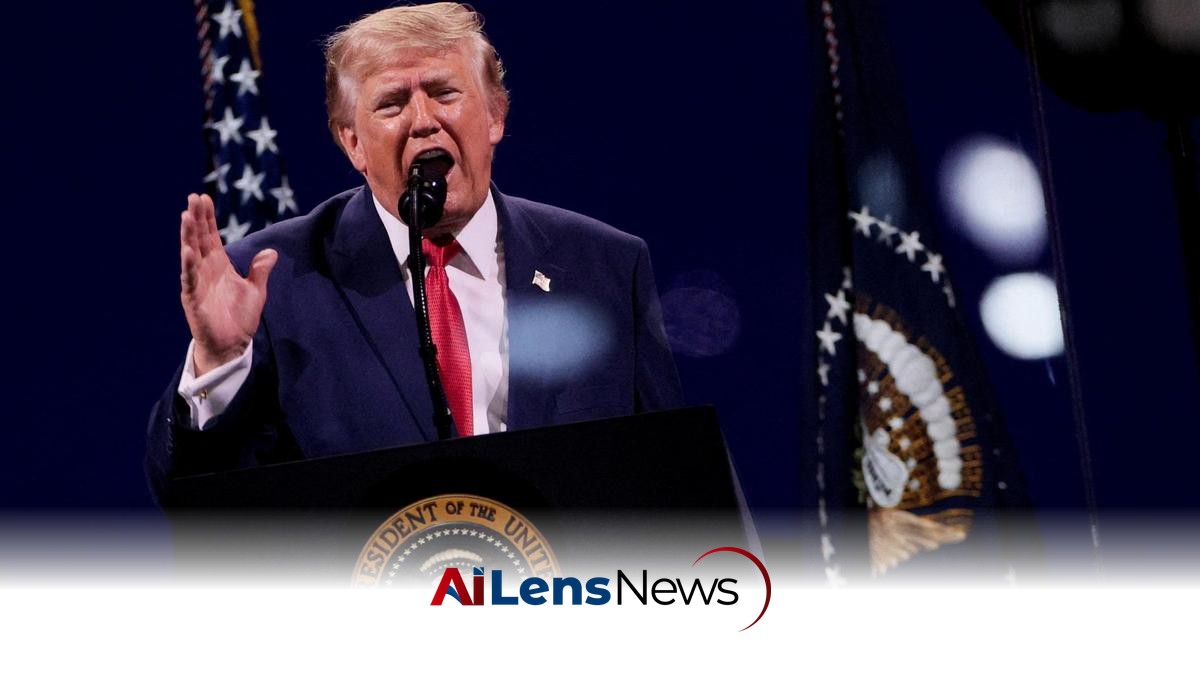


The U.S. escalates military action against Iran after President Trump vows to respond to attacks in the Strait of Hormuz, raising tensions in the region.
Washington DC, United States Jul 9, 2026 ALN: The United States has escalated its military engagement in the Middle East by launching new strikes on Iran on Wednesday, July 8, 2026. This decision follows President Donald Trump's declaration to retaliate "hard" against Iranian aggression, particularly in light of recent attacks on commercial shipping in the strategically vital Strait of Hormuz. This development marks a significant increase in tensions between the two nations, which have been fraught with conflict for decades.
President Trump, while ordering the strikes, expressed his hope that this latest flare-up would be resolved quickly, yet he did not rule out the possibility of further negotiations. This dual approach reflects a common strategy in international relations where military action is coupled with an invitation to dialogue, aiming to project strength while also leaving open avenues for peace. U.S. Central Command (CENTCOM) stated that the airstrikes were intended to degrade the capabilities of Iranian forces that threaten freedom of navigation in the Strait of Hormuz, a crucial maritime passage through which a significant portion of the 's oil and liquefied natural gas flows.
CENTCOM's announcement on social media underscored the United States' intent to hold Iran accountable for what it described as "unjustified aggression against commercial shipping." The Strait of Hormuz has long been recognized as a critical chokepoint for global energy supplies, and any disruption in this region can have far-reaching implications for global oil markets and economic stability.
Iran's state-run Mehr news agency reported explosions in several port cities, including Bandar Abbas, Konarak, and Chabahar, suggesting that the strikes had a significant impact on Iranian military infrastructure. The Iranian government has consistently asserted its right to control the Strait of Hormuz, even threatening to impose fees for passage and to target vessels that do not adhere to its designated routes. This assertion of control has raised alarm among international shipping companies and governments reliant on the safe passage of their maritime trade.
Prior to the military strikes, President Trump announced the end of the ceasefire with Iran, which had been a tenuous agreement aimed at reducing hostilities in the region. His statement prompted immediate calls for de-escalation from various international mediators, including Pakistan and Qatar, as well as the United Nations. The situation in the Strait of Hormuz has been a flashpoint in the broader context of the West Asia conflict, which saw a dramatic escalation earlier in the year when U.S.-Israeli strikes resulted in the death of Iran's supreme leader, Ali Khamenei.
Khamenei's death and the subsequent political vacuum have further complicated the already volatile situation in the region. His burial was scheduled for Thursday, July 9, 2026, in his hometown of Mashhad, an event that could potentially incite further unrest and retaliatory actions from Iranian hardliners. The power dynamics within Iran are uncertain, and there are fears that factions within the Iranian government may respond aggressively to perceived threats from the U.S.
In the days leading up to the strikes, Iranian military forces reportedly targeted at least three commercial vessels, prompting the U.S. to launch extensive retaliatory strikes against Iranian targets on Tuesday, July 7, 2026. The rapid succession of attacks from both sides has heightened fears of a broader conflict, with President Trump stating at a NATO summit in Ankara, "We're gonna hit 'em hard tonight. They violate the agreement every day." His comments reflect a firm stance against Iranian actions, yet he also suggested that any military engagement would be resolved quickly.
Following Trump's announcement that the ceasefire was "over," oil prices surged by eight percent, demonstrating the immediate economic implications of military actions in this region. The global market closely monitors developments in the Strait of Hormuz due to its significance as a conduit for oil transportation. Any disruptions not only affect oil prices but can also have cascading effects on economies wide.
In light of the escalating tensions, UN Secretary-General Antonio Guterres called for all parties to exercise "maximum restraint." This call for de-escalation was echoed by Pakistan, which has served as a key mediator in the U.S.-Iran discussions. The international community is increasingly concerned about the potential for a full-scale conflict, which could destabilize the region and lead to significant loss of life.
On July 8, 2026, Iranian Foreign Minister Abbas Araghchi spoke with Qatar's Prime Minister, emphasizing the importance of diplomatic solutions to the ongoing regional issues. The involvement of mediators like Qatar and Pakistan is crucial, as they may facilitate dialogue between the U.S. and Iran to prevent further military escalation.
Both the United States and Iran reported significant military engagements in the initial wave of attacks. Iranian state media indicated that explosions occurred in the coastal city of Bushehr, which is home to Iran's only civilian nuclear power plant and is strategically located near Kharg Island, the main oil terminal for Iranian crude exports. The presence of critical infrastructure in these areas raises the stakes for both sides, as attacks could have severe implications for energy security and nuclear non-proliferation efforts.
Reports from Iranian state television suggested that U.S. strikes resulted in the deaths of eight Iranian military personnel. CENTCOM confirmed that its forces targeted over 80 sites, including Iranian air-defense systems, coastal radar installations, and a significant number of small boats operated by the Islamic Revolutionary Guard Corps (IRGC). The IRGC has been a key player in Iran's military strategy and its operations in the Gulf region.
Tehran's response was immediate, with the Revolutionary Guards claiming to have struck dozens of U.S. military facilities in Kuwait and Bahrain. Kuwait reported intercepting two ballistic missiles and 13 drones, indicating that Iranian military capabilities remain robust despite the U.S. strikes. The Iranian army also claimed to have attacked U.S. forces stationed at Sheikh Isa air base in Bahrain. Fortunately, U.S. military officials reported that the latest Iranian attacks did not result in any American casualties or significant damage to facilities, suggesting that defensive measures were effective.
Nawal Saad, a civil servant in Bahrain, expressed her concerns about the escalating conflict, stating, "the spectre of war is looming once more," highlighting the anxiety and fear that such military actions instill in the local population. The psychological impact of military conflict extends beyond the battlefield, affecting civilians who live in constant uncertainty.
The ongoing maritime tensions in the region are further complicated by the involvement of neighboring countries. Oman, which lies opposite the Strait of Hormuz from Iran, condemned the targeting of Bahrain and Kuwait, as well as the strikes on ships, without directly attributing blame to Iran. Oman has maintained a neutral stance throughout the conflict, but its position is increasingly being tested as discussions with Tehran regarding the administration of the Strait continue.
Washington's insistence on free passage for ships contrasts sharply with Iran's demands for the imposition of fees and its refusal to allow vessels to navigate through Omani waters. The maritime traffic in the region had tentatively resumed following a previous agreement between Washington and Tehran to end hostilities, but the recent escalation has thrown that arrangement into jeopardy.
As of now, nearly 6,000 seafarers remain stranded in the region, according to International Maritime Organization chief Arsenio Dominguez. The plight of these seafarers underscores the human cost of geopolitical tensions, as they are caught in the crossfire of international disputes. The situation in the Strait of Hormuz continues to evolve, and the potential for further military engagement remains high, making it imperative for all parties involved to seek diplomatic solutions to prevent escalation into a broader conflict.
To learn more about the latest developments in Wars & Conflicts, stay updated with our exclusive reports and analyses on AiLensNews.

