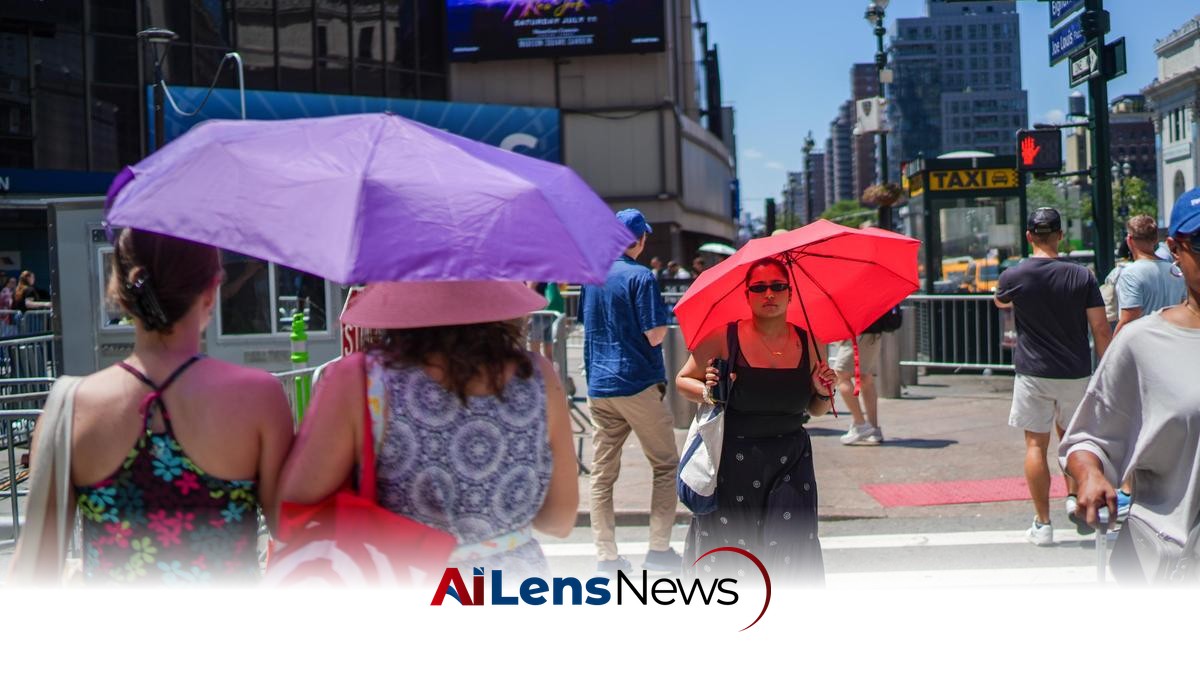


A dangerous heat wave disrupts July 4th celebrations across the U.S., affecting events, Cup matches, and power grids.
Washington DC, United States Jul 4, 2026 ALN: A punishing heat wave threatened America's July 4 celebrations, Cup matches, and power grids as near-record temperatures scorched the eastern United States on Friday, July 3, 2026. This extreme weather event has raised concerns about public safety, infrastructure resilience, and the implications of climate change on future celebrations and events.
Around 160 million Americans were under either major or extreme heat warnings as the country prepared to mark the 250th anniversary of its independence, according to the National Weather Service. Such widespread heat warnings reflect a growing trend of more frequent and severe heat waves across the United States, a phenomenon that scientists attribute to climate change. The National Oceanic and Atmospheric Administration (NOAA) has reported that the average temperature in the contiguous United States has risen significantly over the past century, with heat waves becoming more intense and longer-lasting.
Celebrations on the National Mall — the vast lawn stretching from Congress to the Washington Monument — were partially postponed in the early afternoon on Friday due to the heat. The National Mall is often the focal point for Independence Day celebrations, featuring concerts, fireworks, and a parade that draws large crowds. However, the extreme weather conditions prompted officials to prioritize safety, leading to the decision to postpone some festivities.
A young woman apparently suffered from heat exhaustion and was evacuated by paramedics from the Great American State Fair, being held on the Mall. "It's like the 30th person," said an event staffer. "They might have to shut this [event] down." Less than 90 minutes later, organizers did just that. This incident underscores the potential health risks associated with extreme heat, particularly for vulnerable populations such as the elderly, young children, and those with preexisting health conditions.
The annual Independence Day Parade in Washington, set for Saturday morning, was also cancelled "due to extreme heat," organizers said. This cancellation marks a significant alteration to a long-standing tradition that has been celebrated for generations. The Independence Day Parade is not only an opportunity for communities to come together but also serves as a historical reminder of the nation's founding principles and values.
In New York City, the heat index — the apparent temperature when humidity is factored in — stood at 105°F (41°C) in mid-afternoon, shy of the 115°F that forecasters had predicted. The heat index is a crucial metric for understanding how temperature and humidity combine to affect human comfort and health. High humidity can exacerbate the effects of heat, making it harder for the body to cool itself through perspiration.
Still, the brutal heat prompted a massive governmental response, with cooling centers opening across the city and public swimming pools extending hours of operation. Local authorities in several cities activated emergency plans to provide relief to residents, including setting up air-conditioned shelters and distributing water to those in need. These measures are vital in mitigating the heat's impact, especially for those who lack access to air conditioning or adequate housing.
Across the country, "numerous daily temperature records are expected today and Independence Day, with some consecutive-day, monthly, and all-time records possible," the National Weather Service stated. Such records highlight the growing frequency of extreme weather events linked to climate change, raising concerns about the long-term implications for public health, infrastructure, and emergency preparedness.
Early on Friday, Hang Dang, a 76-year-old retiree, said she was not letting extreme temperatures keep her from attending July 4th celebrations in Washington. "I came to the U.S. in 1975 from Vietnam and I was here for the bicentennial," Ms. Dang told reporters, noting she drove 12 hours from Florida to attend festivities. Her determination to participate in the 250th anniversary celebrations reflects the significance of this milestone for many Americans, who view Independence Day as a cherished opportunity to celebrate national identity and heritage.
"I said I've got to get back for the 250th because I don't think I'll make it to the 300th!" she joked as a Marine Corps Osprey aircraft hovered nearby. This light-hearted sentiment contrasts sharply with the serious health risks posed by the extreme heat, highlighting the tension between cultural traditions and public safety.
Around midday, lines to enter the state fair appeared to be more than 400 ft (120 m) long as temperatures climbed towards a forecast high of 102°F. Inside the festival, attendees sheltered in the short midday shadows cast by the temporary buildings set up for the event. The state fair typically features a variety of attractions, including rides, games, and food stalls, drawing large crowds eager to celebrate the holiday.
Standing outside one pavilion, a woman repeatedly shouted, "Homeland Security, here! Spin the wheel, win a prize! Full blast A/C in there!" as she pointed to the door. This scene illustrates the lengths to which event organizers went to provide some relief from the heat, emphasizing the importance of access to cooling spaces during extreme weather events.
Around an hour later, a voice over the public address system rang out: "Attention fair-goers, the event has been postponed. We will re-open at 5 p.m. Please proceed to the nearest exit.” The decision to postpone the event reflects a growing recognition of the dangers posed by extreme heat, as well as the need for event organizers to prioritize the safety of attendees.
In Miami — a city that is no stranger to heat — Argentina and Cape Verde faced off in a stadium that has a partial roof canopy but no air conditioning. The forecast heat index for the 6 p.m. kickoff was 100°F. The decision to hold outdoor sporting events during extreme heat raises questions about athlete safety and performance, as well as the potential for heat-related illnesses among players and spectators alike.
On Saturday, July 4, 2026, France and Paraguay will clash in Philadelphia, where the heat index could reach 105°F. The extreme conditions have prompted discussions within the sports community about the need for revised guidelines and protocols for outdoor events during heat waves, particularly as global temperatures continue to rise.
Due to the heat, FIFA has introduced a mandatory "hydration break" in each half of every game at this Cup, although it was not clear whether that would be adequate for matches taking place outdoors during the heat wave. These measures are intended to protect players and ensure that they can perform safely, but the effectiveness of such interventions in extreme conditions remains a topic of debate.
Preliminary data showed the daily heat record in the U.S. capital was likely broken when the nearby airport reached 102°F, surpassing the previous July 3 record from 1966 when the mercury reached 101°F. The intense heat and related air conditioner usage was stressing electricity grids across the country. As temperatures rise, the demand for electricity typically increases, particularly during peak hours when air conditioning usage is highest. This surge in demand poses significant challenges for utility providers, who must balance reliability with the need to prevent outages.
New York's utility provider, Con Edison, said its crews restored electricity to some 60,000 residents after heatwave-driven outages. Power outages during extreme heat events can have serious consequences, particularly for vulnerable populations who may rely on air conditioning for health and safety. The restoration of power is critical not only for comfort but also for the preservation of food and medicine that may be compromised during outages.
More than 22,000 people were without power around 4:30 p.m. on Friday across New York City and some suburbs. The widespread outages highlight the vulnerabilities of the electrical grid, particularly in the face of increasingly severe weather conditions. Utility companies are under pressure to invest in infrastructure upgrades and enhancements to ensure that grids can withstand the growing frequency of extreme weather events.
PJM, the company that coordinates multiple grids on the East Coast and parts of the Midwest serving 67 million customers, said data centers were prepared to switch to emergency backup power to relieve grids, among other actions. While that call was not made, the company stated it was an option on the table for Friday. The coordination between utility companies and emergency management agencies is critical during heat waves, as they work to ensure that power remains available while protecting the safety and well-being of residents.
The implications of this extreme heat wave extend beyond the immediate disruptions to celebrations and events. As climate change continues to influence weather patterns, communities across the United States may need to adapt their planning and preparedness strategies for future Independence Day celebrations and other large gatherings. This includes considering alternative dates or venues, enhancing cooling infrastructure, and implementing public health campaigns to educate residents about the risks associated with extreme heat. The challenges posed by extreme weather events are likely to increase in frequency and intensity, necessitating a proactive approach to safeguarding public health and safety in the years to come.
To learn more about the latest developments in Culture & Society, stay updated with our exclusive reports and analyses on AiLensNews.

