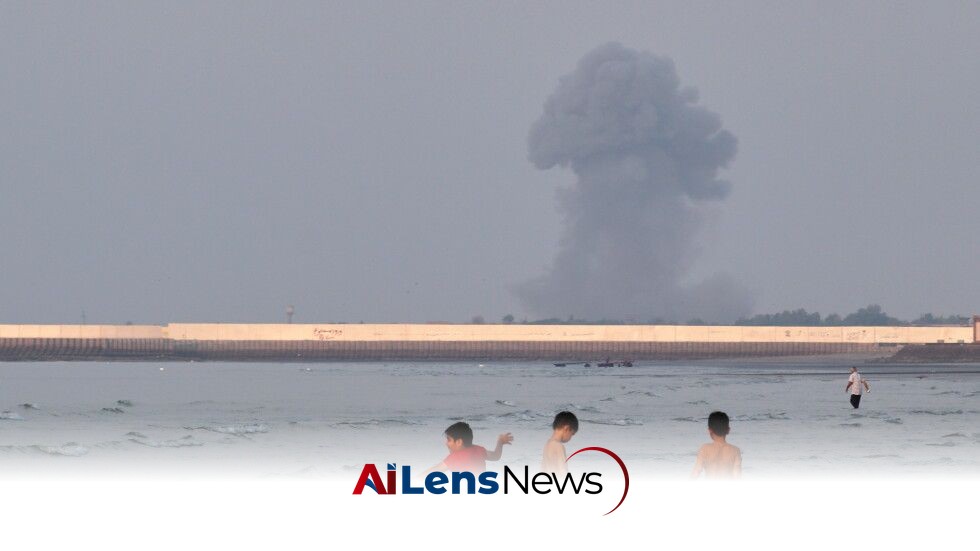


Following a series of military exchanges, both the US and Iran assert their dominance over the strategic Strait of Hormuz, heightening regional tensions.
Washington DC, United States Jul 13, 2026 ALN: The ongoing conflict between the United States and Iran has escalated dramatically, with both nations claiming control over the strategically vital Strait of Hormuz. This assertion comes in the wake of intense military exchanges that have unfolded over the weekend, further complicating an already volatile situation in the Middle East.
The Strait of Hormuz, a narrow passage that connects the Persian Gulf to the Arabian Sea, is a critical chokepoint for global oil shipments. Approximately one-fifth of the world's oil supply passes through this narrow waterway, making it a focal point for geopolitical tensions. The strait is not only vital for oil exports from countries such as Saudi Arabia, Iraq, and the United Arab Emirates but also for the import of goods and energy to Iran, which has historically relied on this route for its economy.
The tensions between the US and Iran can be traced back to several key factors, including the US's withdrawal from the Joint Comprehensive Plan of Action (JCPOA) in 2018, which was an agreement aimed at curbing Iran's nuclear program. Following this withdrawal, the US reinstated severe economic sanctions against Iran, which have crippled its economy and led to increased hostility. In retaliation, Iran has gradually reduced its compliance with the nuclear deal, further escalating the situation.
In recent months, the US has ramped up its military presence in the region, citing threats from Iranian forces. This includes the deployment of aircraft carriers and additional naval vessels to the Persian Gulf. Iran, on the other hand, has accused the US of aggressive posturing and interference in its maritime activities. The Iranian Revolutionary Guard Corps (IRGC) has been particularly vocal, stating that they will not allow foreign military vessels to operate freely in what they consider their territorial waters.
The latest round of exchanges included missile strikes and drone operations, with both sides reporting damage to naval assets. The US military has stated that its recent strikes were aimed at Iranian military installations, asserting that Tehran does not have control over the Strait. These military actions are part of a broader strategy by the US to deter Iranian aggression and ensure the free flow of commerce through the strait.
Conversely, Iranian officials have claimed that their forces have successfully repelled US attempts to assert dominance in the region, emphasizing their readiness to defend their territorial waters. Reports indicate that Iranian naval forces have engaged in maneuvers designed to demonstrate their operational capabilities, including the use of fast attack boats and missile systems.
Additionally, both nations have engaged in cyber warfare, with reports suggesting that Iranian hackers have targeted US military and infrastructure systems. The complexity of these exchanges has raised concerns among military analysts about the potential for miscommunication and miscalculation, which could lead to an unintended escalation of hostilities.
The international community has expressed concern over the escalating tensions. Global leaders are calling for restraint and dialogue to prevent further military confrontation. The United Nations Secretary-General has urged both nations to engage in diplomatic discussions to resolve their differences peacefully. The potential for conflict in the Strait of Hormuz has implications not only for the immediate region but also for global security, as any disruption could have far-reaching economic consequences.
Moreover, energy markets are reacting to the heightened tensions, with oil prices experiencing fluctuations as traders assess the implications of potential disruptions in the Strait of Hormuz. Analysts have noted that even rumors of conflict can lead to significant increases in oil prices, reflecting the market's sensitivity to geopolitical risks. Countries that depend heavily on oil imports, particularly in Europe and Asia, are closely monitoring the situation, as sustained high oil prices could impact their economies.
In addition to economic concerns, there are broader implications for global security alliances. The US has long-standing alliances with Gulf states, and any conflict involving Iran could draw in other regional players, potentially leading to a wider confrontation. Conversely, Iran has sought to strengthen its ties with non-Western countries, including Russia and China, which could complicate the geopolitical landscape further.
As both the US and Iran continue to assert their positions, the situation remains precarious. Analysts warn that any miscalculation could lead to a broader conflict, impacting not only regional stability but also global economic conditions. The potential for an armed confrontation in the Strait of Hormuz raises questions about the effectiveness of current diplomatic efforts and the international community's role in mediating the conflict.
The Strait of Hormuz has historically been a flashpoint for tensions, with previous incidents of naval confrontations and threats to shipping lanes. The strategic significance of the strait cannot be overstated; it serves as a vital artery for the global economy, particularly for energy supplies. Disruptions in this region could lead to significant spikes in oil prices, affecting economies worldwide, particularly those heavily reliant on imported oil.
In conclusion, the claims of control over the Strait of Hormuz by both nations underscore the complexities of the ongoing conflict. The need for diplomatic engagement has never been more critical as the world watches closely. As the situation develops, it will be essential for both parties to consider the potential consequences of continued military escalation and to explore avenues for dialogue that could lead to a de-escalation of tensions. The Strait of Hormuz remains a litmus test for international relations in the region, and its stability is vital for the security and economic well-being of many nations around the world.
To learn more about the latest developments in Regions & Countries, stay updated with our exclusive reports and analyses on AiLensNews.

