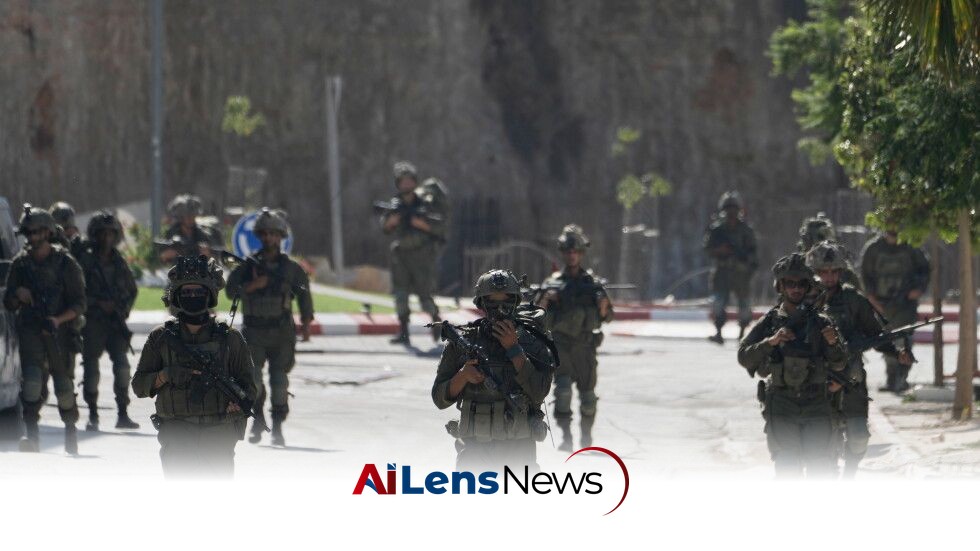


The US government has sharply criticized Israeli settlers for their siege of Palestinian homes in the West Bank, marking a significant rebuke amid escalating violence in the region.
Washington DC, United States Aug 14, 2026 ALN: The ongoing violence in the West Bank has drawn a strong response from the United States, particularly regarding the recent siege of Palestinian homes by Israeli settlers. This incident, which has garnered international attention, highlights the increasing tensions in a region already fraught with conflict. The dynamics at play are deeply rooted in a complex history of territorial disputes, national identity, and the quest for statehood, making the current situation a focal point for both regional and global politics.
Israeli settlers have besieged three homes in the occupied West Bank, including one owned by a Palestinian-American. This standoff in the town of Qusra has persisted for several days, contributing to a wave of settler violence that has been escalating in recent months. The homes targeted are situated in an area that Israel seized during the 1967 Mideast war, which is considered vital for the establishment of a future Palestinian state. The Israeli government’s policy of supporting settlement expansion in the West Bank has been a contentious issue, as these settlements are widely regarded as illegal under international law. This perspective is rooted in various United Nations resolutions and the Fourth Geneva Convention, which prohibits an occupying power from transferring its own civilian population into the territory it occupies.
The siege itself has been marked by confrontations between settlers and Palestinian residents, leading to heightened tensions within the community. Reports indicate that settlers have restricted access to the homes, creating an atmosphere of fear and uncertainty among the Palestinian families affected. The situation in Qusra is not an isolated incident; rather, it is part of a broader pattern of violence and intimidation that Palestinian communities face as a result of the ongoing expansion of Israeli settlements. Such actions not only threaten the immediate safety of those living in the area but also contribute to a pervasive sense of insecurity that affects Palestinians across the West Bank.
In a rare move, the US government has issued a sharp rebuke of the actions taken by the Israeli settlers. The remarks made by officials reflect a growing concern within the Trump administration regarding the implications of such violence on peace efforts in the region. The US has historically supported Israel, but this incident has prompted a reevaluation of its stance amidst rising tensions. The Biden administration, which has emphasized the importance of a two-state solution, may view these developments as detrimental to the prospects for peace and stability.
The US's condemnation of the siege is significant, as it marks a departure from previous administrations that have often been reluctant to criticize Israeli actions in the West Bank. This shift may indicate a broader recognition of the need for accountability and dialogue in the Israeli-Palestinian conflict. The historical context of US-Israel relations is complex, characterized by a strong military and economic alliance. However, as violence escalates, the US faces increasing pressure from various stakeholders, including human rights organizations and international allies, to take a more balanced approach in addressing the grievances of both Israelis and Palestinians.
The siege and the accompanying violence threaten to derail ongoing peace negotiations and exacerbate the humanitarian situation for Palestinians living under occupation. The international community is closely monitoring the situation, with calls for both sides to exercise restraint and engage in dialogue. The United Nations and various non-governmental organizations have expressed concern over the deteriorating conditions in the West Bank, emphasizing the urgent need for a renewed commitment to peace talks.
Moreover, the siege has implications beyond the immediate conflict; it affects regional stability and international relations. The ongoing violence can provoke reactions from neighboring countries and influence public opinion in the Arab world, potentially leading to increased tensions and unrest. The Arab League and other regional bodies may feel compelled to respond to the situation, which could further complicate diplomatic efforts aimed at resolving the Israeli-Palestinian conflict.
The humanitarian implications of the siege are also profound. Palestinian communities in the West Bank are already facing significant challenges, including restrictions on movement, access to resources, and economic opportunities. The siege exacerbates these issues, leading to heightened fears of displacement and loss of livelihood. Humanitarian organizations operating in the region are tasked with addressing these needs, but their efforts are often hampered by the ongoing violence and instability.
Understanding the current situation requires a look at the historical context of the Israeli-Palestinian conflict. The roots of this conflict can be traced back to the early 20th century, with the rise of nationalist movements among both Jews and Arabs in the region. The establishment of the State of Israel in 1948, following the end of British mandate in Palestine, led to the first Arab-Israeli war and the displacement of hundreds of thousands of Palestinians—a tragedy known as the Nakba, or "catastrophe" in Arabic.
Since then, several wars and uprisings, known as Intifadas, have occurred, and the Israeli occupation of the West Bank and Gaza Strip has been a central issue. The Oslo Accords in the 1990s offered a glimmer of hope for peace but ultimately failed to resolve the core issues, including borders, the status of Jerusalem, and the right of return for Palestinian refugees. The expansion of Israeli settlements in the West Bank has further complicated the situation, as these settlements are viewed by Palestinians and much of the international community as an obstacle to peace.
The siege of Palestinian homes by Israeli settlers is a stark reminder of the fragility of peace in the region. As violence continues to escalate, the role of international actors, particularly the United States, will be crucial in seeking a resolution to this long-standing conflict. The path to peace is fraught with challenges, requiring a commitment from both sides to engage in meaningful dialogue and address the underlying issues that fuel the conflict.
In the coming weeks and months, it will be essential for the international community to remain vigilant and proactive in advocating for a peaceful resolution. The situation in Qusra serves as a microcosm of the broader Israeli-Palestinian conflict, highlighting the urgent need for a comprehensive approach that prioritizes human rights, security, and the aspirations of both peoples for self-determination. The hope for a sustainable peace hinges on the ability of leaders to transcend historical grievances and work towards a future where both Israelis and Palestinians can coexist peacefully.
To learn more about the latest developments in Culture & Society, stay updated with our exclusive reports and analyses on AiLensNews.

