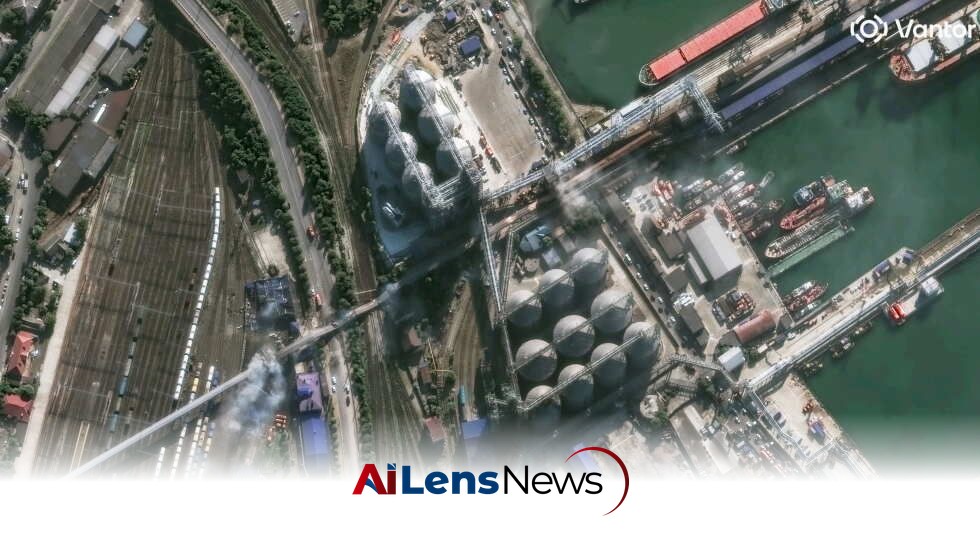


Ukrainian forces have successfully struck the Gazprom Neftekhim Salavat oil refining complex in Bashkortostan, igniting a substantial fire at the facility.
Washington DC, United States Aug 14, 2026 ALN: In a significant escalation of the ongoing conflict, Ukrainian drones have targeted the Gazprom Neftekhim Salavat oil refining and petrochemical complex located in Russia’s republic of Bashkortostan. The attack, confirmed by Ukraine’s General Staff, has resulted in a major fire at the facility, marking a bold move deep within Russian territory. This incident is indicative of Ukraine's evolving military tactics as the conflict, which began in 2014 with the annexation of Crimea, continues to escalate.
The strike on the refinery appears to be part of Ukraine's broader strategy to disrupt Russian supply chains and infrastructure. Eyewitness reports indicate that flames and smoke were visible from a considerable distance, highlighting the scale of the damage inflicted. The Gazprom Neftekhim Salavat complex is not only a major producer of oil and petrochemicals but also plays a crucial role in the regional economy, making the attack particularly impactful. The use of drones in this operation reflects a shift towards more technologically advanced warfare, allowing Ukraine to strike targets with precision while minimizing the risk to its personnel.
This incident has drawn varied reactions internationally, with some viewing it as a necessary step in Ukraine's defense against Russian aggression, while others express concern over the potential for escalation. Supporters of Ukraine argue that such actions are vital for undermining Russia's military capabilities and economic resources, thereby weakening its ability to sustain the conflict. Conversely, critics warn that attacks on Russian territory could provoke a harsher response from the Kremlin, potentially leading to an escalation in military operations and further civilian casualties.
The attack underscores the ongoing volatility in the region and the lengths to which Ukraine is willing to go to assert its sovereignty. It also raises questions about the effectiveness of Russia's air defenses and its ability to protect critical infrastructure from such drone strikes. The implications of this attack extend beyond immediate military concerns; they also touch on broader geopolitical dynamics, as nations around the world assess their positions in relation to the conflict.
The Gazprom Neftekhim Salavat complex is a crucial part of Russia's oil and gas industry, and its disruption could have significant implications for fuel supply and economic stability in the region. The facility is responsible for producing a variety of petrochemical products that are essential not only for domestic consumption but also for export. Disruptions to the operations at this facility could lead to shortages and increased prices for fuel and petrochemical products, impacting both the Russian economy and international markets.
As the conflict continues, both sides are likely to ramp up their military operations, leading to further instability. Ukraine has been increasingly employing drone technology to target Russian military assets and infrastructure, reflecting a shift in the nature of warfare in the region. The use of drones allows for greater operational flexibility and the ability to strike high-value targets at a distance, which is particularly advantageous for Ukraine given its limited resources compared to the larger Russian military.
As the situation evolves, analysts will be closely monitoring the responses from the Russian government and military. The potential for retaliatory strikes against Ukrainian infrastructure remains high, and the international community is urged to remain vigilant. Russia may respond with increased military activity in Ukraine, including airstrikes or ground operations aimed at reclaiming lost territory or neutralizing perceived threats.
This incident serves as a stark reminder of the ongoing conflict and its far-reaching consequences, not only for Ukraine and Russia but for global geopolitical dynamics as well. The international community has been divided in its response to the conflict, with some nations providing military and financial support to Ukraine, while others continue to engage with Russia diplomatically. The attack on the Gazprom Neftekhim Salavat complex could influence the calculus of these nations, prompting them to reassess their strategies and positions regarding the conflict.
Moreover, the attack may have implications for energy markets globally. As Russia is a major player in the global oil and gas industry, disruptions to its production capabilities can lead to fluctuations in oil prices, affecting economies worldwide. Analysts will be watching closely to see how this incident impacts energy supply chains and market stability.
In conclusion, the targeting of the Gazprom Neftekhim Salavat oil refining and petrochemical complex by Ukrainian drones represents a significant development in the ongoing conflict between Ukraine and Russia. It highlights the increasing use of advanced military technology in modern warfare and the potential for escalation in the region. As both sides prepare for possible retaliatory actions, the international community must navigate the complexities of the situation with caution, recognizing the broader implications for regional and global security.
The conflict between Ukraine and Russia has its roots in a complex history that includes cultural, political, and economic factors. The annexation of Crimea by Russia in 2014 marked a turning point, leading to widespread condemnation from the international community and the imposition of sanctions against Russia. The ongoing conflict in Eastern Ukraine, particularly in the Donetsk and Luhansk regions, has resulted in thousands of casualties and significant displacement of civilians.
In recent years, Ukraine has sought to strengthen its ties with Western nations, including the European Union and NATO, in a bid to bolster its defense capabilities against Russian aggression. This shift has been met with resistance from Russia, which views NATO's eastward expansion as a direct threat to its national security. The geopolitical implications of this conflict are profound, as they involve not just the two nations but also the interests of global powers, including the United States and the European Union.
The use of drones in this recent attack on the Gazprom Neftekhim Salavat complex reflects a broader trend in modern warfare where technology plays an increasingly critical role. Unmanned aerial vehicles (UAVs) have become a game-changer in military operations, allowing for surveillance, reconnaissance, and precision strikes without risking human lives. This trend has been observed in various conflicts around the world, where both state and non-state actors have adopted drone technology to enhance their military capabilities.
For Ukraine, the ability to deploy drones effectively has provided a strategic advantage, enabling it to target key infrastructure and military assets within Russia. As the conflict progresses, it is likely that both sides will continue to invest in and develop their drone capabilities, leading to an arms race in unmanned systems.
The international community's response to the conflict has been multifaceted, with various nations taking different stances based on their geopolitical interests. Countries in the West, particularly the United States and members of the European Union, have provided Ukraine with military aid, training, and financial support in its fight against Russian aggression. This support has been crucial for Ukraine in bolstering its defense capabilities and sustaining its military operations.
On the other hand, nations that maintain close ties with Russia, such as China and certain countries in the Middle East, have been more reserved in their responses, often calling for dialogue and diplomatic solutions. The divergent reactions underscore the complexity of the geopolitical landscape surrounding the conflict, as countries navigate their interests while responding to the evolving situation.
In summary, the recent drone strike on the Gazprom Neftekhim Salavat oil refining and petrochemical complex signifies a pivotal moment in the ongoing conflict between Ukraine and Russia. As both sides prepare for potential escalation, the international community must remain vigilant in monitoring developments and assessing their implications for regional and global stability. The use of advanced military technology, particularly drones, is reshaping the nature of warfare and underscores the need for a nuanced understanding of the conflict's broader context. The future remains uncertain, but the stakes are high for both nations and the global community at large.
To learn more about the latest developments in Culture & Society, stay updated with our exclusive reports and analyses on AiLensNews.

