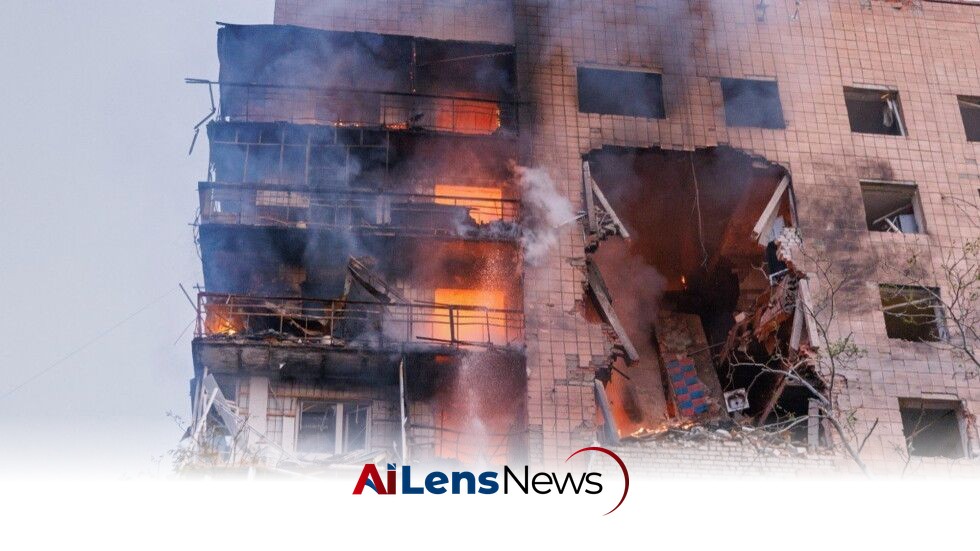


In a significant escalation, Ukraine has launched over 400 drones towards Moscow, coinciding with protests against President Zelenskyy's government following recent Russian airstrikes.
Washington DC, United States Jul 21, 2026 ALN: In a dramatic escalation of the ongoing conflict, Ukraine has launched over 400 drones targeting Moscow, as reported by the city's mayor. This attack comes on the heels of a series of Russian airstrikes that have devastated several Ukrainian cities, including Kyiv and Zaporizhzhia. The scale and audacity of the drone assault have drawn significant attention from both domestic and international observers, marking a significant shift in the dynamics of the war.
The drone assault is seen as a direct response to the relentless bombardment of Ukrainian territories by Russian forces, which has resulted in significant civilian casualties and damage to infrastructure. Ukrainian officials have stated that at least three people were killed and over 45 injured in the recent airstrikes in Zaporizhzhia. This pattern of violence underscores the severe humanitarian crisis unfolding in Ukraine, where civilians are increasingly caught in the crossfire of military operations.
This unprecedented drone strike on Moscow marks a pivotal moment in the conflict, highlighting Ukraine's growing military capabilities and its willingness to retaliate against Russian aggression. The use of drones represents a significant advancement in Ukraine's military strategy, allowing it to project power beyond its borders and directly challenge Russian military assets. Analysts suggest that this move is not only a demonstration of military strength but also a psychological tactic aimed at unsettling Russian leadership and its populace.
Moreover, the timing of the drone attack is particularly noteworthy. It coincides with a period of increasing domestic unrest in Ukraine, where protests have erupted against President Volodymyr Zelenskyy's administration. Citizens are expressing their dissatisfaction with the government's response to the war and the ongoing humanitarian crisis, which has seen millions displaced and critical infrastructure destroyed. The drone strike serves to divert attention from these internal issues, as the government seeks to rally public support around a narrative of national defense.
As the conflict escalates, protests have erupted in various cities, with citizens expressing their dissatisfaction with the government's response to the war and the ongoing humanitarian crisis. Demonstrators have called for accountability and a reassessment of military strategies, demanding that the government prioritize the safety and well-being of civilians. These protests reflect a growing frustration among the populace, who are increasingly aware of the toll the war is taking on their lives and livelihoods.
In response to the unrest, President Zelenskyy has reiterated his commitment to defending Ukraine's sovereignty and has called for unity among the populace. He has emphasized the importance of resilience in the face of adversity, urging citizens to remain steadfast in their support for the military efforts against Russian aggression. However, the pressure is mounting as citizens demand more transparency and effective measures to address the challenges posed by the ongoing conflict. The government faces the dual challenge of managing external threats while also addressing the legitimate grievances of its citizens.
The international community has closely monitored the situation, with various leaders expressing concern over the escalating violence. Calls for de-escalation and diplomatic solutions have intensified, but the recent drone attack may complicate efforts to achieve peace. Western nations have largely supported Ukraine's right to defend itself, but there are growing fears that such aggressive military actions could provoke a stronger response from Russia, potentially escalating the conflict further.
In the wake of the drone strike, discussions among NATO allies and other international stakeholders have focused on the implications for regional security. The possibility of increased military support for Ukraine is on the table, but there are also concerns about the potential for a wider conflict that could draw in other nations. The delicate balance of power in Eastern Europe hangs in the balance as both sides continue to engage in a cycle of retaliation.
As the situation continues to evolve, both Ukraine and Russia remain locked in a cycle of retaliation, with civilians bearing the brunt of the conflict's consequences. The humanitarian situation is dire, with millions of Ukrainians relying on aid and support from international organizations. The coming days will be crucial in determining the trajectory of the war and the stability of the region, as both military and diplomatic efforts are weighed against the backdrop of escalating violence.
In conclusion, Ukraine's drone attack on Moscow signifies a bold military strategy amid domestic unrest, raising questions about the future of the conflict and the government's ability to maintain public support. The intertwining of military actions and internal political dynamics suggests that the path ahead will be fraught with challenges, as both the Ukrainian government and its citizens grapple with the realities of a protracted war. The implications of these events will likely resonate beyond the borders of Ukraine, impacting regional stability and international relations for years to come.
The conflict between Ukraine and Russia has deep historical roots, with tensions escalating significantly since 2014 when Russia annexed Crimea. This event marked the beginning of a prolonged military confrontation in Eastern Ukraine, where pro-Russian separatists declared independence in the Donetsk and Luhansk regions. The international community largely condemned Russia's actions, leading to sanctions and a shift in geopolitical alliances, particularly with Western nations rallying around Ukraine.
Since then, Ukraine has sought to bolster its military capabilities, receiving support from NATO and various Western countries. The conflict has not only been a military struggle but also a battle for national identity, as Ukraine strives to assert its sovereignty and align more closely with European institutions. The ongoing war has resulted in thousands of deaths and has displaced millions, creating one of the largest humanitarian crises in Europe in recent history.
The use of drones in modern warfare has increasingly become a focal point in military strategies worldwide. Ukraine's recent drone attack on Moscow showcases its adaptation to new technologies in warfare, reflecting a trend seen in various global conflicts. Drones offer advantages such as reduced risk to personnel, the ability to conduct surveillance, and the capacity to strike targets with precision.
Ukraine's investment in drone technology, including the development of indigenous systems and the acquisition of foreign models, has transformed its military capabilities. This shift not only enhances Ukraine's defensive posture but also allows it to project power in ways that were previously unfeasible. The psychological impact of striking a major city like Moscow cannot be understated, as it challenges the perception of invulnerability that often accompanies larger military powers.
The implications of Ukraine's drone strike on Moscow extend beyond immediate military considerations. The incident could lead to a reevaluation of military strategies by both sides, potentially escalating the arms race in the region. Russia may respond with increased military operations or retaliatory strikes, further deepening the cycle of violence.
Moreover, the international community's response will play a critical role in shaping the conflict's trajectory. Continued support for Ukraine from Western nations could embolden its military efforts, while calls for restraint may urge both parties to consider diplomatic avenues for resolution. The delicate balance of power in Eastern Europe remains precarious, with the potential for broader regional instability if the conflict escalates.
In light of these developments, the humanitarian situation in Ukraine will likely deteriorate further if violence continues. International organizations are already stretched thin in their efforts to provide aid, and an escalation in conflict could exacerbate the suffering of civilians caught in the crossfire. As the war drags on, the need for a comprehensive approach that addresses both military and humanitarian aspects becomes increasingly urgent.
Ultimately, the recent drone attack signifies a turning point in the Ukraine-Russia conflict, highlighting the complex interplay between military actions and internal political dynamics. As both countries navigate this challenging landscape, the potential for miscalculation looms large, underscoring the importance of dialogue and diplomacy in seeking a resolution to one of Europe's most pressing crises.
To learn more about the latest developments in Culture & Society, stay updated with our exclusive reports and analyses on AiLensNews.

