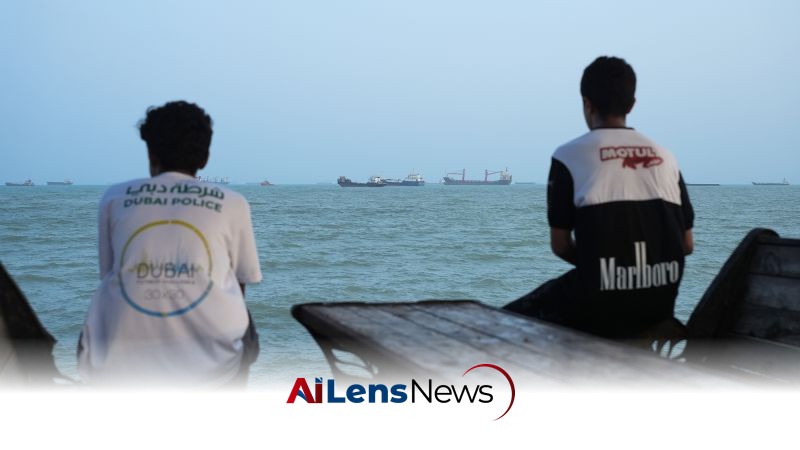


As the US-Iran conflict continues, the control of the vital Strait of Hormuz remains disputed, impacting global oil supplies and maritime safety.
Washington DC, United States Aug 14, 2026 ALN: The Strait of Hormuz, a narrow passage connecting the Persian Gulf to the Gulf of Oman, has long been recognized as one of the world's most vital maritime chokepoints. It is a critical artery for global oil transportation, with estimates suggesting that approximately 20% of the world's oil supply passes through this strait. Given its strategic importance, control over the strait has become a focal point of contention between the United States and Iran, especially in light of the ongoing conflict that has escalated tensions between the two nations.
As of now, nearly half a year into the US-Iran war, the geopolitical landscape surrounding the Strait of Hormuz is increasingly complex. The ongoing conflict has resulted in a significant decline in global oil stockpiles, with traffic through the strait effectively stalled. This situation has raised questions about who truly controls this critical waterway, as both the US and Iran assert their claims over it.
US President Donald Trump has been vocal in his assertion that the strait is under US control. He has repeatedly stated that the United States possesses total control over the strait, emphasizing the military capabilities of the US Navy in the region. In his remarks to reporters, Trump claimed, "They don’t have control. We have total control. We own it, and at some point, maybe they’ll do something, and then they get blown away.” He also mentioned that the US Navy had conducted operations to sweep the strait for mines, further underscoring the military presence of the US in the area.
However, the reality is far more nuanced than Trump's proclamations suggest. While the US has deployed naval forces to the region and implemented a blockade aimed at restricting Iranian maritime trade, the strait remains a dangerous and contested environment. Iran has made it clear that it will not fully reopen the strait until certain conditions are met, which has led to a stalemate in maritime traffic.
Currently, the US naval blockade of Iran is still in effect, which has severely hampered Iran's ability to engage in maritime trade. This blockade has strangled Iran's cash flow and effectively closed the strait to Iranian shipping. While there is still some traffic moving through the Persian Gulf to non-Iranian destinations, the volume is significantly reduced compared to pre-war levels. For instance, only 14 vessels crossed the strait on a recent Tuesday, a stark contrast to the approximately 120 ships that used to transit the strait daily before hostilities erupted.
The decline in maritime traffic can be attributed to the fears of shipping companies regarding the safety of their vessels in the strait. Experts have noted that many merchant shipping companies are hesitant to operate in the region due to the perceived inability of the US to ensure safe passage. Carl Schuster, a former director of the US Pacific Command's Joint Intelligence Center, stated that these fears are not unfounded, as attacks on vessels in the strait have become increasingly common.
In fact, at least four vessels belonging to the Abu Dhabi National Oil Company were attacked by drones and missiles in the strait within the past week, highlighting the ongoing threat to maritime operations. Such attacks not only endanger the safety of ships but also drive up insurance costs for shipping companies, further deterring them from navigating through the strait during the conflict.
Beyond direct attacks, Iran has also engaged in tactics aimed at harassing shipping vessels. This includes flying drones overhead to conduct surveillance on merchant shipping, as noted by the United Kingdom Maritime Trade Operations (UKMTO) in a recent advisory. Since the onset of the war, there have been 54 reported incidents of damage to vessels in the strait or the surrounding Gulf region, according to UKMTO, which monitors maritime security in the area. Additionally, there have been three confirmed total losses of vessels and 13 near misses, underscoring the hazardous conditions present in the strait.
Experts agree that the notion of total control over the strait is misleading. Cedric Leighton, a CNN military analyst and retired Air Force Colonel, emphasized that neither the US nor Iran currently possesses full control over the strait. He described the situation as a standoff, where both sides have the capacity to apply pressure on each other but are constrained by the proximity of US forces and Iran's willingness to threaten maritime operations.
In this delicate balance of power, both the US and Iran possess tools that allow them to exert influence over the strait. The strategic significance of the Strait of Hormuz cannot be overstated, as it serves as a critical route for oil and natural gas transportation. The disruption of maritime traffic through the strait has had profound implications for global economies and energy markets, placing additional pressure on the US to find a resolution or to guarantee safe passage for vessels.
The closure of the strait has significant ramifications not only for energy prices but also for political dynamics within the United States. The ongoing conflict and its impact on oil supply could influence the upcoming midterm elections in November, potentially shaping the political landscape and the decisions made by lawmakers. Analysts suggest that the pressure to resolve the situation could lead to concessions by the US, which may inadvertently benefit Iran if a new Congress pushes for a shift in US policy.
Iran, for its part, appears to be adopting a strategy of patience. A senior adviser to the Iranian Revolutionary Guards recently indicated that Iran could prolong the conflict until Trump is out of office, suggesting a willingness to endure economic hardships in pursuit of a more favorable outcome. This approach reflects Iran's broader strategy of deterrence, with officials emphasizing the need to ensure their national security and prevent further aggression from the US.
While the US maintains a military and economic advantage over Iran, including heavy sanctions on Iranian oil and frozen assets abroad, the situation is not without its challenges. Experts note that US military forces in the region are stretched thin, having been deployed for an extended period. This situation necessitates the rotation of new carrier battle groups into the area to bolster US leverage in any negotiations regarding the strait.
However, the US's leverage is limited by its staying power. If the US were to reduce its military presence or ease the blockade, it could lose significant negotiating power and influence over the future governance of the strait. This precarious position places Trump in a difficult predicament, as he must navigate the competing demands of maintaining military pressure on Iran while also addressing domestic concerns related to rising living costs and the need for a resolution to the conflict.
In conclusion, the question of who controls the Strait of Hormuz remains contentious and complex. While both the US and Iran assert their claims over the strait, the reality on the ground reflects a standoff characterized by mutual threats and limited control. The implications of this conflict extend beyond the immediate region, affecting global oil markets, economic stability, and the political landscape in the United States. As tensions continue to simmer, the future of the Strait of Hormuz will remain a critical focal point in US-Iran relations and global energy security.
To learn more about the latest developments in Culture & Society, stay updated with our exclusive reports and analyses on AiLensNews.

