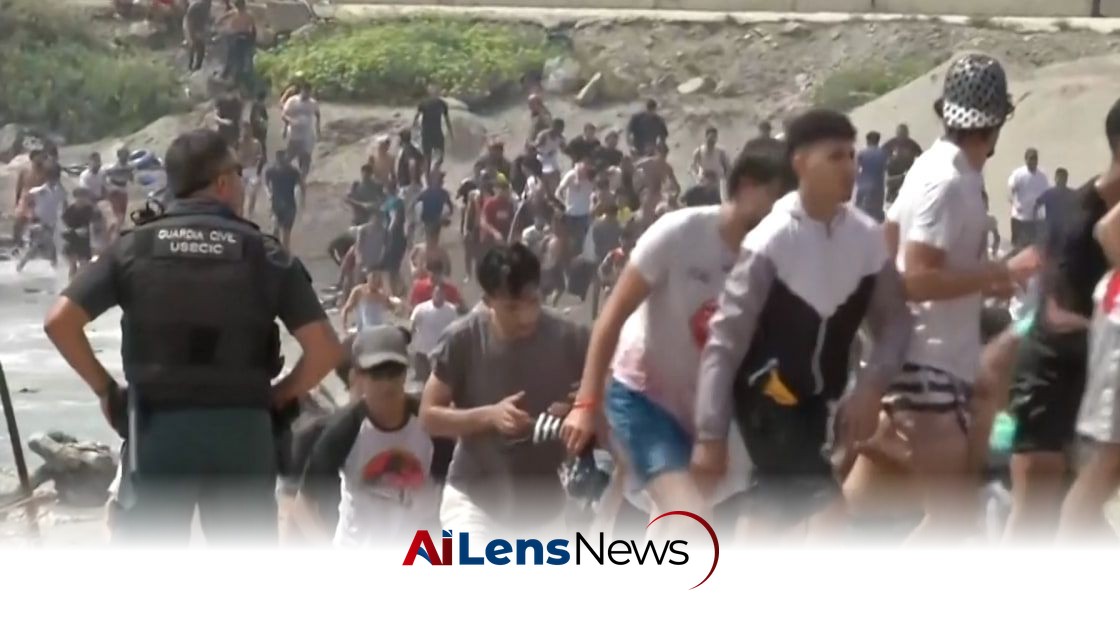


Thousands of young men surged into Spain's Ceuta exclave from Morocco, overwhelming border security as they sought entry into Europe.
Washington DC, United States Jul 31, 2026 ALN: Border guards in the tiny Spanish exclave of Ceuta on the Moroccan coast were overwhelmed as crowds of young men pushed through gates and swam around the border barrier, hoping to gain entry into Europe. This incident is not an isolated occurrence but rather a reflection of a broader trend in migration patterns that have been observed over the past several years. Ceuta, along with its counterpart Melilla, serves as one of the few land borders between Africa and Europe, making it a critical point of entry for many migrants seeking better opportunities.
The situation escalated dramatically as thousands attempted to breach the border, leading to chaotic scenes along the coastline. Many migrants, primarily young men, took to the water, swimming around the barriers designed to prevent unauthorized crossings. The sheer number of individuals attempting to cross the border in such a short period overwhelmed local authorities, who found themselves ill-equipped to handle the surge. This incident raises important questions about the adequacy of border security measures and the preparedness of local resources to respond to sudden spikes in migration.
This surge in migration reflects ongoing challenges faced by European nations in managing border security and migration flows from Africa. The events in Ceuta highlight the desperation of many seeking a better life in Europe, often risking their lives in the process. The motivations behind this mass migration are complex and multifaceted, involving economic instability, political unrest, and social factors in the migrants' home countries. Many of these individuals come from regions plagued by conflict, poverty, and lack of opportunities, driving them to seek refuge and a chance for a more stable life in Europe.
Local authorities reported that the influx strained resources and personnel, prompting calls for increased support from the Spanish government and the European Union. The situation has reignited discussions about migration policies and the humanitarian responsibilities of European nations. As the number of migrants attempting to enter Europe continues to rise, there is an urgent need for a coordinated response that balances border security with humanitarian considerations. The European Union has been grappling with how to handle migration flows for years, and incidents like the one in Ceuta only serve to highlight the ongoing challenges and the need for reform.
As the crisis unfolded, humanitarian organizations expressed concern for the safety and well-being of those attempting to cross the border. Many migrants face perilous conditions, and the response from authorities has been scrutinized amid calls for more humane treatment. Organizations such as the Red Cross and Médecins Sans Frontières have been vocal about the need for better resources and support systems for migrants, emphasizing that many individuals fleeing dire circumstances deserve compassion and assistance rather than punitive measures. The narrative surrounding migration often becomes polarized, with some advocating for stricter border controls while others call for more open and welcoming policies.
Ceuta, a small territory on the northern coast of Africa, has long been a focal point for migrants attempting to reach Europe. Its geographical location makes it an attractive destination for those looking to cross into the European Union. The recent surge underscores the complexities of migration in the region and the urgent need for comprehensive solutions. Ceuta's history as a gateway between two continents adds layers of complexity to the migration debate, as the territory has been shaped by centuries of cultural exchange and conflict.
The implications of this crisis extend beyond Ceuta and Spain, impacting European migration policy as a whole. The European Union has struggled to find a unified approach to migration, with member states often divided on how to handle the influx of migrants. Some countries have implemented stricter border controls, while others have taken a more humanitarian approach, leading to tensions and disagreements within the EU. The situation in Ceuta may prompt a reevaluation of existing policies and encourage leaders to seek collaborative solutions that address the root causes of migration.
In response to the crisis, Spain has increased its border security measures, but the situation remains fluid as more individuals continue to seek passage into Europe. The Spanish government has called for assistance from the European Union, highlighting the need for a collective response to the challenges posed by migration. As the situation develops, it is crucial for policymakers to consider not only security measures but also the humanitarian implications of their actions. The lives of countless individuals hang in the balance, and their stories deserve to be heard amidst the political discourse surrounding migration.
Moreover, the international community must also engage in dialogue about the factors driving migration from Africa to Europe. Issues such as economic development, conflict resolution, and climate change are all intertwined with migration patterns. Addressing these root causes is essential for creating sustainable solutions that can reduce the pressure on borders and provide individuals with viable alternatives to migration. As the world grapples with the complexities of migration, the situation in Ceuta serves as a poignant reminder of the human stories behind the headlines and the urgent need for compassionate and effective responses to a global challenge.
The historical context of Ceuta cannot be overlooked when discussing its role as a migration hotspot. The city has been a point of contact between Europe and Africa for centuries, with its strategic location making it a site of both cultural exchange and conflict. Over the years, Ceuta has seen waves of migration driven by various factors, including colonialism, economic opportunity, and political instability. The current crisis is part of a long history of migration that has shaped the region and reflects the ongoing struggles faced by individuals seeking a better life.
In recent years, the Mediterranean Sea has become one of the deadliest migration routes in the world. Many migrants attempting to reach Europe by boat face treacherous conditions, with overcrowded vessels and inadequate safety measures leading to tragic losses at sea. This reality underscores the desperation that drives individuals to undertake such perilous journeys, often leaving behind their homes and families in search of safety and opportunity. The plight of these migrants has sparked international outcry and calls for a more humane approach to migration management.
The role of technology and surveillance in managing migration has also come under scrutiny. Many European countries have invested heavily in border security technologies, including drones and surveillance systems, to monitor migration flows. While these measures aim to enhance security, they have also raised ethical concerns regarding privacy and the treatment of migrants. The balance between ensuring national security and upholding human rights remains a contentious issue, with advocates calling for a more humane and compassionate approach to migration management.
Furthermore, the COVID-19 pandemic has exacerbated existing challenges related to migration. Travel restrictions and border closures have disrupted migration patterns, leading to increased desperation among those seeking to cross borders. The pandemic has highlighted the interconnectedness of global issues, with economic downturns and health crises driving migration flows. As countries grapple with the aftermath of the pandemic, the need for a comprehensive and coordinated response to migration has become more pressing than ever.
In conclusion, the situation in Ceuta serves as a microcosm of the broader challenges faced by Europe and the international community in addressing migration. The influx of migrants seeking entry into Europe highlights the urgent need for a balanced approach that considers both security and humanitarian concerns. As policymakers navigate these complex issues, it is essential to prioritize the well-being of individuals and families affected by migration, ensuring that their voices are heard and their rights are protected. The ongoing crisis in Ceuta is a reminder of the human stories behind the statistics, and it calls for a compassionate and effective response to one of the defining challenges of our time.
To learn more about the latest developments in Culture & Society, stay updated with our exclusive reports and analyses on AiLensNews.

