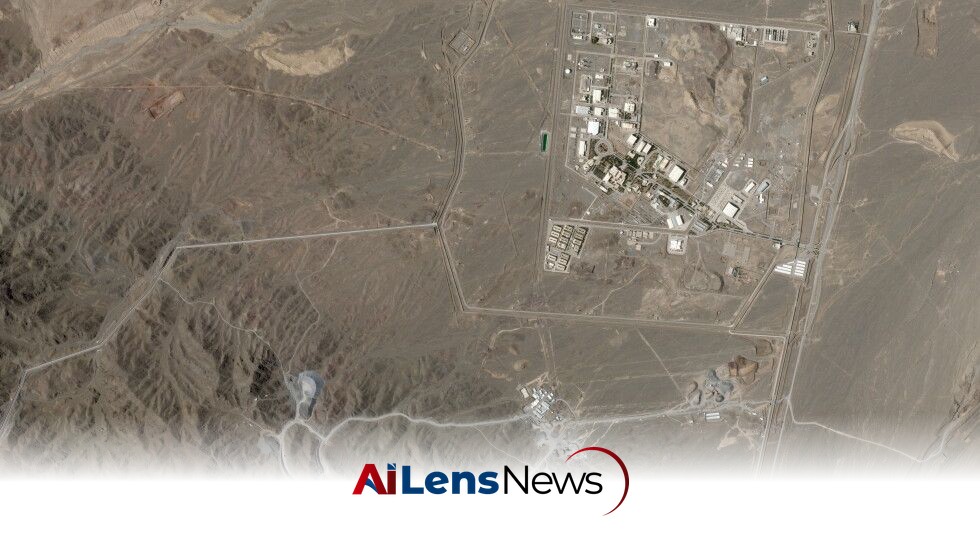


Iran's Pickaxe Mountain houses a controversial underground nuclear site, facing threats from former U.S. President Donald Trump. This article explores its significance and the geopolitical implications.
Washington DC, United States Jul 23, 2026 ALN: Iran's Pickaxe Mountain has become a focal point in the ongoing tensions surrounding the country's nuclear ambitions. This underground site, which is still under construction, has drawn the ire of former U.S. President Donald Trump, who has repeatedly threatened military action against it. The facility's strategic importance not only relates to its geographical location but also to the broader geopolitical dynamics involving Iran, the United States, and other nations concerned about nuclear proliferation.
Located in a remote area, the site is believed to be part of Iran's efforts to develop nuclear capabilities. The mountain's geological features provide a natural barrier, making it difficult for any potential airstrikes to reach the facility. This strategic positioning has raised concerns among international observers about Iran's intentions. The construction of such a facility underground suggests a deliberate attempt to shield its operations from surveillance and potential military strikes. This is consistent with Iran's historical approach to its nuclear program, which has been characterized by secrecy and a desire to maintain a degree of operational security.
Moreover, the location of Pickaxe Mountain is significant in the context of Iran's broader nuclear strategy. It is believed that the site could be used for uranium enrichment, a critical component of nuclear weapons development. Enrichment activities, especially when conducted in fortified underground facilities, pose a challenge to international monitoring efforts. This has led to heightened scrutiny from global powers and concerns about Iran's compliance with international nuclear agreements.
Understanding the significance of uranium enrichment in Iran's nuclear program is crucial. Enrichment allows a country to increase the proportion of the isotope U-235 in uranium, which is necessary for both nuclear power generation and the creation of nuclear weapons. The international community has long been wary of Iran's ability to enrich uranium, especially given past instances where Iran has been accused of attempting to develop nuclear weapons capabilities. The presence of a fortified site like Pickaxe Mountain raises alarms about the potential for Iran to pursue such ambitions undetected.
Trump's administration has taken a hardline stance on Iran, viewing its nuclear program as a direct threat to global security. His threats to bomb the site have sparked debates about the potential consequences of military intervention. Analysts warn that such actions could escalate tensions in an already volatile region. The Middle East has a history of conflict, and any military action against Iran could provoke retaliatory measures, not only from Iran but also from its allies in the region, including Hezbollah and various militia groups.
Furthermore, military action against Pickaxe Mountain could undermine diplomatic efforts aimed at curbing Iran's nuclear ambitions. The Joint Comprehensive Plan of Action (JCPOA), commonly known as the Iran nuclear deal, was established to limit Iran's nuclear capabilities in exchange for sanctions relief. However, the U.S. withdrawal from the agreement in 2018 under Trump's administration led to increased tensions and a breakdown in negotiations. Military threats could further alienate Iran from the negotiating table, making a peaceful resolution more difficult.
The repercussions of military action are not only limited to Iran and the U.S. The potential for broader regional instability is significant. Countries in the region, particularly those with vested interests in containing Iran's influence, may feel compelled to respond. This could lead to a cycle of retaliation that spirals out of control, drawing in multiple actors and exacerbating existing conflicts.
The international community has responded with a mix of concern and caution. While some nations support a tough stance against Iran, others advocate for diplomatic solutions. The United Nations and the International Atomic Energy Agency (IAEA) have called for transparency and dialogue to address the nuclear issue. The IAEA, tasked with monitoring nuclear activities worldwide, has expressed the need for access to Iranian facilities to ensure compliance with international regulations.
Countries such as France, Germany, and the United Kingdom have emphasized the importance of diplomacy over military action. They argue that a military strike could lead to a wider conflict and destabilize the region further. Additionally, Russia and China, both of whom have significant economic ties with Iran, have criticized any military threats, advocating instead for a return to diplomatic negotiations. Their involvement underscores the global stakes involved in the situation, as both nations are permanent members of the UN Security Council and have the power to influence international responses.
The potential for military action against Pickaxe Mountain also raises questions about the role of regional powers. Countries such as Saudi Arabia and Israel have been vocal critics of Iran's nuclear ambitions, viewing them as existential threats. Israel, in particular, has conducted military operations against Iranian targets in Syria and has threatened to take similar actions against Iranian facilities in other locations, including Pickaxe Mountain. This regional dynamic complicates the situation, as any military engagement could draw in multiple actors and escalate into a broader conflict.
Moreover, the involvement of regional players like Saudi Arabia and Israel highlights the sectarian and geopolitical divides in the Middle East. Iran, a predominantly Shia Muslim nation, has often found itself at odds with Sunni-majority countries, particularly Saudi Arabia. The rivalry between these two nations has fueled proxy conflicts across the region, and the nuclear issue adds another layer of complexity to their already fraught relationship.
As the situation surrounding Pickaxe Mountain continues to evolve, it remains a critical point of contention in U.S.-Iran relations. The potential for military action raises questions about the future of diplomacy in the region and the broader implications for global security. The stakes are high, with the possibility of a military confrontation looming over the fragile balance of power in the Middle East.
In the context of international relations, the fate of Pickaxe Mountain could serve as a litmus test for the effectiveness of diplomatic engagement versus military intervention. As various nations weigh their options, the need for a comprehensive approach that addresses both security concerns and the humanitarian implications of conflict becomes increasingly apparent. The international community must navigate this complex landscape carefully to avoid missteps that could lead to further escalation and instability.
Ultimately, the situation at Pickaxe Mountain is emblematic of the larger struggle between the pursuit of national security and the imperative of diplomatic engagement. The ongoing tensions serve as a reminder of the delicate balance that must be maintained in international relations, particularly when dealing with issues as fraught as nuclear proliferation. As stakeholders continue to assess the ramifications of Iran's nuclear ambitions, the world watches closely, aware that the decisions made in this context could have far-reaching consequences for global peace and security.
To learn more about the latest developments in Culture & Society, stay updated with our exclusive reports and analyses on AiLensNews.

