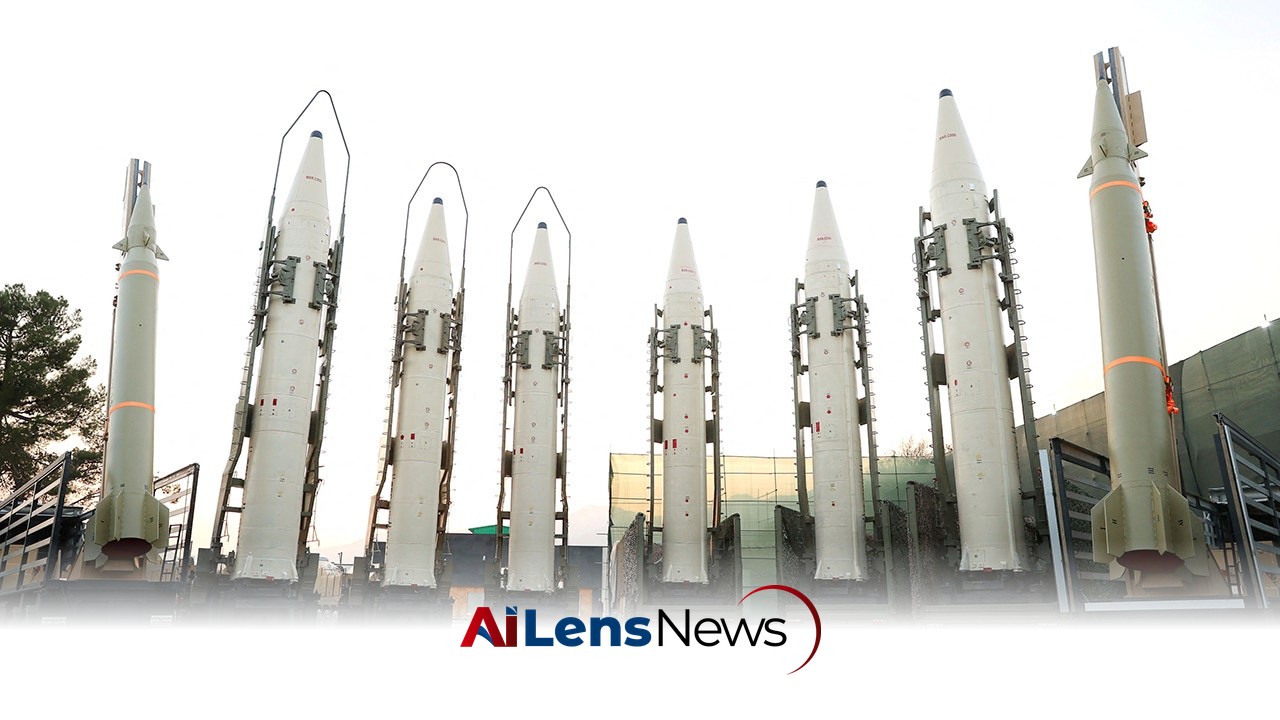


Analysts warn of potential Iranian military strikes in response to intensified US economic sanctions, with a focus on high-value targets.
Washington DC, United States Aug 14, 2026 ALN: The geopolitical landscape surrounding Iran and the United States has been fraught with tension for several years, particularly following the U.S. withdrawal from the Joint Comprehensive Plan of Action (JCPOA) in 2018. This pivotal decision by the Trump administration marked a significant shift in U.S.-Iran relations, leading to the re-imposition of stringent economic sanctions aimed at curtailing Iran's nuclear ambitions and its regional influence. As the U.S. continues to ramp up these sanctions, the potential for military responses from Iran appears to be increasing, raising concerns about a possible escalation of conflict in the region.
Recent developments have underscored this escalating tension. On Thursday, national security analysts warned that Iran could initiate military strikes as early as this fall, targeting high-value assets in response to the intensifying U.S. economic sanctions. This warning coincided with reports from the Abu Dhabi National Oil Company (ADNOC), which stated that two vessels were struck while transiting the strategically vital Strait of Hormuz. The Strait of Hormuz is a critical chokepoint through which a substantial portion of the world's oil supply is transported, making it a focal point of geopolitical interest and military strategy.
While ADNOC reported no injuries and indicated that the situation was under control, the UAE foreign ministry condemned the attacks, highlighting the heightened tensions in the region. The U.S. has been closely monitoring these developments, with Treasury Secretary Scott Bessent announcing that Washington is preparing to implement unprecedented economic measures against Iran. In an interview, Bessent indicated that these measures would represent a significant escalation in the economic isolation of Iran, suggesting that the U.S. is willing to adopt a more aggressive stance in its approach to Tehran.
Behnam Ben Taleblu, a senior fellow at the Foundation for Defense of Democracies, emphasized that as Washington intensifies its sanctions, Tehran is likely to respond with military pressure. He noted that the Iranian regime may resort to kinetic actions—military strikes or attacks—in an effort to counteract the economic pressures imposed by the U.S. government. According to Taleblu, the regime is expected to adopt a strategy that includes attacks on shipping vessels, U.S. military bases, and Arab infrastructure within the Persian Gulf region, thereby expanding its target list in response to the U.S. naval blockade and declining oil revenues.
This potential shift toward military action by Iran is not occurring in a vacuum. The backdrop of stalled diplomatic negotiations between Washington and Tehran further complicates the situation. Reports indicate that there have been no discussions regarding the extension of the U.S.-Iran ceasefire agreement, with a senior Iranian source confirming that Tehran is insisting on the U.S. returning to the nuclear pact and establishing a clear timeline for fulfilling its obligations. The interim memorandum of understanding, which was signed in June, aimed to halt military operations on all fronts, but the agreement has since unraveled, with President Trump declaring it 'over' in July.
The looming deadline of August 17 for negotiations adds urgency to the situation, particularly concerning control over the Strait of Hormuz. The newly appointed head of Iran's Basij paramilitary force, Hossein Taeb, asserted that Iran maintains control over the Strait, directly contradicting President Trump's assertion that the U.S. holds total control over the waterway. This divergence in narratives reflects the ongoing power struggle and the complex dynamics at play in the region.
Taleblu's analysis suggests that Iran is employing a dual strategy of military escalation and diplomatic maneuvering to counter U.S. pressure. He noted that the Iranian regime is adept at using a combination of threats and negotiations to maintain its influence and avoid granting the Trump administration a perceived victory. By asserting control over the Strait of Hormuz, Iran aims to project strength and resilience in the face of mounting challenges.
Moreover, the potential for military escalation raises significant concerns for regional stability and security. The Strait of Hormuz is not only a critical maritime route for oil transportation but also serves as a flashpoint for military confrontations. Any military action by Iran could provoke a robust response from the U.S. and its allies, potentially leading to a wider conflict in the region. The implications of such a conflict would be far-reaching, affecting global oil markets, international trade routes, and the geopolitical balance of power in the Middle East.
In the context of these developments, it is essential to consider the broader implications of U.S. sanctions on Iran and the potential for military responses. The sanctions have already had a profound impact on Iran's economy, leading to significant reductions in oil revenues and increasing domestic unrest. As the Iranian regime faces mounting pressure, the likelihood of military responses may become more pronounced as a means of asserting its power and countering perceived threats from the U.S. and its allies.
In conclusion, the current trajectory of U.S.-Iran relations suggests that we may be on the cusp of a significant escalation in military tensions. As Iran contemplates its response to U.S. sanctions, the potential for military strikes targeting key assets remains a serious concern. The delicate balance between diplomacy and military action will be crucial in determining the future of U.S.-Iran relations and the stability of the broader Middle East region. The coming weeks and months will be critical in shaping the outcome of these tensions, as both sides navigate a complex landscape of threats, negotiations, and strategic calculations.
The history of U.S.-Iran relations is marked by a series of confrontations and negotiations, with the JCPOA representing a high point in diplomatic efforts to resolve concerns over Iran's nuclear program. The agreement, reached in 2015, involved Iran agreeing to limit its nuclear activities in exchange for relief from economic sanctions. However, the U.S. withdrawal from the deal and subsequent sanctions have reversed much of the progress made, leading to increased tensions and military posturing from both sides.
Iran's strategic position in the Middle East has long made it a focal point for U.S. foreign policy. The country has been involved in various regional conflicts and has supported proxy groups in countries such as Iraq, Syria, and Lebanon. These actions have drawn the ire of the U.S. and its allies, who view Iran's influence as destabilizing. The ongoing sanctions have further exacerbated these tensions, as Iran seeks to assert its influence in the region while facing economic hardship.
The implications of a military response from Iran could extend beyond the immediate region. An escalation of hostilities could disrupt global oil supplies, leading to increased prices and economic instability worldwide. Furthermore, such a conflict could draw in other regional players, potentially leading to a broader confrontation that could reshape alliances and power dynamics in the Middle East.
As the situation continues to evolve, the international community is watching closely. Diplomatic efforts may still provide a path forward, but the window for negotiations is narrowing. The U.S. and Iran must navigate a complex landscape of historical grievances, national interests, and regional dynamics to avoid a miscalculation that could lead to military confrontation. The stakes are high, and the consequences of inaction or missteps could be dire for both nations and the wider world.
In summary, the current state of U.S.-Iran relations is precarious, with the potential for military escalation looming large. The interplay of sanctions, military threats, and diplomatic negotiations will play a crucial role in shaping the future of this relationship and the stability of the Middle East. As both sides approach this critical juncture, the need for careful consideration and strategic foresight has never been more apparent.
To learn more about the latest developments in Culture & Society, stay updated with our exclusive reports and analyses on AiLensNews.

