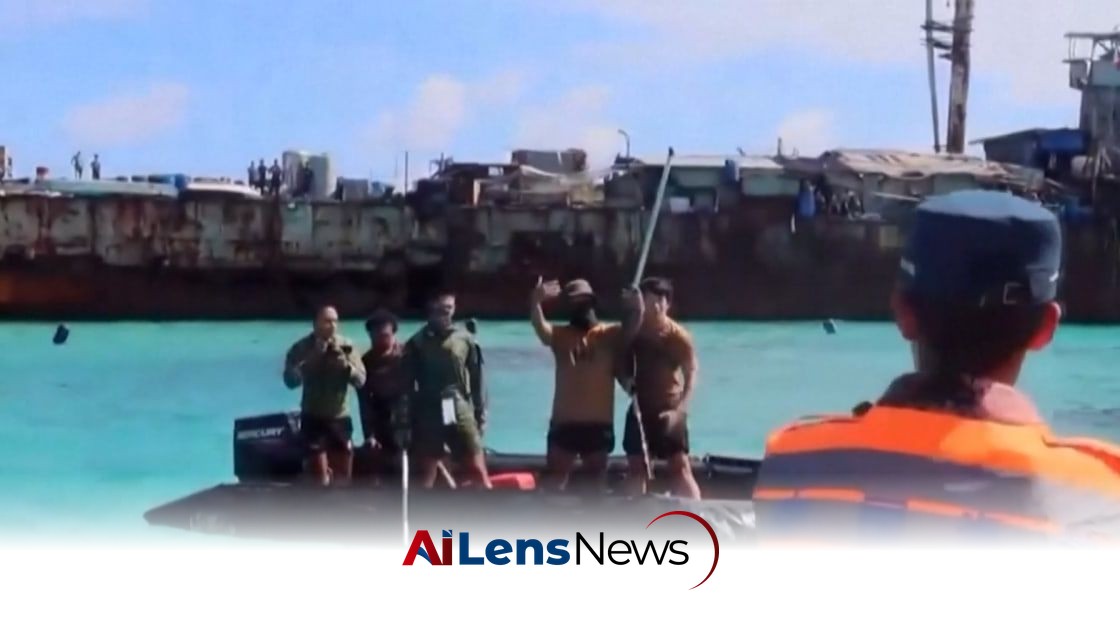


A recent encounter between Chinese and Philippine vessels in the South China Sea has heightened tensions, with both nations trading accusations of aggression.
Washington DC, United States Jul 21, 2026 ALN: In a significant escalation of tensions in the South China Sea, China and the Philippines have exchanged accusations following a maritime incident involving their respective vessels. The encounter, which occurred in contested waters, has raised concerns about the potential for further conflict in the region.
The Philippine government reported that during the incident, a member of its navy was struck on the head with a wooden baton by a Chinese law enforcement officer. This claim has been met with a strong denial from Beijing, which asserted that its officers were provoked during the encounter. This incident is not an isolated occurrence but rather part of a broader pattern of confrontations that have characterized the South China Sea disputes for years.
The South China Sea is a highly contested region, with multiple countries, including China, the Philippines, Vietnam, Malaysia, Brunei, and Taiwan, laying claim to various parts of the sea. The area is not only strategically important due to its shipping lanes, which are among the busiest in the world, but it is also rich in natural resources such as oil and natural gas, making it a focal point for geopolitical tensions.
China has been increasingly assertive in its claims over the South China Sea, often leading to confrontations with other nations that contest its territorial assertions. The Chinese government has constructed artificial islands and military installations in the area, actions that have drawn international criticism and heightened tensions with neighboring countries. The Philippines, under its current administration, has sought to strengthen its naval capabilities and alliances, particularly with the United States, to counter China's growing influence.
The historical context of the South China Sea dispute dates back to the mid-20th century, but it has intensified in recent years. In 2016, an international tribunal ruled in favor of the Philippines, rejecting China's extensive claims based on the so-called Nine-Dash Line. However, China has refused to acknowledge the ruling, leading to ongoing friction between the two nations.
The Philippine government has condemned the actions of the Chinese officers, calling for accountability and a cessation of aggressive maneuvers in the region. Philippine officials emphasized the need for a peaceful resolution to the ongoing disputes and urged for adherence to international maritime laws. The administration has also sought to rally support from other Southeast Asian nations, aiming to present a united front against Chinese expansionism.
On the other hand, China has characterized its actions as necessary for maintaining order and enforcing its sovereignty in the area. Chinese officials have accused the Philippine vessels of intruding into waters that they claim as their own, framing the incident as a defensive measure. This narrative is part of a broader strategy by Beijing to assert its dominance in the region and deter what it perceives as foreign encroachment.
This incident underscores the fragility of peace in the South China Sea, where military encounters have the potential to escalate rapidly. Analysts warn that continued confrontations could lead to a broader conflict, drawing in regional powers and complicating international relations. The United States, which has strategic interests in the region, has reaffirmed its commitment to supporting its allies, including the Philippines, in the face of Chinese aggression.
As both nations navigate this delicate situation, the international community is closely monitoring developments. Diplomatic efforts will be crucial in de-escalating tensions and fostering dialogue between the two nations to prevent further incidents. The Association of Southeast Asian Nations (ASEAN) has also been involved in discussions aimed at promoting stability in the region, although achieving a consensus among its member states has proven challenging due to differing national interests.
The implications of this incident extend beyond the immediate confrontation. It raises questions about the effectiveness of current diplomatic frameworks and the potential for new agreements to address maritime security in the South China Sea. The ongoing tensions may also influence regional military dynamics, prompting countries to increase their defense spending and military readiness in response to perceived threats.
In conclusion, the clash between China and the Philippines near the disputed shoal highlights the ongoing volatility in the South China Sea. Both countries must exercise restraint and seek diplomatic solutions to ensure stability in this strategically vital region. The actions taken in the coming weeks and months will be critical in shaping the future of the South China Sea and determining the balance of power in Southeast Asia.
The South China Sea has long been a flashpoint for regional tensions, with its rich fishing grounds and potential hydrocarbon resources drawing the interest of several nations. The roots of the current dispute can be traced back to colonial-era treaties and post-World War II claims, with various countries asserting their historical rights to different parts of the sea.
China's assertion of its claims is largely based on the Nine-Dash Line, a demarcation that encompasses a significant portion of the South China Sea. This line has been a source of contention, as it overlaps with the exclusive economic zones (EEZ) of several Southeast Asian nations. The Philippines, in particular, has been vocal about its rights to areas within its EEZ, as established by international law.
In recent years, China has ramped up its military presence in the region, conducting naval exercises and deploying coast guard vessels to assert its claims. This has led to numerous incidents involving fishing vessels, oil exploration ships, and military patrols, often resulting in confrontations with the navies of the Philippines and other claimant states. The Philippine government has responded by bolstering its own naval capabilities and seeking greater cooperation with allies, particularly the United States, which has a mutual defense treaty with the Philippines.
The potential for future conflict in the South China Sea remains high, particularly as both China and the Philippines continue to assert their claims. Analysts warn that a miscalculation or accidental encounter could quickly escalate into a larger confrontation, drawing in other regional powers and complicating the security landscape in Southeast Asia.
Moreover, the ongoing competition between the United States and China adds another layer of complexity to the situation. The U.S. has consistently expressed its commitment to maintaining freedom of navigation in the South China Sea, often conducting freedom of navigation operations to challenge China's claims. This has led to increased tensions between the U.S. and China, with both nations seeking to demonstrate their resolve in the region.
As the situation evolves, regional actors will need to navigate a delicate balance between asserting their claims and avoiding confrontation. The role of international organizations, such as the United Nations and ASEAN, will be crucial in facilitating dialogue and promoting peaceful resolutions to disputes in the South China Sea.
The recent clash between China and the Philippines serves as a stark reminder of the volatility in the South China Sea and the complex interplay of national interests at play. Both countries face significant challenges in managing their respective claims while also considering the broader implications of their actions on regional stability.
Moving forward, it will be essential for both nations to engage in constructive dialogue and seek diplomatic solutions to their disputes. The international community must also play a role in supporting efforts to de-escalate tensions and promote stability in the region. As the geopolitical landscape continues to evolve, the actions taken by China, the Philippines, and other stakeholders will shape the future of the South China Sea and the balance of power in Southeast Asia.
To learn more about the latest developments in Culture & Society, stay updated with our exclusive reports and analyses on AiLensNews.

