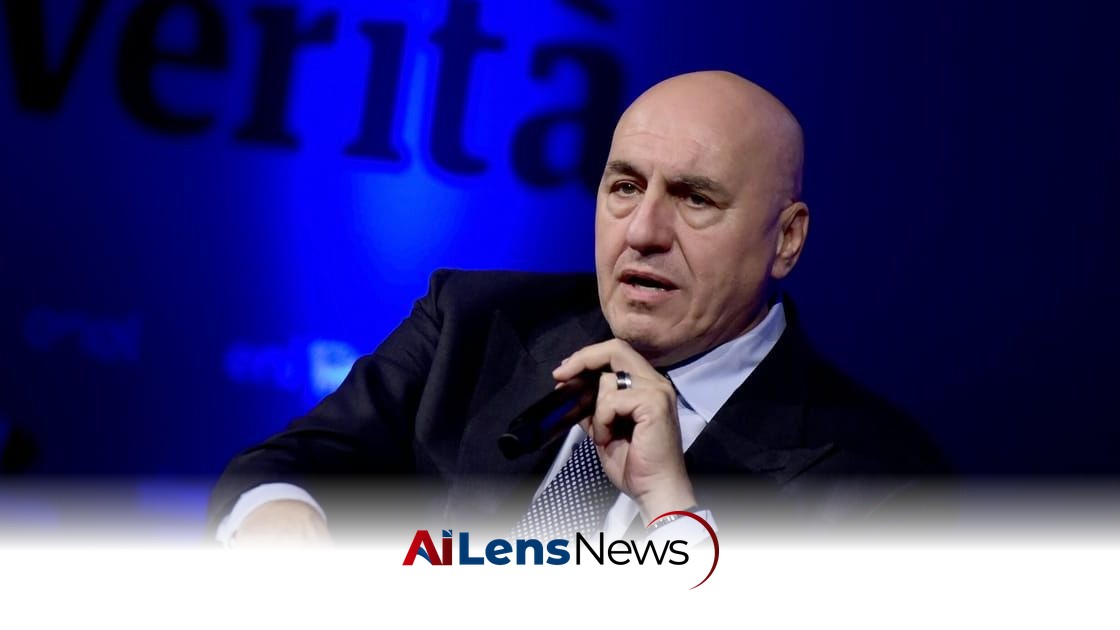


Italian Defense Minister Guido Crosetto proposed an advisory role to Mykhailo Fedorov, the recently ousted Ukrainian defense minister, highlighting his innovative contributions to Ukraine's military.
London, United Kingdom Jul 25, 2026 ALN: The recent political developments in Ukraine have attracted significant international attention, particularly following the dismissal of Mykhailo Fedorov from his position as the Ukrainian Minister of Defense. This unexpected change in leadership has raised questions about the future of Ukraine's defense strategy and the implications for its ongoing conflict with Russia. Fedorov’s removal, which came at the hands of President Volodymyr Zelenskyy, has been interpreted by many analysts as part of a broader effort to reshape Ukraine's military leadership amidst the ongoing war.
Fedorov, who has been a prominent figure in Ukraine's defense sector, especially known for his role in modernizing the military through technology and innovation, was ousted earlier this month. His tenure was marked by significant advancements in Ukraine's military capabilities, particularly in the use of drones and cyber warfare, which have proven crucial in the conflict against Russian aggression. However, his leadership style and approach reportedly led to tensions with senior military officials, which may have contributed to his dismissal.
In a notable gesture of international solidarity, Italian Defense Minister Guido Crosetto reached out to Fedorov shortly after his ousting. Crosetto's offer to Fedorov to come to Italy and serve as an adviser reflects not only a personal connection but also Italy's broader commitment to supporting Ukraine during this tumultuous period. Crosetto stated in an interview that he had called Fedorov the day after his dismissal, extending an invitation to work together in Rome. This proposal was described by Crosetto as a sign of respect and friendship, emphasizing the importance of collaboration in defense matters.
Fedorov's contributions to Ukraine's military modernization have not gone unnoticed. Crosetto praised him for embodying innovation and for his significant role in changing the dynamics on the battlefield. He noted that Fedorov's efforts have allowed Ukraine to not only defend its territory but also to regain the initiative in various combat situations. This ability to adapt and innovate in military strategies has been critical for Ukraine, especially in the face of a technologically advanced adversary like Russia.
However, Fedorov's tenure was not without challenges. His clashes with top generals highlight a common issue faced by many military leaders: the resistance to change within established hierarchies. Crosetto pointed out that this resistance is not unique to Ukraine but is also a challenge in other European countries, including Italy, France, and Germany. This observation underscores the complexities of military reform and modernization, where traditional practices often clash with the need for innovation in response to evolving threats.
As of now, Fedorov has not publicly responded to Crosetto's offer, leaving his future uncertain. The decision to accept such a role would involve weighing his commitment to Ukraine against the potential opportunities that an advisory position in Italy could offer. It is also indicative of the broader geopolitical landscape, where alliances and partnerships are continuously evolving in response to ongoing conflicts.
On the Italian front, Crosetto's remarks also touched on the country's defense spending strategy. He expressed a preference for utilizing the European Union's Security Action for Europe (SAFE) scheme to finance defense initiatives rather than relying solely on national public debt. This approach aligns with broader European efforts to bolster defense capabilities in light of the changing security environment in Europe, particularly following Russia's actions in Ukraine.
The Italian government is currently considering a request for funding under the SAFE scheme, proposing to apply for €5 billion to €7 billion, a significant reduction from the €15 billion initially anticipated. This shift in funding strategy reflects the complexities of national budgets and the need for careful financial planning in a time of economic uncertainty exacerbated by the war in Ukraine and its ripple effects across Europe.
As the situation develops, the implications of Fedorov's potential move to Italy and the Italian government's defense spending decisions will be closely watched by both military analysts and policymakers. The integration of innovative leaders like Fedorov into international defense discussions could foster new ideas and strategies, benefiting not only Ukraine but also its allies in Europe. The ongoing conflict in Ukraine remains a pivotal issue for European security, and the responses from various nations, including Italy, will play a crucial role in shaping the future landscape of defense and military cooperation in the region.
In summary, the invitation extended by Guido Crosetto to Mykhailo Fedorov is more than just a personal offer; it represents the interconnected nature of defense strategies in Europe and the importance of adapting to new challenges in a rapidly changing geopolitical environment. As both Ukraine and its allies navigate the complexities of war and defense, the contributions of innovative leaders like Fedorov will be vital in shaping effective responses to ongoing threats.
To understand the ramifications of this situation, it is essential to consider the broader context of Ukraine's defense strategy and its relationship with NATO and the European Union. Since the onset of the conflict with Russia, Ukraine has sought to align more closely with Western military standards and practices. This alignment has included significant reforms within its armed forces, aimed at increasing efficiency and effectiveness in combat. The modernization efforts under Fedorov’s leadership were part of this strategic pivot, focusing on integrating advanced technologies and fostering a more agile military structure.
Fedorov's emphasis on technology, particularly in drone warfare and cyber capabilities, was seen as a crucial response to the asymmetric warfare tactics employed by Russia. The use of drones has transformed the battlefield, allowing for enhanced reconnaissance, targeting, and even direct engagement capabilities. His approach has been particularly relevant in the context of Ukraine's need to maximize its limited resources against a larger and more established military force. The lessons learned from Fedorov's time in office may continue to influence Ukraine's military strategy, regardless of his next steps.
Additionally, the offer from Italy’s Defense Minister can be viewed as part of a larger trend in European defense cooperation. Countries across the continent are increasingly recognizing the necessity of collaboration in addressing shared security threats. Italy's outreach to Fedorov could signal an intention to strengthen bilateral defense ties, potentially leading to joint initiatives in areas such as military training, technology sharing, and strategic planning. Such collaboration would not only benefit Ukraine but also enhance Italy's own defense posture in the face of evolving threats.
Moreover, the political landscape in Ukraine remains fluid, and the implications of Fedorov's dismissal could resonate beyond military leadership. It reflects the ongoing challenges faced by President Zelenskyy as he navigates internal pressures and external expectations. The ability to maintain a cohesive military command while addressing issues of accountability and governance will be critical for Ukraine's continued resilience in the face of Russian aggression.
In conclusion, the developments surrounding Mykhailo Fedorov's dismissal and the subsequent offer from Italy's Defense Minister highlight the interconnected nature of modern defense strategies in Europe. As Ukraine continues to confront significant challenges, the potential for collaboration with innovative leaders and allied nations will be crucial in shaping effective responses to the ongoing conflict. The dynamics of military leadership, international partnerships, and defense spending strategies are all intertwined in this complex geopolitical landscape, underscoring the importance of adaptability and cooperation in addressing contemporary security threats.
To learn more about the latest developments in Culture & Society, stay updated with our exclusive reports and analyses on AiLensNews.

