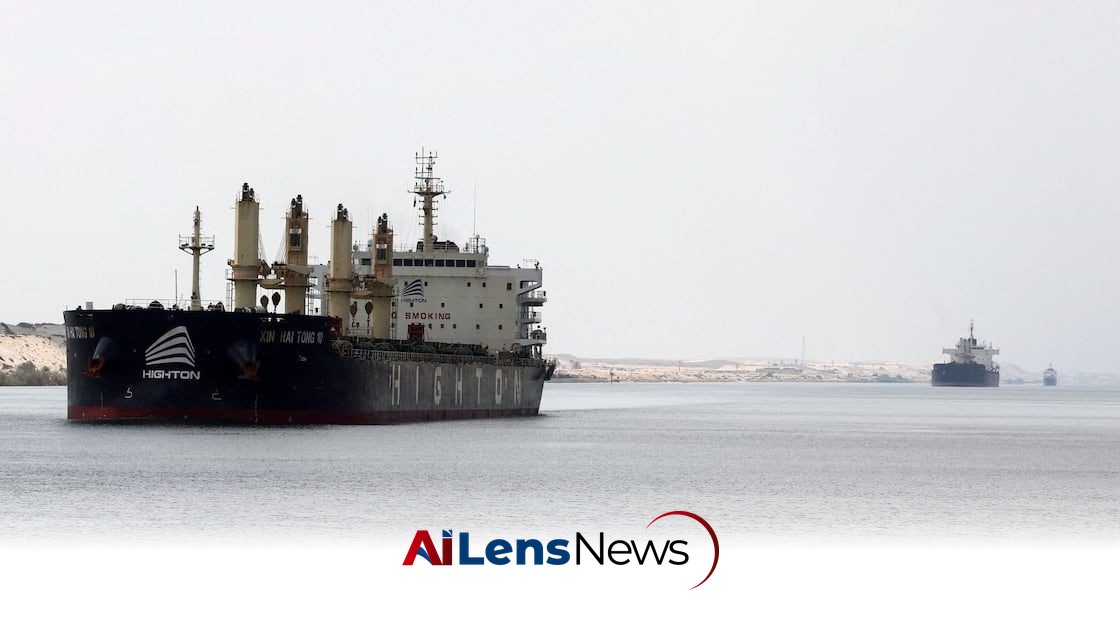


Saudi Arabia has halted crude exports via the Bab Al Mandeb strait due to Houthi attacks, shifting to the Suez Canal, increasing costs and transit times.
Abu Dhabi, United Arab Emirates Jul 27, 2026 ALN: Saudi Arabia has made a significant shift in its crude oil export strategy, redirecting shipments through the Suez Canal amid escalating threats from Houthi rebels, who have declared a maritime embargo on Saudi shipping. This embargo has led to a halt in crude oil exports via the Bab Al Mandeb strait from Saudi Arabia's west coast, a vital shipping route that has historically facilitated the movement of oil to major Asian markets.
According to data from Kpler, crude oil exports moving through the Suez Canal surged by 106 percent during the week of the embargo announcement, reaching an impressive 1.06 million barrels per day. This marks a notable increase from the week starting July 13, illustrating the immediate impact of the Houthi threats on Saudi Arabia's oil export logistics.
Despite the embargo, tankers that loaded crude oil prior to the Houthi declaration, many of which are operated by Chinese companies, have continued to navigate the Bab Al Mandeb strait. Notable vessels, such as the Singapore-flagged Xin Long Yang and the Chinese-flagged Cosnew Lake, were reported to have passed through the strait on July 23. However, there are unverified reports indicating that some tankers may be leaving the strait with their Automatic Identification System (AIS) transponders turned off, which raises concerns about the transparency and safety of maritime operations in the region.
On a recent Saturday, the Iran-backed Houthi rebels claimed responsibility for attacks on Saudi Aramco's oil facilities located in Jizan and Yanbu. While neither the Saudi government nor Aramco, recognized as the world's largest oil-exporting company, has confirmed these claims, if verified, it would represent the first direct assault on Saudi oil infrastructure since 2022. Such an event could further accelerate the shift in oil export routes and raise alarm among international energy markets.
The Suez route, while a necessary alternative, is notably more expensive and time-consuming compared to the Bab Al Mandeb strait. For instance, transporting a Saudi oil cargo from Yanbu on the Red Sea to South Korea via Bab Al Mandeb typically takes about 24 days. In contrast, the Suez route, which requires navigating around the Cape of Good Hope, extends the journey to approximately 54 days. This difference of more than four weeks can significantly impact delivery schedules and costs for Asian buyers, including major consumers like China, India, and Japan.
Saudi Aramco primarily sells its crude oil under fixed monthly contracts at predetermined official prices, with only a small portion of its exports conducted on a spot basis. Given that Asian buyers represent the bulk of Aramco's clientele, crude oil loaded at Yanbu has traditionally been shipped eastward via the shortest route through the Bab Al Mandeb strait. However, the Suez route diverges from this established path, requiring vessels to travel into the Mediterranean Sea.
Moreover, the Suez Canal's limitations pose additional logistical challenges. The canal is too shallow to accommodate fully loaded Very Large Crude Carriers (VLCCs), which typically transport around two million barrels of oil. As a result, smaller Suezmax tankers, which can carry about one million barrels each, must be utilized for transit through the canal. This necessitates the use of two Suezmax vessels to transport the equivalent volume of one VLCC, thereby increasing shipping costs.
Estimates suggest that chartering two Suezmax tankers for the Suez route could result in an additional cost of approximately $2 million compared to using a single VLCC through the Bab Al Mandeb strait. This premium arises from the need for an extra vessel and the extended duration of the voyage, rather than from higher daily rates. According to the Baltic Exchange, a global benchmark for shipping rates, VLCCs were quoted at $382,397 per day as of July 24, while Suezmaxes were priced at $103,500 per day.
The recent escalation in hostilities has seen the Houthis claim responsibility for missile and drone strikes targeting Saudi Aramco's facilities in Jizan and Yanbu. The Jizan refinery, which processes a substantial 400,000 barrels per day, has the capacity to draw from stockpiles to mitigate any immediate impacts. Conversely, Yanbu’s export terminal is crucial, having accounted for 92 percent of Saudi Arabia's seaborne crude exports in June, as reported by Kpler.
Yanbu's strategic location at the end of the East-West Pipeline, which transports crude oil overland from the Gulf coast to the Red Sea, allows Saudi Arabia to bypass the Strait of Hormuz, a chokepoint that has been a focal point of geopolitical tensions in recent years. In March, Saudi Arabia increased the pipeline's capacity to a record seven million barrels per day, following Iran's blockade of the Strait of Hormuz, showcasing the pipeline's significance in ensuring the stability of global energy supplies.
Mannat Jaspal, a director and fellow of climate and energy at the Observer Research Foundation Middle East, highlighted the importance of Saudi Arabia’s East-West Pipeline as a safeguard for global energy supplies. The pipeline enables crude exports to avoid the potential disruptions associated with the Strait of Hormuz and maintain steady flows to Asia through the Bab Al Mandeb and to Europe via the Suez Canal. Jaspal warned that a simultaneous crisis at both chokepoints could lead to a severe upheaval in energy markets.
A statement released on July 27 by the 47-member Combined Maritime Forces indicated that the Houthis have transitioned from a posture of threatening to actively targeting vessels associated with Saudi interests. The statement noted that the group has deployed missiles and drones to positions in proximity to the Bab Al Mandeb, raising concerns about the security of maritime operations in this critical shipping lane.
The Houthis have a history of disrupting oil flow and container shipping in the region, with the Bab Al Mandeb strait carrying an average of 9.3 million barrels per day in 2023 prior to the recent escalation of their campaign. This historical context underscores the ongoing vulnerabilities faced by maritime shipping in the region and the potential for significant disruptions to global oil supply chains.
The implications of these developments are profound, as they not only affect Saudi Arabia's economy but also have far-reaching consequences for global energy markets. The shifting of oil exports from the Bab Al Mandeb to the Suez Canal could lead to increased shipping costs, longer delivery times, and potential supply shortages, particularly for Asian markets that rely heavily on Saudi crude oil. As tensions continue to rise, the international community remains vigilant, monitoring the situation closely to assess the potential impact on global energy stability.
To learn more about the latest developments in Culture & Society, stay updated with our exclusive reports and analyses on AiLensNews.

