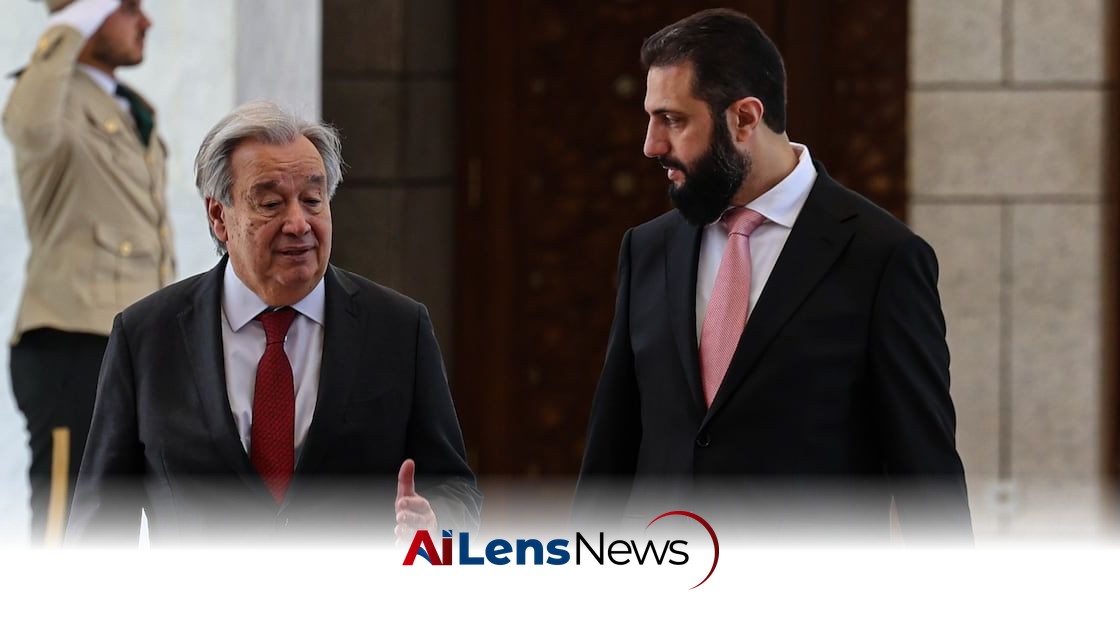


UN Secretary-General Antonio Guterres's recent visit to Damascus marks a significant moment for the UN's role in Syria, aiming to foster recovery and peace.
Abu Dhabi, United Arab Emirates Jul 27, 2026 ALN: Antonio Guterres’s recent arrival in Damascus marks a significant moment in the history of the United Nations’ engagement with Syria. His visit, which occurred over the weekend, makes him the first UN Secretary-General to step foot in the country in 17 years. This is not merely a ceremonial visit; it symbolizes a potential shift in the dynamics of international involvement in Syria, a nation that has faced a devastating civil war since 2011. Guterres was received by Foreign Minister Asaad Al Shibani and subsequently met with President Ahmad Al Shara, with discussions centered on recovery projects and the future of UN peacekeeping operations in the region. The context of this visit is particularly rich, occurring during a year that has already seen notable diplomatic activities, including meetings between Syrian and Western leaders and incremental sanctions relief.
The landscape of Syria that Guterres entered is drastically different from the one his predecessor, Ban Ki-moon, encountered during his visit in 2009. At that time, Bashar Al Assad was still being courted by various European capitals, and the nation was hosting one of the largest refugee populations in the region, including millions of Palestinians and Iraqis. The civil uprising, which would lead to years of conflict, was still two years away. Today, the situation is dire; the country is marked by widespread destruction, economic collapse, and a humanitarian crisis that has resulted in millions of displaced individuals. The UN’s role in this context has been a topic of significant debate and controversy.
Throughout the ongoing civil war, the UN has maintained its relationship with the Assad regime, often adhering to its terms for delivering humanitarian aid. This relationship has sparked criticism, particularly as the regime has been accused of using chemical weapons against civilians and of besieging rebel-held areas. Many Syrians feel that the UN's actions have inadvertently legitimized the Assad government while failing to meaningfully address the humanitarian needs of the population. The UN's reliance on the regime for aid distribution has often resulted in assistance being manipulated or withheld, leading to a growing mistrust among the Syrian populace regarding the effectiveness and intentions of international aid efforts.
Guterres undoubtedly wants to demonstrate that the UN can still be a catalyst for progress in the region.
During the earlier years of the conflict, the UN faced significant challenges in its attempts to provide aid and negotiate peace. Empowering the UN to deliver assistance to opposition-controlled areas without the regime's consent would have necessitated a mandate from a divided Security Council, which was often unable to reach consensus on Syria. As a result, the UN's engagement was seen by many as a necessary evil, a means to facilitate humanitarian aid while also maintaining a dialogue with the Assad regime, despite the frustrations of those who opposed the government.
Guterres’s visit is seen as an attempt to recalibrate the UN's approach to Syria. The new leadership aims to engage with a broader spectrum of Syrian society, recognizing the complexities of the current situation. The Syrian government has been actively seeking to attract Gulf investors to assist in the reconstruction of critical infrastructure, such as ports and power facilities. Additionally, there have been efforts to encourage the United States to reconsider its sanctions and designations against the regime. One of the key goals for Damascus is to revive negotiations with Israel regarding the territories that have been occupied since the onset of the conflict, particularly in relation to the Golan Heights. The Syrian government is interested in restoring the previous UN-backed status quo, which established a demilitarized zone monitored by UN peacekeepers along the border with Israel.
The humanitarian situation in Syria is increasingly desperate. According to recent estimates, two-thirds of the country’s 23 million people are in need of some form of aid. The ongoing conflict has displaced approximately 5.5 million individuals within the country, while landmines and unexploded ordnance pose significant risks to returning families. The UN's involvement is crucial for addressing these humanitarian needs and facilitating recovery efforts.
In the context of Guterres’s visit, the Syrian government has expressed a willingness to permit UN agencies to operate within its borders, provided they refrain from hiring former associates of the regime. This condition reflects the complexities of the UN's relationship with the Syrian authorities and the challenges that lie ahead. In nations with weakened governance, the UN has often been accused of overshadowing local institutions, a scenario that the current Syrian leadership is keen to avoid as it works to bolster the capacity of its state.
Guterres’s visit could herald a new chapter for the UN's engagement in Syria. For the Syrian people, this visit represents an important step in their ongoing struggle to reclaim their place on the global stage and to seek assistance in rebuilding their war-torn nation. For the UN, it presents an opportunity to rectify past missteps and to forge a more constructive and effective partnership with the Syrian government and its people.
The implications of this visit extend beyond immediate humanitarian concerns. It signals a potential shift in the international community's approach to Syria, as diplomatic efforts gain momentum and the possibility of recovery and rebuilding becomes more tangible. The success of these efforts will depend on the UN's ability to navigate the complex political landscape, to engage with a diverse range of stakeholders, and to ensure that aid reaches those who need it most without being co-opted by the regime.
As the situation in Syria continues to evolve, the international community will be watching closely to see how Guterres's visit influences future engagements and whether it leads to tangible improvements in the lives of the Syrian people. The challenges are immense, but the potential for progress is equally significant, making this a pivotal moment in the ongoing saga of Syria's recovery and the UN's role within it.
To learn more about the latest developments in Culture & Society, stay updated with our exclusive reports and analyses on AiLensNews.

