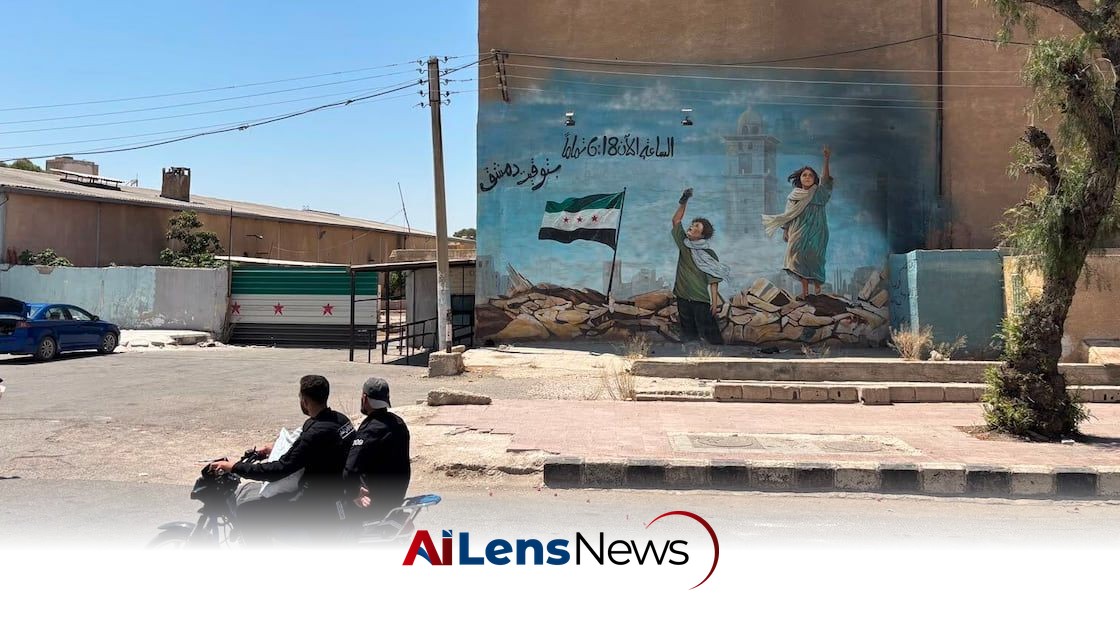


The city of Deraa, pivotal in the Syrian uprising, rejoices as death sentences are handed down to key figures of the Assad regime, marking a significant moment in its tumultuous history.
Abu Dhabi, United Arab Emirates Aug 12, 2026 ALN: The city of Deraa, often referred to as the birthplace of the Syrian uprising, has become a focal point for both celebration and reflection following recent court rulings that have sentenced key figures of the Assad regime to death. For many Syrians, the events of 2011 marked a significant turning point, igniting a movement that sought to challenge decades of authoritarian rule under President Bashar Al Assad. The uprising began with simple acts of defiance, such as graffiti calling for political reform and the release of political prisoners. However, the regime's brutal response to these peaceful protests led to an escalation of violence that ultimately spiraled into a full-blown civil war.
The situation in Deraa escalated dramatically when 15 boys were arrested for spray-painting anti-regime slogans on the walls of the city. Their abduction and subsequent torture at the hands of government forces, particularly under the orders of Atef Najib, a cousin of President Assad and the head of political security in the region, sparked outrage. This incident served as a catalyst for widespread protests, which were met with increasing violence from the government, marking the beginning of a conflict that would ravage the country for years to come.
The uprising in Deraa was not just a local phenomenon; it resonated across Syria and inspired similar protests in other cities. The government's harsh crackdown on dissent, including the use of live ammunition against unarmed protesters, galvanized public support for the uprising. As the protests grew in size and intensity, the regime's response became increasingly brutal, leading to a cycle of violence that would claim hundreds of thousands of lives and displace millions.
Fast forward to the present day, and the recent sentencing of Najib, along with President Assad and his brother Maher, has brought a renewed sense of hope and vindication to many in Deraa. The Al Omari Mosque, a significant locale for protests during the early days of the uprising, has become a site of celebration as residents reflect on the implications of these court rulings. Malek Al Abboud, a local resident who has witnessed the devastation of his city firsthand, expressed his feelings of victory, stating that Najib's actions were pivotal in igniting the revolution. He articulated the collective sentiment among many residents who view Najib as a principal architect of the suffering and destruction that followed the initial protests.
The physical landscape of Deraa bears the scars of the conflict, with numerous buildings reduced to rubble and public spaces transformed into sites of remembrance. One such location is a square dedicated to the anniversary of the uprising, which features a mural depicting a boy with a spray can and a girl making the victory sign—symbols of the hope and defiance that characterized the early days of the protests. This visual representation serves as a poignant reminder of the aspirations that drove the revolution and the sacrifices made by countless individuals.
As the city grapples with its past, the court verdicts also raise questions about the future of justice and accountability within Syria. The Assad regime has long been accused of egregious human rights violations, and the pursuit of justice remains a critical concern for many Syrians. The recent sentences, issued in absentia, highlight the challenges faced by the new Syrian government in holding accountable those responsible for the violence and atrocities committed during the war. With many senior officials having fled the country, including the Assad brothers, the feasibility of enforcing these sentences remains uncertain.
The international community has been closely monitoring the situation in Syria, particularly in light of the ongoing humanitarian crisis and the complex geopolitical dynamics at play. Countries have grappled with how to address the Assad regime's actions, with some advocating for sanctions and others pushing for diplomatic engagement. The recent court rulings may serve as a catalyst for renewed discussions on accountability and justice, both within Syria and in international forums.
Fida, the mother of Malek Al Abboud, expressed her cautious optimism regarding the sentencing of Najib, emphasizing that while it represents a step toward justice, the ultimate goal lies in the capture and accountability of the Assad brothers. Having returned to Deraa from Jordan, where many Syrians sought refuge during the conflict, she reflects on the profound changes that have taken place in her hometown. Her sentiments echo the feelings of many returnees who find themselves in a city marked by loss and longing for the past.
Despite the challenges, Fida remains hopeful for the future, urging others who have fled to return to Syria. Her belief in the potential for recovery and rebuilding is shared by many in the community, who are eager to see their city restored to its former glory. However, the path to recovery is fraught with obstacles, including the lack of infrastructure, ongoing security concerns, and the pervasive atmosphere of fear that still lingers in the aftermath of the war.
The implications of these court rulings extend beyond Deraa, as they may influence the broader political landscape in Syria and the international community's approach to the Assad regime. The pursuit of justice for victims of the conflict is a crucial aspect of any potential reconciliation process, and the recent sentences could serve as a rallying point for those advocating for accountability. Moreover, the response of the international community to these developments will be closely watched, as many countries have grappled with how to address the ongoing crisis in Syria and the complex dynamics of post-conflict reconstruction.
As Deraa continues to navigate the aftermath of the uprising and the ongoing quest for justice, the city remains a symbol of resilience and hope for many Syrians. The recent celebrations stand as a testament to the enduring spirit of those who have fought for change and continue to strive for a better future. The journey toward healing and rebuilding will undoubtedly be a long and arduous one, but the commitment to seeking justice and accountability remains a guiding principle for many in Deraa and beyond.
In conclusion, the recent court rulings and the celebrations in Deraa encapsulate a larger narrative of resistance against oppression and the quest for justice in a devastated nation. As the Syrian people continue to confront the legacy of the Assad regime, the hope for accountability and a brighter future remains alive in the hearts of those who have suffered and endured. The path ahead may be uncertain, but the spirit of Deraa serves as a beacon of hope for all those yearning for change in Syria.
To learn more about the latest developments in Culture & Society, stay updated with our exclusive reports and analyses on AiLensNews.

