

A Ukrainian intelligence officer has retracted his confession in the murder of a woman linked to a Monaco bombing, shifting blame to his accomplice amid ongoing investigations.
New Delhi, India Jul 10, 2026 ALN: A Ukrainian intelligence agent who confessed to killing a woman suspected of attempting to assassinate a multimillionaire and his family in Monaco has now claimed he did not pull the trigger.
During a custody hearing in Kyiv, Vladyslav Reut, who recently led investigators to Anastasiia Berezovska's grave in the woods, stated that he "categorically denied" committing her murder, instead blaming his alleged accomplice, Vitalii Zhykovych. This sudden change in narrative raises numerous questions about the integrity of the investigation and the motivations behind the actions of both men involved.
The complex case has garnered significant attention due to Reut's status as an active and decorated officer of Ukraine's military intelligence agency, GUR, while Zhykovych was formerly employed by the SBU security service. The intertwining of high-ranking intelligence officials with criminal activities presents a worrying scenario for Ukraine's security apparatus, particularly in light of ongoing conflicts and the need for stability within the nation.
On Thursday evening, President Volodymyr Zelensky indicated that he would provide "additional relevant reports" in the coming days, although the motive behind the Monaco explosion targeting Vadym Yermolayev remains unclear. Yermolayev, a businessman who amassed wealth in cognac and real estate, renounced his Ukrainian citizenship years ago and has faced sanctions from Kyiv for continuing business in Crimea after its annexation by Russia. His controversial business dealings and the geopolitical implications of his wealth make this case even more significant, as it touches on issues of corruption, loyalty, and national security.
Now, the would-be assassin has been killed herself, adding another layer of intrigue and tragedy to this already convoluted narrative. Berezovska's death not only eliminates a potential witness but also complicates the investigation, as her motivations and connections remain shrouded in mystery.
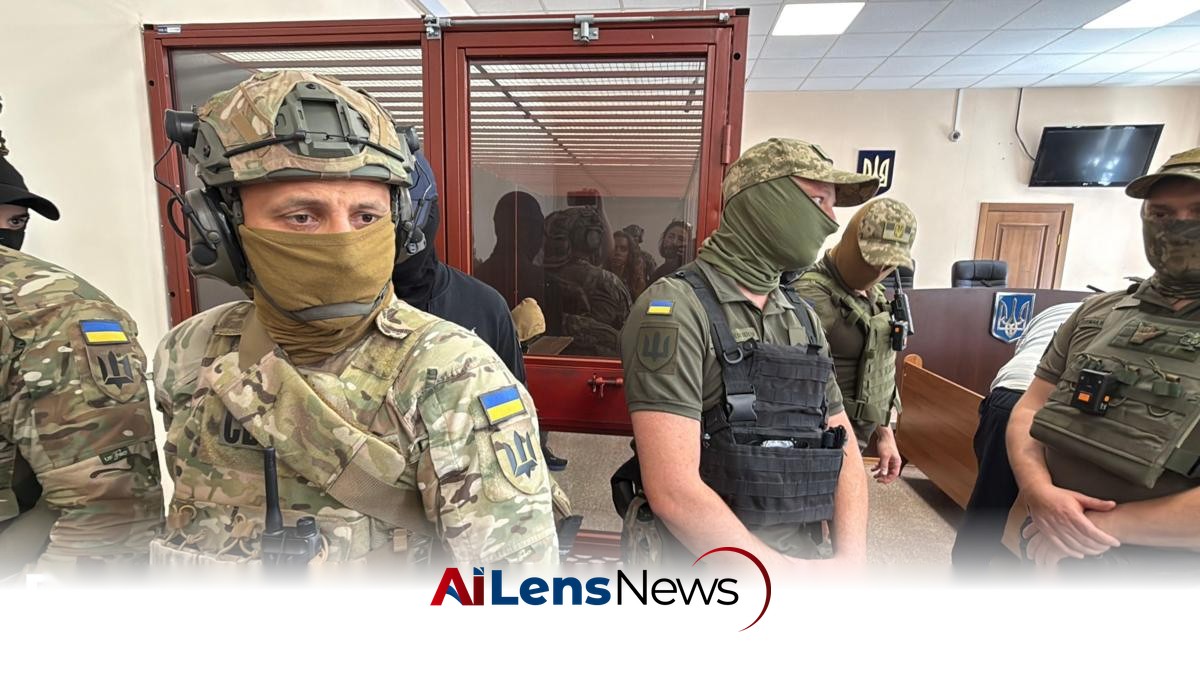
The two suspects appeared in court for separate hearings, handcuffed and flanked by heavily armed security personnel. They wore hoods and masks that obscured their faces, leaving only their eyes visible, as they sat hunched in a glass courtroom cage, avoiding the gaze of television cameras. This dramatic presentation underscores the seriousness of the charges against them and the public's fascination with the unfolding drama.
In court, the prosecutor revealed that Berezovska had entered Ukraine two days after the Monaco explosion, before being identified as the prime suspect. She crossed the border from Poland by bus, indicating a level of planning and forethought in her actions. Upon learning of the allegations against her, investigators quickly focused on Zhykovych and Reut, utilizing Berezovska's phone records to trace cash and cryptocurrency transfers made to her accounts. The use of technology in tracking financial transactions highlights the modern methods employed by law enforcement to uncover criminal activity, particularly in cases involving sophisticated financial networks.
Initially, Reut confessed to shooting Berezovska and led investigators to the location where he buried her body, concealed beneath branches in a wooded area west of Kyiv. However, just days later, he retracted his confession, stating he wanted to "tell the truth" and shifted the blame to Zhykovych. This reversal raises questions about the pressures and circumstances surrounding confessions in high-stakes criminal cases, particularly involving individuals with military and intelligence backgrounds.
Reut emphasized, "I fought enemy combatants while defending my country. I would never intentionally murder an innocent civilian woman." In his revised account, he claimed that he and Zhykovych had picked up Berezovska on a highway to Kyiv because she "needed to be hidden" in connection with a "criminal matter," though he did not elaborate on the specifics. This lack of clarity adds to the confusion surrounding the case, as the motivations for their actions remain elusive.
According to Reut, Zhykovych produced a modified Makarov pistol during their drive and loaded it, claiming it was merely a precaution. After picking up Berezovska, he stated that they were directed to a forest path near the village of Yuriv, where Zhykovych allegedly ordered him to shoot, saying, "It's either her or us." Reut claims that Zhykovych then shot Berezovska four times before they dug a grave and concealed her body. The graphic nature of these allegations paints a chilling picture of the events that transpired and raises ethical concerns about the actions of individuals trained to protect their country.
Reut further alleged that Zhykovych disposed of the gun and Berezovska's belongings in a nearby lake. However, he now questions why he confessed if he did not actually shoot her, claiming he was threatened by Zhykovych, who warned him that his relatives would be in danger if anything happened to him. This claim of coercion introduces a disturbing element into the narrative, suggesting that there may be deeper issues of loyalty and fear within the intelligence community.
Zhykovych's lawyer dismissed Reut's new account, portraying his client as a low-level former SBU officer and asserting that a civilian could not have commanded a serving GUR member to commit murder. He described Zhykovych as a "patriot" who had fought in eastern Ukraine in 2014 and actively defended the Kyiv region since Russia's full-scale invasion in 2022. This defense strategy aims to reposition Zhykovych as a victim of circumstance rather than a perpetrator of crime, highlighting the complexities of loyalty and betrayal in a nation facing external threats.
The prosecutor has stated that both men acted "jointly and in a coordinated fashion" and have been charged with premeditated murder. This assertion emphasizes the seriousness of the allegations and the potential consequences for both individuals involved. The legal ramifications of their actions could have far-reaching effects, not only for the accused but also for the institutions they represent.
Currently, there are more questions than answers in this troubling case for the authorities in Kyiv. Zhykovych's lawyer suggested the possibility of a "Russian trail," referencing past instances of Ukrainian intelligence agents being recruited by Moscow, though he provided no evidence to support this claim. This insinuation raises the specter of foreign interference in domestic affairs, a concern that resonates deeply within Ukraine given its ongoing conflict with Russia and the historical context of espionage and betrayal.
Other theories, including corruption and organized crime, have also been proposed. The intersection of organized crime and state actors is a persistent issue in Ukraine, where corruption has long been a challenge for governance and stability. The implications of this case extend beyond the individuals involved, potentially impacting public trust in the intelligence community and the government as a whole.
Prosecutor Dmytro Tkachuk confirmed that all versions are being considered, noting that one suspect had revealed some information about a potential motive, but he refrained from disclosing it to avoid hindering the investigation. This cautious approach reflects the complexities of legal proceedings in high-profile cases, where the potential for media influence and public opinion can complicate the search for justice.
Both men have been denied bail and remanded in custody as the investigation continues. The ongoing detention highlights the seriousness of the charges and the need for a thorough examination of the evidence before any conclusions can be drawn. As the case unfolds, it will likely continue to attract significant media attention and public scrutiny, with implications for the broader context of Ukraine's struggle for stability in a time of crisis.
To learn more about the latest developments in Wars & Conflicts, stay updated with our exclusive reports and analyses on AiLensNews.

