

Ukraine intensifies its military operations against Russian maritime logistics, targeting supply routes to Crimea and impacting fuel supplies significantly.
New Delhi, India Jul 9, 2026 ALN: Ukraine's military has intensified its attacks near Russian-annexed Crimea, following up strikes on Russia's land corridor to the peninsula by targeting maritime supply routes as well.
Recent military actions by Ukraine have escalated tensions in the ongoing conflict, particularly in the strategically significant region surrounding Crimea. This escalation comes as Ukraine aims to disrupt Russian supply lines, crucial for sustaining military operations and civilian needs within the occupied territories. The focus on maritime attacks marks a shift in Ukraine's military strategy, highlighting the importance of naval capabilities in modern warfare.
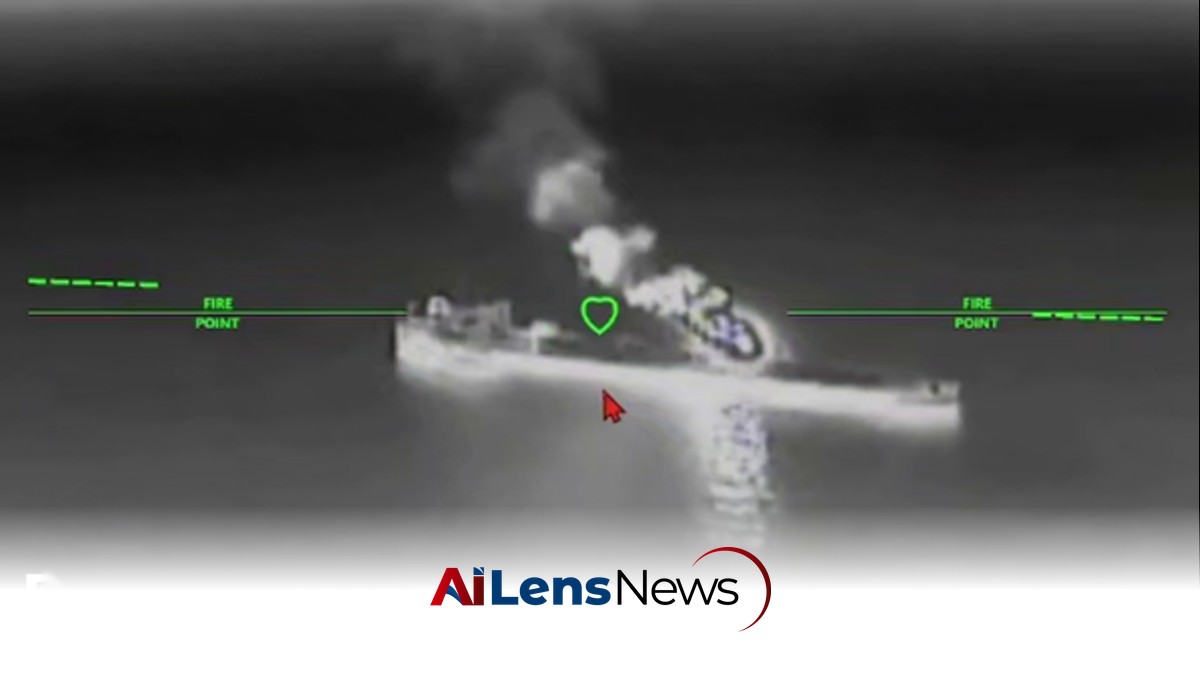
According to reports from Ukraine's drone force commander Robert Brovdi, also known as Magyar, at least 25 ships have been hit and set on fire over the past four days in the Sea of Azov, an inland sea linked to the Black Sea by the Kerch Strait. This region has been pivotal for maritime traffic, particularly for oil shipments to Crimea, which have now become targets of Ukrainian strikes.
The losses incurred by the Russian maritime fleet in such a short time frame represent a significant blow to its naval capabilities. This development poses a direct challenge to Russian President Vladimir Putin's assurances of maintaining fuel supplies to Crimea, which has been under Russian control since 2014. The ongoing conflict has seen Crimea become a crucial logistical hub for Russian military operations, making the disruption of its supply lines a strategic objective for Ukraine.
These attacks appear to be part of Ukraine's self-declared "logistics lockdown," a military strategy aimed at choking off supplies and routes into and out of occupied Crimea. By targeting both land and maritime supply routes, Ukraine is attempting to create a comprehensive blockade that could severely hinder Russian military operations and civilian life on the peninsula.
While Ukraine's military claims that 36 ships have been struck, the exact number remains uncertain, as some vessels may have been targeted multiple times and not all strikes have been independently verified. The majority of these ships are reported to belong to Russia's "shadow fleet" of commercial oil tankers, which have been operating in the region to circumvent sanctions and maintain fuel supplies.
The presence of tankers in the Sea of Azov is a common sight, particularly near the Kerch port, where there is an onshore oil loading facility. Ukraine previously targeted the Kerch port in an attack last month, and subsequent analysis of satellite imagery indicates a noticeable reduction in tanker numbers in the area following these strikes. This suggests that Ukraine's military campaign is having a tangible impact on Russian logistics.
Footage of the recent strikes began circulating on social media platforms, with Brovdi detailing daily strikes between July 6 and July 9. The governor of Russia's Rostov region, Yuri Slyusar, confirmed that two empty tankers were attacked on Wednesday in Taganrog Bay, located in the northeastern corner of the Sea of Azov. Reports indicated that the tankers were still burning the following day, highlighting the destructive capabilities of Ukraine's drone strikes.
Brovdi noted that two of the tankers attacked earlier in the week were each carrying approximately 7,000 tons of fuel destined for Crimea. The implications of these strikes extend beyond immediate damage; they threaten the already precarious fuel supply situation in Crimea, which has been reliant on consistent deliveries from the Russian mainland.
Satellite imagery captured on Wednesday revealed a large plume of smoke rising from a ship approximately 2.5 miles off the Crimean coast, indicating the aftermath of the strikes. Data from NASA suggests that the fire had been ongoing since July 6, likely as a result of the initial wave of drone attacks claimed by Ukraine's forces. Additionally, the same imagery depicted around 20 other vessels departing the area and heading south towards the Black Sea, possibly in an attempt to escape the escalating conflict.
Specific tankers targeted in the attacks have been named by the head of Ukraine's Unmanned Systems Forces, including Venera-3, Sanar-1, Sanar-17, Klimena, Thetis, Alexey Savrasov, and Penelopa. Furthermore, a passenger ferry named SKS One and a bulk carrier were also reportedly attacked in Kerch port, with images of the incidents shared on social media.
It is important to note that leaving the Sea of Azov does not guarantee safety from Ukraine's drone strikes. Ukrainian forces have demonstrated their ability to extend their reach into the Black Sea, as evidenced by a naval drone attack on a sanctioned tanker named Blue. Footage from the attack showed the unmanned vessel evading fire as it approached the tanker, although the exact location of the incident remains unverified. Ukraine stated that the attack occurred near Yalta, a popular resort city in occupied Crimea.
The maritime strikes coincide with ongoing attacks on Russian oil refineries, which have resulted in widespread fuel shortages across the country, affecting major cities like Moscow and St. Petersburg. Ukrainian President Volodymyr Zelensky has argued that targeting oil refineries is a justified response to Russian aggression, asserting that the Russian populace must "feel that it is their state that is waging war." This rhetoric underscores the psychological aspect of the conflict, as Ukraine seeks to rally domestic and international support by framing its military actions as a necessary response to Russian hostilities.
Zelensky highlighted two recent attacks on oil depots in the Tver and Stavropol regions, located hundreds of kilometers from the front lines, as well as an unnamed oil terminal in the Rostov region, believed to be Yug Rusi, situated inland from Taganrog Bay. These strikes illustrate Ukraine's strategy of extending the conflict beyond the immediate battlefield, aiming to disrupt Russian logistical capabilities at multiple levels.
US President Donald Trump characterized the drone strategy as an escalation during his meeting with Zelensky at the NATO summit in Ankara. He acknowledged the potential risks involved but also noted that such actions could lead to a resolution of the conflict. The international community continues to monitor these developments closely, as they could have far-reaching implications for regional stability and security.
The scale of drone attacks on Russian maritime logistics appears to have intensified in recent days. Brovdi claimed that 12 tankers were attacked in just one night from Wednesday into Thursday, a significant increase in operational tempo. Notably, Russian pro-war sources have not disputed the details or authenticity of the footage, indicating a level of concern within Russian military circles regarding the effectiveness of their maritime defenses.
The "Military Informant" Telegram channel criticized the defenseless manner in which the tankers traveled, likening them to a shooting gallery for Ukrainian drone operators. This assessment highlights the perceived vulnerability of the Russian Black Sea Fleet, which has reportedly limited its operational capabilities and is now largely confined to the port of Novorossiysk.
The consequences of these strikes are likely to be severe, particularly given the declining oil refining capacity and ongoing fuel shortages in Crimea. In late June, President Putin estimated that Crimea's monthly fuel requirements were around 70,000 tons, promising to bolster supplies through increased deliveries by both land and sea. The tankers targeted in the Sea of Azov may have been carrying quantities significantly exceeding this estimate, further exacerbating the fuel crisis.
Currently, fuel rationing or shortages are reported in over 90% of Russian regions, with the government implementing a ban on diesel exports. Long queues at filling stations have become a common sight in major cities, reflecting the broader impact of the conflict on everyday life in Russia.
In Crimea, Russian-appointed authorities are grappling with disruptions to power supplies and transportation, further complicating the situation for residents. Ukraine's military has already jeopardized Russia's land supply routes to the peninsula and is now systematically targeting its maritime routes as well, creating a multi-faceted challenge for Russian forces.
To learn more about the latest developments in Wars & Conflicts, stay updated with our exclusive reports and analyses on AiLensNews.

