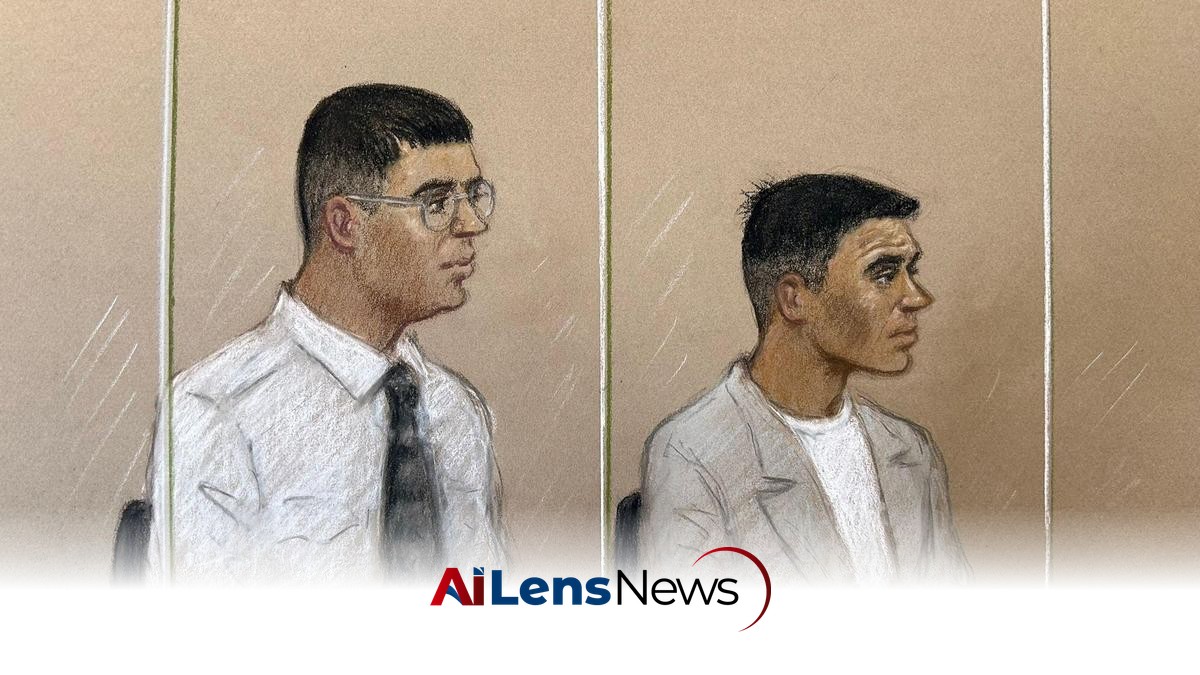


Two Romanian men received prison sentences for the stabbing of Iranian journalist Pouria Zeraati in London, an attack attributed to Iranian state influence.
Tehran, Iran Jul 4, 2026 ALN: On Friday, two Romanian men, Nandito Badea and George Stana, were sentenced to eight and twelve years in prison, respectively, for the brutal stabbing of Pouria Zeraati, a journalist associated with Iran International, a Persian-language television station based in London. This incident, which occurred in March 2024, has been described by the presiding judge, Bobbie Cheema-Grubb, as an attack orchestrated on behalf of the Iranian state, highlighting the ongoing tensions between the Iranian government and dissident voices abroad.
Pouria Zeraati, known for his critical reporting on the Iranian regime, was attacked outside his residence in the Wimbledon area of London. The assault involved the use of a knife, resulting in serious injuries to Zeraati’s leg. The attack was not an isolated incident but part of a broader pattern of intimidation and violence against journalists and activists who oppose the Iranian government.
During the trial, the jury found Badea and Stana guilty of wounding with intent to cause grievous bodily harm. The evidence presented indicated that the attack was premeditated and carried out with the intention of silencing a prominent critic of the Iranian regime. Judge Cheema-Grubb emphasized the severity of the attack, noting that it was executed for the benefit of a foreign power, which in this case, was identified as the Iranian state.
“I am sure that this was an attack carried out for and for the benefit of a foreign power,”
she stated during the sentencing hearing at London's Central Criminal Court. This assertion underscores the serious implications of state-sponsored violence and the lengths to which governments may go to suppress dissent.
The Iranian government has been accused of orchestrating various plots against opposition figures and media outlets operating in the West. U.K. security officials have raised alarms about a rising trend of such activities, particularly targeting Iranian dissidents and the Jewish community in Britain. The case of Zeraati is particularly alarming as it reflects the risks faced by journalists who report critically on authoritarian regimes.
Iran International, the channel for which Zeraati works, has previously been subjected to threats and intimidation due to its coverage of the Iranian government's actions. The broadcaster has faced increasing hostility, prompting it to temporarily relocate its operations to Washington, D.C., in 2023. This move was a direct response to what the network described as an escalation of state-backed threats from Iran. Following a brief period in the U.S., the station resumed operations at a new location in London, indicating its resilience in the face of intimidation.
In the immediate aftermath of the attack on Zeraati, law enforcement authorities reported that Badea, a former professional soccer player, and another accomplice had attacked the journalist before fleeing in a getaway vehicle driven by Stana. The two men managed to escape the U.K. and were later arrested in Romania in December 2024. They were subsequently extradited to the United Kingdom to face justice. A third suspect, identified as David Andrei, remains in Romania, where he is facing separate criminal proceedings.
During the sentencing, Judge Cheema-Grubb highlighted the nature of the attack, suggesting that Stana, as the driver, should have understood the serious implications of his actions, which warranted a longer sentence of twelve years. In contrast, Badea received an eight-year sentence due to his shorter involvement in the conspiracy. The distinctions made in sentencing reflect the legal system's recognition of the varying degrees of culpability among the perpetrators.
In response to the attack and the subsequent trial, Iran's senior diplomat in the U.K. has categorically denied any involvement by the Iranian state in the assault on Zeraati. This denial, however, is met with skepticism given the evidence presented in court and the broader context of Iranian state-sponsored aggression against dissidents. The Iranian regime has a long history of employing tactics to intimidate and eliminate opposition, both domestically and abroad.
Since the attack, Zeraati has made a recovery and has returned to his role at Iran International. However, in a victim impact statement, he expressed the emotional toll the incident has taken on him, stating that he now lives in a state of fear and anxiety, necessitating his relocation abroad to avoid potential reprisals. This sentiment reflects the harsh reality faced by many journalists and activists who challenge authoritarian regimes, underlining the personal risks involved in their work.
Ken McCallum, the head of MI5, the United Kingdom's domestic intelligence service, has indicated that the threat posed by Iran is significant, noting that over twenty potentially lethal plots linked to Iranian operatives had been disrupted in the previous year alone. This statistic highlights the urgent need for vigilance and proactive measures to protect individuals targeted by such plots.
Moreover, the implications of this case extend beyond the immediate violence against Zeraati. It raises critical questions about the safety of journalists and activists in the diaspora, particularly those who report on repressive regimes. The incident serves as a stark reminder of the global nature of the struggle for free expression and the lengths to which some governments will go to suppress dissenting voices.
In a related context, an Iranian proxy group has recently claimed responsibility for a series of antisemitic attacks, which have included stabbings and attempted firebombings at synagogues. These incidents further illustrate the complex web of violence and intimidation that is often employed by state and non-state actors in pursuit of political objectives, contributing to an atmosphere of fear among targeted communities.
As the continues to grapple with the challenges posed by authoritarian regimes and their attempts to silence dissent, the case of Pouria Zeraati serves as a poignant reminder of the critical importance of protecting journalists and activists who courageously stand up against oppression. The need for international solidarity and support for those facing threats due to their work is more pressing than ever, as the fight for human rights and freedom of expression remains a global struggle.
To learn more about the latest developments in International Politics, stay updated with our exclusive reports and analyses on AiLensNews.

