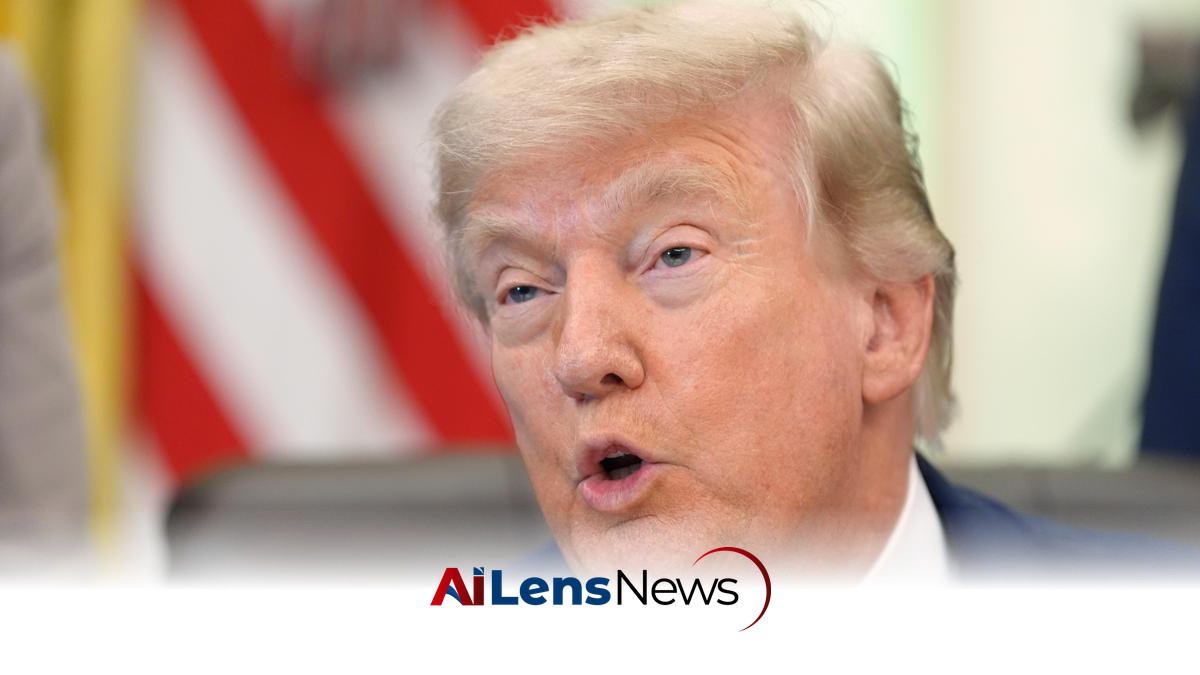


Trump warns of military action against Iran if a deal is not reached, following stalled U.S.-Iran diplomatic talks.
Washington DC, United States Jul 7, 2026 ALN: President Donald Trump recently made a bold declaration regarding the United States' ongoing tensions with Iran, stating that the country would either negotiate a deal or resort to military action to "finish the job." This announcement was made during a press conference on July 6, 2026, in the Oval Office, following the funeral of Iran's Supreme Leader Ayatollah Ali Khamenei. The implications of Trump's comments are significant, especially given the backdrop of escalating conflict and a fragile diplomatic landscape.
The statement comes in the wake of indirect talks between the U.S. and Iran that concluded without any tangible progress. These discussions were part of a broader effort to stabilize the region and prevent Iran from advancing its nuclear capabilities. The talks followed a 60-day ceasefire, which was initiated by Washington in hopes of creating a conducive environment for diplomacy. However, the ceasefire has not led to any substantial breakthroughs, and the situation remains tense.
In his remarks, Trump emphasized the potential for military action, stating, "We’re either going to make a deal or we’re going to finish the job. OK. And it won’t be tough to finish the job. I’d rather make a deal, because I don’t want to affect 91 million people." This comment underscores the administration's belief that military intervention could be a viable option should diplomatic efforts fail. Trump went on to assert the U.S.'s military capabilities, claiming, "We can knock down their bridges in one hour, we can knock out their energy supply.... They don’t have any money now. We haven’t given them any money." Such statements reflect a willingness to use force if necessary, which raises concerns about the potential for further escalation in an already volatile region.
The death of Khamenei has left a significant power vacuum in Iran, and the subsequent funeral was marked by displays of unity among the Iranian populace. Contrary to expectations that the Iranian public might feel demoralized or weakened by the ongoing conflict, many appeared resolute and determined, signaling a potential rallying effect in the face of external threats. This unity could complicate U.S. efforts to negotiate, as a strong nationalistic sentiment may drive the Iranian leadership to adopt a more defiant stance.
The conflict between the U.S. and Iran has deep roots, with tensions escalating significantly since the U.S. withdrew from the Joint Comprehensive Plan of Action (JCPOA) in 2018. This agreement was aimed at curbing Iran's nuclear program in exchange for sanctions relief. Following the withdrawal, the U.S. reimposed stringent sanctions on Iran, which have severely impacted its economy. The Iranian government has since resumed its nuclear activities, prompting further concerns from the international community about the potential for Iran to develop nuclear weapons.
In the context of these developments, the 60-day ceasefire was seen as a critical opportunity for the U.S. to engage Iran diplomatically. However, as the ceasefire period draws to a close without significant progress, the prospect of renewed military action looms large. The U.S. has consistently maintained that it will not allow Iran to develop nuclear weapons, and Trump's comments suggest that the administration is prepared to take drastic measures to achieve this goal.
The geopolitical implications of a potential military conflict with Iran are profound. The Middle East is already a region fraught with instability, and any escalation could have far-reaching consequences not only for the countries directly involved but also for global security. Neighboring countries, particularly those in the Gulf region, would likely be drawn into the conflict, potentially leading to a wider regional war. Additionally, a military confrontation could disrupt global oil supplies, given that a significant portion of the 's oil passes through the Strait of Hormuz, a critical chokepoint for maritime trade.
Furthermore, the prospect of military action could also affect U.S. relations with its allies, particularly those in Europe who have expressed a desire to maintain diplomatic channels with Iran. The European Union has been critical of the U.S. approach, advocating for a return to negotiations rather than military threats. If the U.S. were to engage in military action, it could alienate key allies and undermine international efforts to address the Iranian nuclear issue through diplomacy.
In conclusion, Trump's recent remarks highlight the precarious state of U.S.-Iran relations and the potential for escalating conflict in the region. As the U.S. navigates this complex landscape, the choices made in the coming weeks will be crucial in determining whether diplomatic solutions can be found or if military action will become the reality. The stakes are high, not only for the U.S. and Iran but for the stability of the entire Middle East and beyond.
The U.S.-Iran relationship has been characterized by a series of confrontations and negotiations over the years, with the JCPOA representing a significant diplomatic effort aimed at curbing Iran's nuclear ambitions. The agreement, which was signed in 2015, involved Iran agreeing to limit its nuclear program in exchange for relief from economic sanctions. However, the U.S. withdrawal from the deal under the Trump administration marked a turning point, leading to escalating tensions and a series of retaliatory measures from both sides.
In the wake of the U.S. withdrawal from the JCPOA, Iran began to gradually step back from its commitments under the agreement, increasing its uranium enrichment activities and expanding its nuclear research. This development has heightened fears among U.S. officials and allies that Iran is moving closer to developing nuclear weapons capabilities. The situation was further exacerbated by incidents such as the assassination of Iranian General Qassem Soleimani in early 2020, which led to retaliatory strikes and a significant increase in hostilities between the two nations.
As the U.S. contemplates its next steps, the administration faces pressure from various stakeholders, including military leaders, diplomats, and international partners. The potential for military action raises questions about the effectiveness of such a strategy, particularly given the complexities of the Iranian political landscape and the potential for unintended consequences. Military action could provoke a strong response from Iran, leading to a cycle of violence that further destabilizes the region.
Moreover, the Iranian leadership is likely to view any military threats as an affront to national sovereignty, potentially uniting the country in opposition to U.S. actions. This reaction could complicate diplomatic efforts and make it more challenging for moderate voices within Iran to advocate for engagement with the U.S. and the international community. The internal dynamics within Iran, particularly following Khamenei's death, will play a crucial role in shaping the country's response to U.S. actions and statements.
In light of these developments, the international community is watching closely as the U.S. navigates its approach to Iran. Countries in the region, including Saudi Arabia and Israel, have expressed concerns about Iran's nuclear ambitions and its influence in the Middle East. Their responses to U.S. actions will also be significant in determining the overall stability of the region. The potential for a military conflict could lead to realignment of alliances and increased tensions among regional powers, further complicating an already intricate geopolitical landscape.
In summary, Trump's remarks serve as a stark reminder of the precarious nature of U.S.-Iran relations and the potential for conflict in the Middle East. As the situation continues to evolve, the need for careful diplomacy and strategic decision-making becomes increasingly critical. The decisions made in the coming weeks and months will have lasting implications not only for U.S.-Iran relations but also for the broader stability of the Middle East and global security.
To learn more about the latest developments in International Politics, stay updated with our exclusive reports and analyses on AiLensNews.

