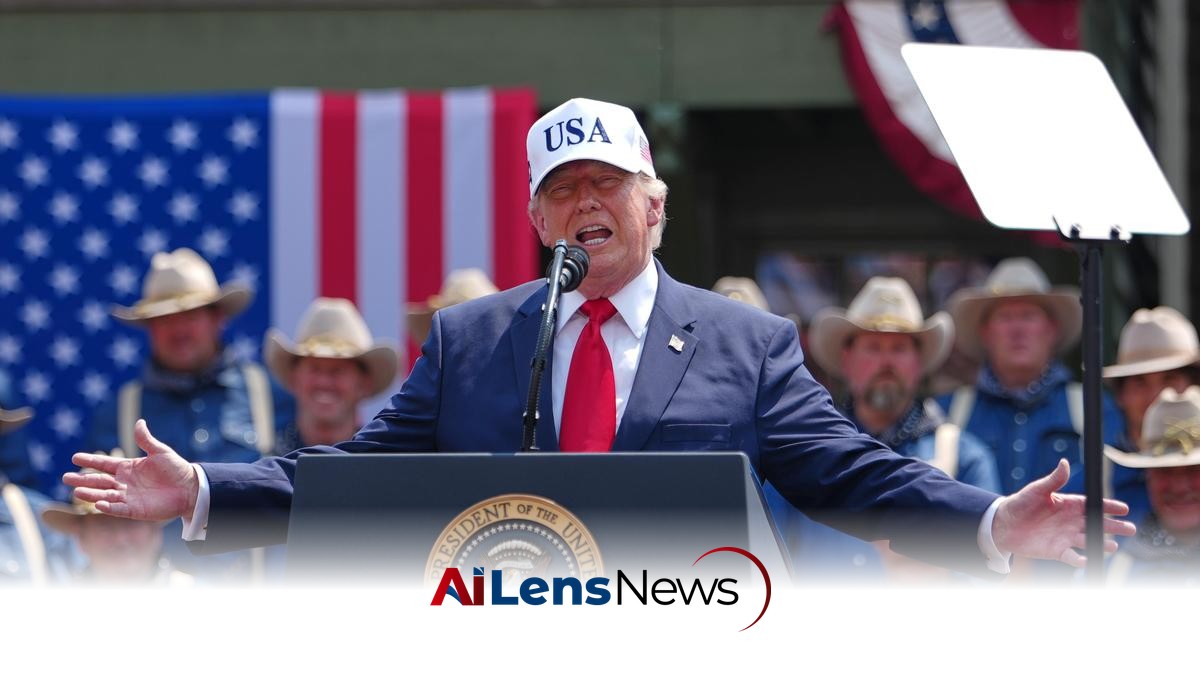


President Trump announces positive developments in U.S.-Iran relations following talks in Qatar focused on denuclearization and asset release.
Washington DC, United States Jul 2, 2026 ALN: President Donald Trump stated on Wednesday, July 1, 2026, that the United States is "getting along very well" with Iran, following recent indirect talks held in Qatar. This statement marks a significant moment in the ongoing and often tumultuous relationship between the two nations, which has been characterized by decades of conflict, sanctions, and diplomatic challenges. The U.S.-Iran relationship has been one of the most complex and contentious in international relations, with roots that extend back to the mid-20th century.
During a press briefing, Trump remarked, "The denuclearization of Iran is moving along well." He expressed optimism about the discussions, noting, "They've had very good meetings, and we'll see." His comments reflect a cautious yet hopeful approach to diplomacy, emphasizing that Iran has "come a long way" in their negotiations. These remarks are particularly noteworthy given the historical context of U.S.-Iran relations, which have been strained since the 1979 Iranian Revolution. This revolution resulted in the overthrow of the Shah of Iran, a U.S.-backed monarch, and the establishment of an Islamic Republic under Ayatollah Khomeini. The U.S. embassy in Tehran was taken over by Iranian militants, leading to a severance of diplomatic ties that has not been fully restored to this day.
The discussions in Qatar, which were conducted at a lower diplomatic level, aimed to build on progress made at the Lake Lucerne Summit, according to a diplomat who requested anonymity. The Lake Lucerne Summit, which took place earlier in the year, had focused on various regional security issues, including the Iranian nuclear program, and had seen representatives from multiple countries engage in dialogue about Iran's role in the Middle East. The backdrop of these negotiations is the long-standing concern over Iran's nuclear ambitions, which many in the international community view as a potential threat to regional and global security.
In a significant development, Kazem Gharibabadi, the head of the Iranian delegation and Deputy Foreign Minister, announced the conclusion of the talks. He revealed that participants had agreed to establish a communication channel by the following day to monitor and report any violations of the initial memorandum of understanding. This communication channel is expected to facilitate ongoing dialogue and help prevent misunderstandings or escalations that could arise from misinterpretations of actions taken by either side. The establishment of such a channel is crucial, especially given the history of miscommunication and misinterpretation that has often led to heightened tensions and conflict.
Gharibabadi also indicated that Iran had insisted on no direct negotiations in Doha regarding the deal to end the conflict that escalated following U.S.-Israeli strikes on Iran in late February. This insistence on indirect negotiations underscores the complexities of the relationship, as direct talks may be perceived by hardliners in Iran as a concession or a sign of weakness. The strikes in February had heightened tensions significantly, leading to fears of further military escalation in the region. By opting for indirect talks, both sides may be attempting to de-escalate tensions while still addressing critical issues. This approach also reflects a broader trend in international diplomacy, where indirect negotiations are often employed to navigate sensitive political landscapes.
In addition to the new communication channel, discussions also addressed the fate of frozen Iranian assets. Tehran has been demanding the release of these funds as part of the settlement process. The issue of frozen assets has been a longstanding point of contention, with billions of dollars held in foreign banks due to sanctions imposed on Iran over its nuclear program and other activities deemed threatening to regional stability. The financial strain on Iran has been exacerbated by the economic repercussions of the COVID-19 pandemic and declining global oil prices, which have significantly impacted its economy.
Gharibabadi mentioned that during meetings with Qatari officials, including representatives from the Central Bank, various issues concerning the expenditure of part of the initial six billion dollars were reviewed. He stated, "It was agreed that, based on the needs communicated by our country, the required goods would be purchased and made available to Iran." This agreement could potentially ease some of the economic pressures faced by Iran, which has been grappling with the effects of international sanctions and a struggling economy. The release of these funds could also have broader implications for Iran's domestic stability, as economic hardship has historically been a source of unrest.
This dialogue marks a notable shift in U.S.-Iran relations, with both sides expressing a willingness to engage in further discussions aimed at resolving longstanding issues. The potential for a thaw in relations could have significant implications not only for the two countries but also for the broader Middle East region. A more stable U.S.-Iran relationship could lead to improved security conditions, particularly in Iraq and Syria, where both nations have vested interests. The dynamics of power in the region are complex, and any change in relations between the U.S. and Iran could lead to a ripple effect impacting various actors involved in regional conflicts.
Moreover, the implications of these negotiations extend beyond just bilateral relations. The international community will be closely monitoring the outcomes of these negotiations and their implications for regional stability. Allies of the United States, particularly Israel and Saudi Arabia, have expressed concerns over Iran's nuclear ambitions and its influence in the region. Any perceived rapprochement between the U.S. and Iran may lead to heightened tensions among these nations, prompting them to reassess their own security strategies. Israel, in particular, has been vocal in its opposition to any agreements that could allow Iran to maintain a nuclear program, fearing that it would embolden Tehran's regional influence.
In conclusion, the recent talks in Qatar represent a critical juncture in U.S.-Iran relations, highlighting the potential for dialogue and negotiation to address complex issues. While optimism is present, the path forward remains fraught with challenges, and the international community will be watching closely as both nations navigate this delicate diplomatic landscape. The future of U.S.-Iran relations will depend on the ability of both sides to adhere to agreements made and to foster an environment conducive to further discussions, ultimately aimed at achieving lasting peace and stability in the region. The success of these efforts could redefine not only U.S.-Iran relations but also the geopolitical landscape of the Middle East, impacting global security dynamics for years to come.
To learn more about the latest developments in Diplomacy & Treaties, stay updated with our exclusive reports and analyses on AiLensNews.

