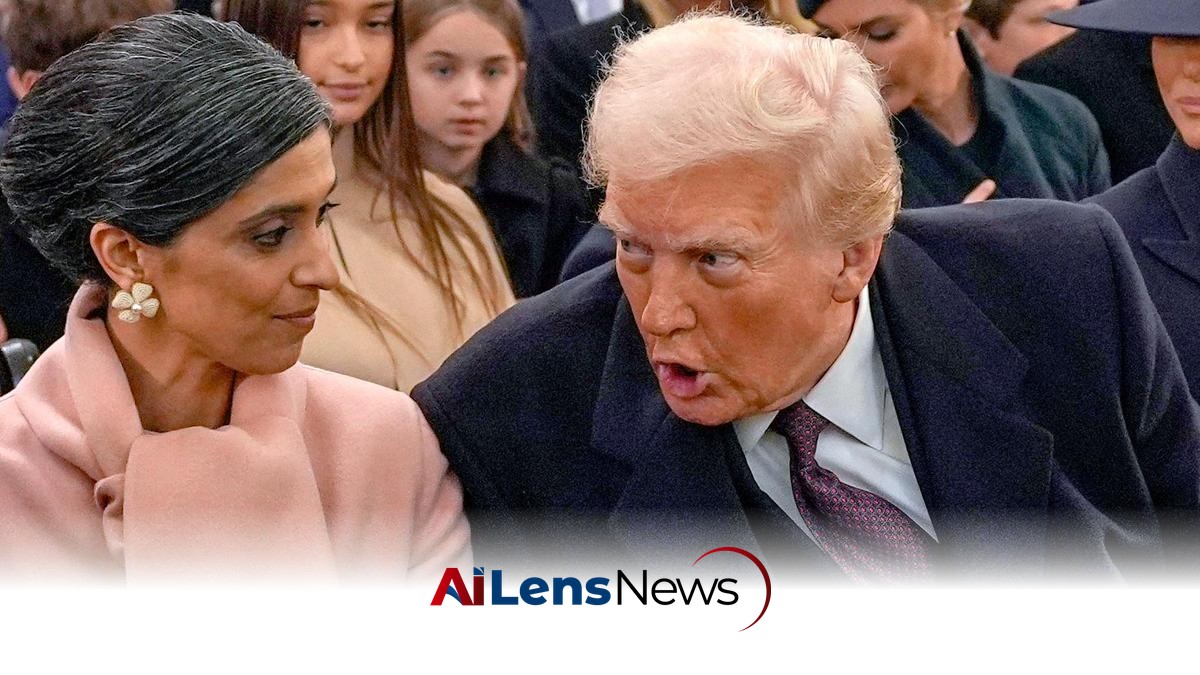


In a recent podcast appearance, Trump read a children's book and humorously reflected on his predecessors and his own presidency.
Washington DC, United States Jul 4, 2026 ALN: U.S. President Donald Trump made a notable appearance on the podcast hosted by second lady Usha Vance, titled "Storytime with the Second Lady," where he engaged in a unique format of reading children's literature aimed at young audiences. The episode, which was posted online on July 3, 2026, featured Mr. Trump reading "Presidents Play!"—a children's book published by the White House Historical Association that showcases illustrations of various U.S. presidents participating in sports and other recreational activities on the White House grounds.
Mr. Trump is known for his unorthodox approach to public speaking and media engagements, often deviating from prepared remarks to share personal anecdotes, opinions, and reflections. This podcast episode was no exception as he provided a running commentary not only on the book itself but also on his predecessors, his own physical fitness, and his experiences in the White House. The segment was pre-taped in mid-June in the Oval Office, which has been notably adorned with gold accents and various personal touches added by Mr. Trump, including a stuffed bald eagle and tables designed to resemble oversized books.
During the podcast, Ms. Vance inquired about Mr. Trump's reading habits while he serves as President. Mr. Trump candidly admitted that his reading primarily consists of newspapers, stating, "I usually read stories about myself." This remark reflects his long-standing relationship with the media, characterized by both a fascination and a contentious dynamic. Throughout his presidency, Mr. Trump has often been the subject of extensive media coverage, and his comments suggest an awareness of the narratives being constructed around him.
As he flipped through the pages of the children's book, Mr. Trump shared his thoughts on several past presidents, often interjecting humor and personal commentary. His observations included descriptions of Lyndon Johnson as a "tough cookie," and he referred to Ronald Reagan as a "high-quality person" who reminded him of a father figure. Such comparisons highlight the personal and emotional connections that Mr. Trump feels towards these historical figures, illustrating how they have influenced his own presidency.
Mr. Trump's commentary also included a playful jab at Richard Nixon, the only U.S. president to resign from office due to the Watergate scandal, as he remarked, "got himself into trouble, I guess." This comment reflects Mr. Trump's tendency to frame historical events in a light that resonates with his own political narrative. His mention of Herbert Hoover, who served during the Great Depression, included a quip about Hoover's invention of a game called "Hoover Ball," stating, "That worked out better for him than the economy," which underscores Mr. Trump's focus on economic performance as a key metric of presidential success.
Barack Obama, a frequent target of Mr. Trump's criticisms, was depicted in the book playing basketball. Mr. Trump, referring to him as "Barack Hussein Obama," expressed skepticism about Mr. Obama's athletic abilities, adding, "He won't be in the Master's anytime soon." This comment exemplifies Mr. Trump's penchant for using humor and sarcasm to critique his political opponents, often leveraging public perceptions to bolster his own image.
Upon reaching a page featuring Bill Clinton jogging on the White House track, Mr. Trump expressed his reluctance to engage in similar physical activities, stating, "I don't think I'll ever do that," while also acknowledging that he has a favorable view of Clinton, saying, "I like him a lot." This acknowledgment reflects the complex relationships that exist between political figures, even those who may have been adversaries during their respective administrations.
Mr. Trump's musings extended to Abraham Lincoln, whose image on horseback prompted him to express a desire to ride horses, humorously suggesting he would prefer a "nice old horse that's extremely slow, lazy" for his potential riding experience. This lighthearted moment showcases Mr. Trump's ability to connect with a younger audience while also revealing a more personal side of his character.
As he viewed a drawing of John Quincy Adams swimming in the Tiber Creek, which runs past the south lawn of the White House, Mr. Trump made a remark about the ongoing construction of a ballroom on the White House grounds, stating, "I think we're building a beautiful ballroom on top of it." This comment reflects the ongoing renovations and personal projects that Mr. Trump has pursued during his time in office, often emphasizing his vision for the White House as a space for both governance and personal expression.
In discussing illustrations of past presidents engaging in physical activities, Mr. Trump turned the conversation towards his own physique. Upon seeing Gerald Ford swimming, he remarked, "I don't know if I look good in a bathing suit. I haven't had a bathing suit in a long time." This self-reflective comment highlights Mr. Trump's awareness of public perception regarding his physical appearance and fitness, a topic that has been a point of discussion throughout his presidency.
Moreover, Mr. Trump referred to William Howard Taft, known for his size, describing him as "our heaviest president" and humorously adding, "I have to be careful because I don't want to supersede his record. For all of you out there watching, keep yourself in good shape." This advice to young viewers not only promotes physical fitness but also reflects Mr. Trump's emphasis on health and wellness, themes that resonate with many Americans.
As the podcast drew to a close, Ms. Vance sought Mr. Trump's perspective on why children should celebrate the country on July 4th. Mr. Trump's response was somewhat ambiguous, stating, "We have a great country. We have a country that, it's on a little bit of a ledge right now. It can go one way or another, you understand that. But we're going to make it go the other. And we're going to make America greater than ever before." This statement encapsulates Mr. Trump's broader political narrative, which often emphasizes themes of national pride, unity, and the idea of American exceptionalism.
In summary, Mr. Trump's appearance on Usha Vance's podcast provided a unique blend of entertainment and political commentary, showcasing his distinctive style of engaging with both history and contemporary issues. By reading a children's book and reflecting on past presidents, Mr. Trump not only entertained young listeners but also reinforced his own views on leadership, fitness, and national pride. The implications of such appearances extend beyond mere entertainment, as they contribute to the ongoing discourse surrounding his presidency and the legacy he aims to leave behind.
To learn more about the latest developments in Culture & Society, stay updated with our exclusive reports and analyses on AiLensNews.

