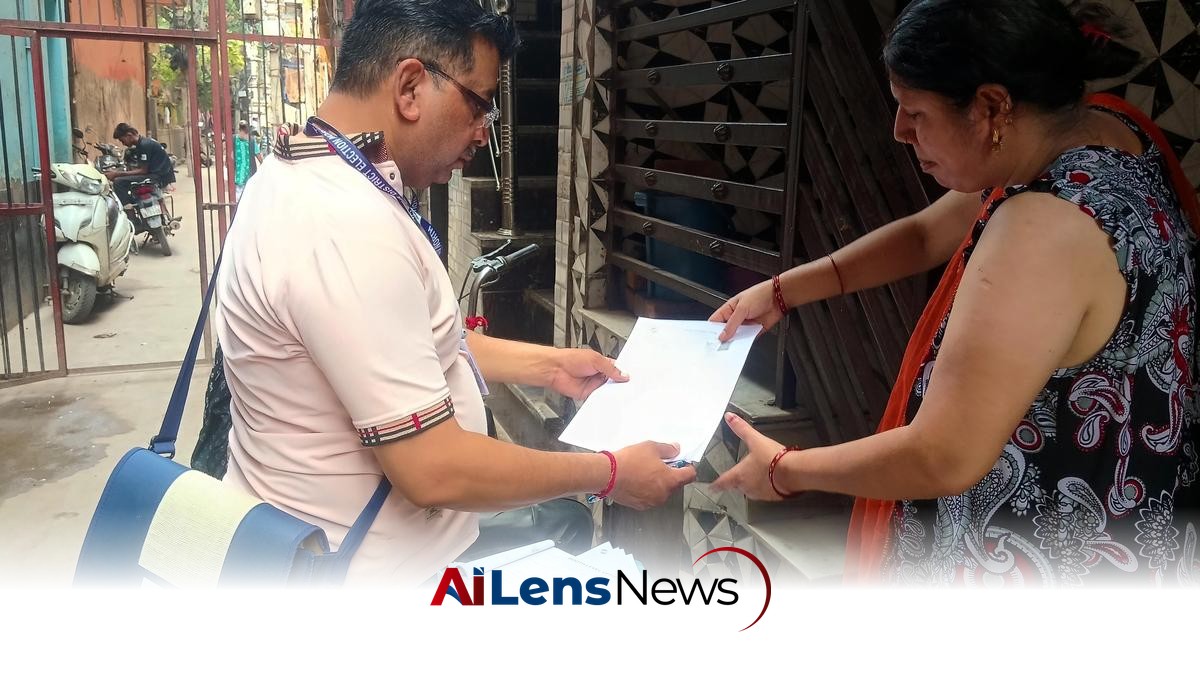


Government schools face classroom disruptions as teachers are deployed for electoral duties, impacting student learning and exam preparations.
New Delhi, India Jul 7, 2026 ALN: New Delhi:
In a significant development affecting the education sector, numerous government teachers have been enlisted by the Election Commission as Booth Level Officers (BLOs) for the ongoing special intensive revision (SIR) of electoral rolls. This decision has led to a substantial staff shortage in government schools, prompting school authorities to rework their timetables and make various adjustments to cope with the absence of teachers.
The situation has become particularly challenging as many schools have resorted to assigning a single teacher to manage two classes simultaneously. In some instances, students are being redirected to libraries or sports grounds due to the lack of available teachers in classrooms. The impact of this measure raises concerns about the quality of education students are receiving, especially in light of the upcoming mid-term exams scheduled for September.
Principals across various schools have voiced their apprehensions regarding the disruption of regular classes, emphasizing the potential negative consequences for students' learning outcomes. The dual responsibilities of teachers, who are now tasked with managing both their school duties and BLO responsibilities, have resulted in extended work hours, often stretching into the night. This scenario has created a challenging environment for educators who are already facing the pressures of ensuring quality education while fulfilling their electoral duties.
Earlier in the week, the Government Schools Teachers’ Association (GSTA) brought attention to the academic loss resulting from this situation in a formal notice addressed to Delhi Education Minister Ashish Sood. In his correspondence, Ajay Veer Yadav, the general secretary of GSTA, expressed concern over the significant number of trained teachers being deployed as BLOs and BLO supervisors. He highlighted that the absence of thousands of teachers from schools could adversely impact the education of millions of students. Yadav emphasized that such academic losses are unlikely to be compensated adequately at a later stage, potentially hindering students' academic progress.
Approximately 13,000 BLOs have been deployed for this initiative, comprising government school teachers, anganwadi workers, and ASHA workers. Official orders stipulate that these individuals will be required to serve full-time until October or until the completion of the SIR process, whichever comes first. The notices issued also instructed school heads or managers to make arrangements to relieve teachers of their regular duties during this period, further complicating the situation for school administrators.
‘Impacting studies’
For school principals, the challenge of managing teacher assignments has become increasingly daunting. One principal, who requested anonymity, shared that a significant number of senior teachers from his school have been assigned to BLO duties. He remarked, "Even some class teachers have been assigned BLO duty. So, who will teach then? Some teachers have been given two registers, and they have to take care of multiple classes." This situation has resulted in the merging of classes or sending students to the playground, a decision that the principal acknowledges will impact students' studies and complicate the completion of the syllabus ahead of the mid-term examinations.
Another principal echoed these sentiments, stating, "We can’t leave the students alone. So during free periods, they are being engaged in the library or with sports. We have to alter timetables because the teachers will be away for a much longer time than they usually are for election or other duties." This highlights the need for educational institutions to adapt quickly to unforeseen circumstances while ensuring that students continue to receive some level of educational engagement during this challenging period.
‘Double the work’
A senior government school teacher currently engaged in BLO duty shared her perspective, noting, "In my school, the principal has assigned my school duties to another teacher for the time being. But unfortunately, substitute teachers do not put in the same amount of effort because it is additional work for them, too." This observation raises questions about the effectiveness of substitute teaching during such critical times and the potential long-term impact on students' learning experiences.
Not all schools, however, have the flexibility to spare teachers exclusively for SIR duty. The issue is particularly pronounced in schools where a greater number of teachers have been deployed for BLO work. One teacher, who along with a colleague has been assigned to SIR duty, mentioned that his principal had relieved him of his school responsibilities entirely. Conversely, in schools where more teachers have been assigned as BLOs, they are attempting to juggle both sets of duties, creating a challenging environment for educators.
Another teacher, who has been balancing his responsibilities between school and BLO duties, expressed his frustrations, stating, "There is pressure from both sides. I am going to school and then stepping out to go for door-to-door BLO work. There are no fixed hours as such, and we are working all day, and into the night." This dual workload not only affects the teachers' well-being but also raises concerns about their ability to deliver quality education to their students.
Similarly, anganwadi workers are also feeling the strain of managing dual responsibilities. One anganwadi worker shared, "I am fulfilling both my duties at the same time, though I’m managing some of it on my phone. My work starts early in the morning and continues till late at night." This highlights the broader implications of the SIR initiative on various sectors, including early childhood education, as workers strive to meet the demands of both their educational and electoral responsibilities.
The repercussions of this situation extend beyond the immediate challenges faced by schools and teachers. The academic performance of students could be significantly impacted, with the potential for long-term consequences if the disruptions are not addressed promptly. As the mid-term exams approach, the urgency to find a balance between electoral duties and educational responsibilities becomes increasingly critical. The situation calls for a comprehensive review of how such initiatives are implemented, ensuring that the educational needs of students are not compromised in the pursuit of electoral preparedness.
In conclusion, the ongoing special intensive revision of electoral rolls has placed an unexpected burden on government schools, resulting in teacher shortages and disruptions to the academic calendar. As schools grapple with these challenges, it is essential for educational authorities to consider the implications of deploying teachers for electoral duties and to explore solutions that prioritize the educational needs of students while fulfilling civic responsibilities. The dual role of educators as both teachers and electoral officers underscores the need for a more sustainable approach to managing such initiatives in the future, ensuring that the quality of education remains a top priority amidst electoral processes.
To learn more about the latest developments in International Politics, stay updated with our exclusive reports and analyses on AiLensNews.

