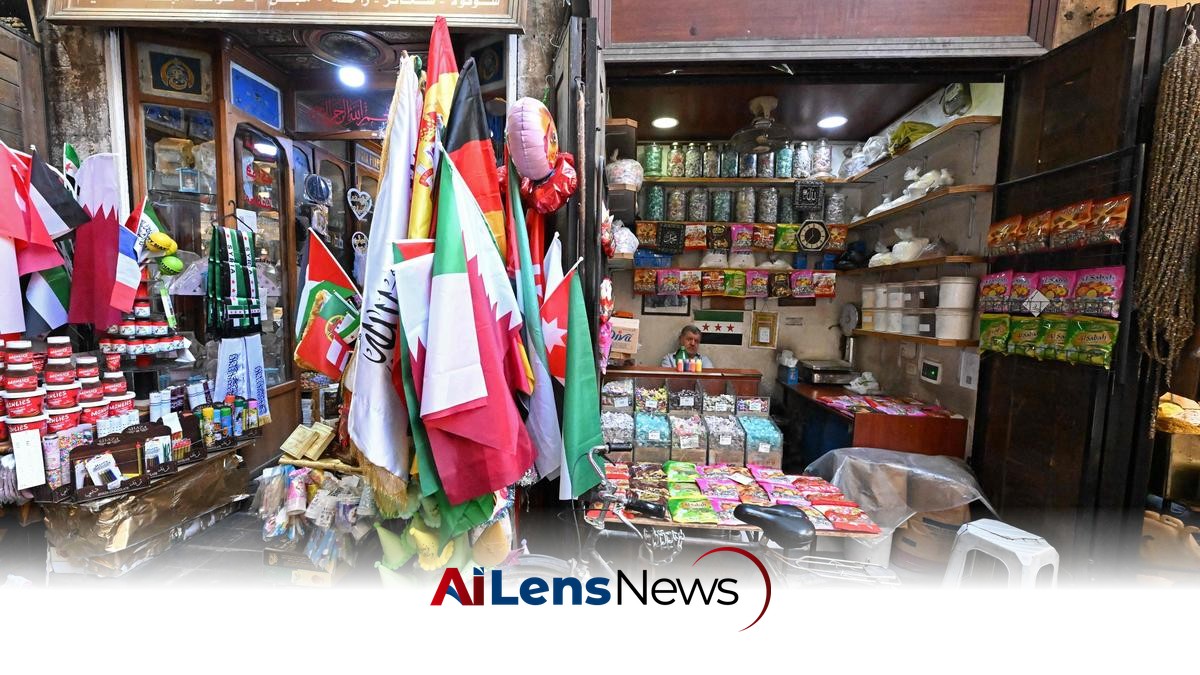


Syria celebrates the U.S. decision to remove it from the terrorism blacklist, signaling potential economic recovery and investment opportunities.
New Delhi, India Jul 10, 2026 ALN: The recent announcement by the United States to remove Syria from its list of "state sponsors of terrorism" has been met with optimism and relief from the Syrian government and various economic analysts. This decision, made public on July 8, 2026, marks a significant shift in U.S.-Syria relations, which have been strained for decades due to geopolitical tensions and conflicting interests in the region.
The designation of Syria as a state sponsor of terrorism was first imposed in 1979, a period characterized by the Cold War and heightened tensions in the Middle East. This classification has had profound implications for Syria's economy, effectively isolating it from international financial systems and limiting foreign investment opportunities. The U.S. government cited Syria's support for various militant groups and its involvement in regional conflicts as the rationale for this designation. Over the years, this label has hindered Syria's ability to engage in trade, access international loans, and attract foreign direct investment, which are critical components for economic growth and recovery.
In the wake of the U.S. announcement, Syrian Foreign Minister Asaad al-Shaibani expressed his gratitude on social media, stating that "a dark page in Syria's history has been turned." This sentiment reflects a broader hope among Syrian officials that the removal from the blacklist could lead to improved economic conditions and a more favorable investment climate. The Syrian foreign ministry described the U.S. decision as an "important development in the course of Syrian-American relations, which are based on dialogue, mutual respect, and shared interests." This indicates a desire for a more cooperative relationship moving forward, which could have implications for regional stability.
Syria's Finance Minister, Mohammed Barnieh, echoed this optimism, asserting that the U.S. decision "paves the way to boost investment, accelerate economic recovery, and reintegrate Syria into the global economy." This perspective is grounded in the belief that removing the designation will eliminate one of the most significant barriers to financial engagement with the international community, thus opening doors for foreign investors who have been hesitant to engage with a country long viewed as a high-risk environment. The potential influx of foreign capital could be vital for rebuilding infrastructure and stimulating economic activity, particularly in sectors such as construction, agriculture, and technology.
U.S. Secretary of State Marco Rubio's notification to Congress regarding this pivotal move indicates that the decision is part of a broader strategy to reshape U.S. foreign policy in the region. The announcement came during a NATO summit in Turkey, where President Donald Trump held discussions with Syrian President Ahmed al-Sharaa, signaling a potential thaw in relations between the two nations. This meeting was significant as it highlighted a willingness from both sides to engage in dialogue and explore avenues for cooperation, which could alter the geopolitical landscape in the Middle East.
While the delisting is seen as a "pivotal shift from an economic standpoint," as noted by academic and economic adviser Ziad Arbash, challenges remain. Arbash pointed out that, despite the removal from the blacklist, practical barriers to financial transactions still exist. For instance, transferring money from Europe to Syria can take up to three weeks and involves complex procedures, as many international banks continue to regard Syria as a high-risk jurisdiction. These lingering challenges underscore the fact that while the removal from the blacklist is a significant step, it does not automatically translate into immediate economic benefits for the Syrian populace.
Additionally, the Syrian population has faced difficulties accessing various U.S. software and platforms, such as Netflix, Zoom, and ChatGPT, which are often restricted due to the lingering effects of sanctions and the country's classification as a state sponsor of terrorism. This has not only limited entertainment options but also hindered educational and professional opportunities for many Syrians. The digital divide exacerbated by these restrictions has implications for the country's ability to engage with the global economy and develop a modern workforce capable of competing in a globalized market.
The U.S. has been gradually lifting sanctions against Syria, a process that began a year prior to the recent announcement. However, experts like Arbash contend that these measures alone have not been sufficient to facilitate a meaningful economic recovery. The removal from the blacklist is viewed as a crucial step forward, but it must be accompanied by further actions to fully reintegrate Syria into the global financial system. This includes addressing the concerns of international banks and financial institutions, which remain wary of engaging with Syria due to its past designation and ongoing regional conflicts.
Central bank governor Mohamad Safwat Raslan emphasized that the U.S. decision sends a "positive message to the Syrian people and to the international economic community." This sentiment reflects a broader hope among Syrians that the delisting could lead to increased stability and prosperity in the region. The potential for foreign investment could also help to rebuild a country that has been ravaged by years of civil war, economic sanctions, and political isolation. The rebuilding process will require not only financial resources but also a stable political environment that encourages investment and fosters economic growth.
Historically, Syria's economy has suffered significantly due to the ongoing conflict that began in 2011, which has led to widespread destruction of infrastructure, displacement of millions, and a humanitarian crisis of unprecedented scale. The hope is that with the lifting of certain restrictions, international aid and investment can flow into the country, helping to rebuild its economy and improve the living conditions of its citizens. The Syrian government has expressed a commitment to implementing economic reforms that could attract foreign investment and support sustainable development initiatives.
However, the implications of this decision extend beyond economic recovery. The U.S. removal of Syria from the blacklist could also influence regional dynamics, particularly in relation to Iran and Russia, who have been key allies of the Syrian government throughout the conflict. The shift in U.S. policy may prompt a reevaluation of alliances and strategies among regional powers, as they assess the future of their engagements with Syria. For instance, Iran and Russia may recalibrate their support for Syria in light of the changing U.S. stance, which could impact the balance of power in the region.
As the situation continues to evolve, the international community will be closely monitoring the developments in U.S.-Syria relations and the broader implications for the Middle East. The potential for economic recovery and reintegration into the global economy represents a significant opportunity for Syria, but it also comes with challenges that must be addressed to ensure a sustainable and peaceful future for the nation. The success of this transition will depend on the Syrian government's ability to implement necessary reforms, foster a stable political environment, and build trust with the international community to attract the investment needed for long-term recovery.
To learn more about the latest developments in International Politics, stay updated with our exclusive reports and analyses on AiLensNews.

