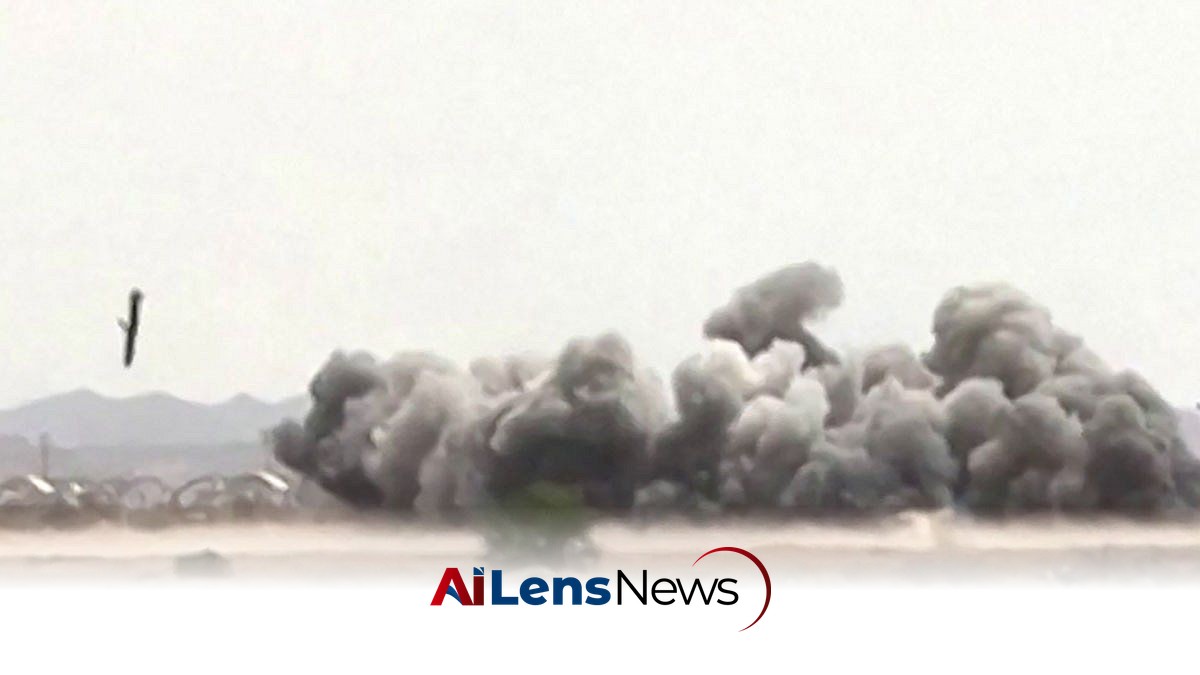


Yemen's Houthi rebels have declared a blockade on Saudi shipping at Bab El Mandeb, risking global trade and escalating tensions in the Iran conflict.
Riyadh, Saudi Arabia Jul 22, 2026 ALN: Cairo: A declared blockade of Saudi Arabia by Yemen’s Houthi rebels has the potential to widen the Iran war and further disrupt global oil supplies and international trade. The Houthis have announced a blockade targeting vessels linked to Saudi Arabia, which they claim is a retaliatory measure against the kingdom’s longstanding blockade on Yemen and a recent attack on the international airport in Yemen’s rebel-held capital, Sanaa. They assert that this blockade has already forced six ships to reroute, although there has been no independent verification of this claim.
Bab El Mandeb Strait, located at the southern tip of the Arabian Peninsula, is a vital shipping chokepoint that connects the Red Sea to the Gulf of Arabia. Approximately 12% of the world’s trade, including a significant portion of global container traffic, transits through this narrow waterway, facilitating trade between Europe and Asia via Egypt’s Suez Canal. The strategic importance of Bab El Mandeb has heightened in recent years, particularly for Saudi oil exports, as disruptions in the Strait of Hormuz—due to tensions related to the ongoing Iran war—have severely limited shipping activities out of the Arabian Gulf.
The Houthis have stated that their blockade will specifically target vessels that are connected to Saudi Arabia or those navigating to and from its Red Sea ports. However, during a previous blockade announced against Israel amid the war in Gaza, the Houthis engaged in attacks on numerous vessels that had little or no direct connection to that conflict. This history raises concerns that the threat of blockade alone could deter international shipping from utilizing this crucial maritime route.
While the Houthis do not control the coastline along Bab El Mandeb, which remains under the authority of their opponents in Yemen’s civil war, they do hold territory within a 100-kilometer proximity to the strait. Reports from Houthi officials indicate that the group has been strategizing for months on how to effectively disrupt shipping in this vital waterway. Their plans reportedly include deploying naval mines, explosive-laden boats, drones, and helicopters to facilitate boarding operations on targeted vessels. These officials, speaking anonymously due to restrictions on media communication, have indicated that vessels will receive warnings not to cross designated boundaries in the strait, and military action will follow if these warnings are disregarded.
In the context of the Strait of Hormuz, Iran has demonstrated that even sporadic attacks on shipping can effectively close a critical waterway by significantly increasing risks and insurance premiums associated with maritime operations. This has raised alarms about the potential for similar tactics to be employed by the Houthis in Bab El Mandeb, which could further disrupt global trade and oil supplies.
Experts warn that if Bab El Mandeb comes under pressure simultaneously with shipping disruptions in the Gulf, it could lead to significant disruptions across two of the world’s most critical maritime routes. Clionadh Raleigh, founder of ACLED, a conflict monitoring service, emphasized the implications of such a scenario, highlighting the potential for widespread economic repercussions. In June alone, more than 7 million barrels of petroleum per day transited through Bab El Mandeb, a substantial increase from the approximately 4 million barrels per day that passed through prior to the Iran war.
Saudi Arabia has been exporting around 4 million barrels of oil daily through its Red Sea port of Yanbu, which has somewhat mitigated the impact of the closure of the Strait of Hormuz. However, the possibility of a blockade in Bab El Mandeb poses a new challenge. Saudi Arabia still possesses alternative routes for exporting crude oil, such as shipping up to 2.5 million barrels per day across the Red Sea to Egypt, where the SUMED pipeline can transport it to the Mediterranean. Additionally, they could utilize the Suez Canal to ship approximately 1 million barrels a day.
International shipping companies may also consider rerouting their vessels, as many did during the height of the war in Gaza. However, this alternative involves taking a longer path around the Cape of Good Hope off South Africa, which could add one to two weeks to voyages and significantly increase shipping costs.
The Houthis have previously attacked over 100 vessels during the peak of the conflict in Gaza, a campaign that was curtailed only after a concerted US and Israeli air campaign intervened in early 2025. In light of the current blockade threats, US President Donald Trump downplayed the situation, suggesting that if any significant actions were taken, the US would respond decisively. “So far, it hasn’t happened,” Trump remarked, indicating a belief in the resilience of international shipping routes.
However, the Houthis' actions also risk reigniting the broader conflict with Saudi Arabia and its allies in Yemen, where major hostilities had subsided following a truce established in 2022. The Saudi military has stated its commitment to keeping Bab El Mandeb open, with Maj. Gen. Turki Al Malki, a spokesperson for the Saudi military, asserting that any threats against transiting vessels would be addressed swiftly and firmly, characterizing such actions as violations of international law and acts of maritime piracy.
The civil war in Yemen, which began in 2014 when Houthi rebels seized the capital, Sanaa, and large swaths of northern Yemen, has drawn in regional powers, with Saudi Arabia leading an international coalition against the Houthis. Over the years, the coalition has imposed an air and sea blockade on Houthi-controlled regions, although this blockade had eased in recent years. The Houthis have accused Saudi Arabia of conducting airstrikes on the airport in Sanaa, which they claim was an attempt to prevent the return of Houthi leaders from Iran after attending the funeral of Supreme Leader Ayatollah Ali Khamenei. Following this incident, the Houthis retaliated with missile and drone strikes targeting Saudi Arabia’s Abha International Airport, marking one of the most significant escalations in years.
The Houthis maintain that their blockade of Bab El Mandeb aims to break the coalition’s blockade on Yemen, which has had devastating humanitarian consequences for the Yemeni population. Analysts argue that this blockade could also serve to benefit Iran, providing it with greater leverage in the region at a time when the US has resumed daily airstrikes targeting Iranian interests. Ahmed Nagi, a senior Yemen analyst at the International Crisis Group, stated that from Iran’s perspective, increasing pressure points across the region enhances its strategic influence, particularly through the Houthis, who provide Tehran with a foothold over one of the world’s most critical maritime chokepoints.
To learn more about the latest developments in Culture & Society, stay updated with our exclusive reports and analyses on AiLensNews.

