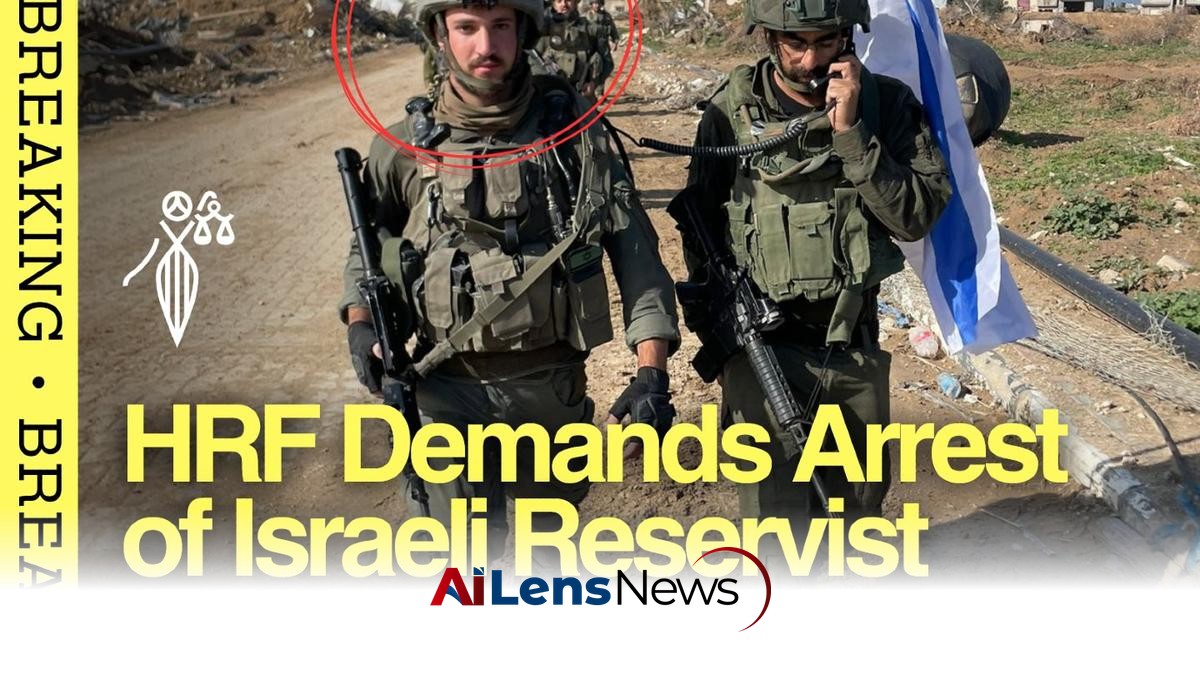


The Hind Rajab Foundation has filed a complaint in India against Israeli soldier Eitan Gilboa, accusing him of war crimes during the Gaza conflict in 2024.
New Delhi, India Jul 5, 2026 ALN: On June 2, 2026, the Hind Rajab Foundation (HRF), a Palestinian rights organization based in Brussels, took a significant legal step by filing a complaint with the Union Ministry of Home Affairs, the Bureau of Immigration, and the police in India, seeking the arrest of Eitan Gilboa, an Israeli soldier. Gilboa was reportedly found vacationing in the picturesque region of Himachal Pradesh, India. The HRF has accused him of committing war crimes in Gaza during the 2024 conflict, a claim that has stirred considerable attention and debate.
Eitan Gilboa is identified as a member of the 271st Combat Engineering Battalion of the Israel Defense Forces (IDF). The HRF's complaint alleges that he was directly involved in the destruction of residential buildings and civilian infrastructure in the areas of Khan Yunis and Rafah. These locations have been focal points of previous military operations, which have drawn international scrutiny and condemnation due to the high civilian casualties and destruction of property. The HRF claims to have gathered substantial evidence, including geo-located videos and social media posts that purportedly show Gilboa celebrating the destruction of these sites. Notably, some of these videos were reportedly shared online by his mother, further complicating the narrative surrounding his actions.
The HRF's complaint marks a critical juncture in the broader discourse on accountability for military actions taken during conflicts. It raises important questions about the responsibilities of individual soldiers and the military structures they operate within, particularly when it comes to adherence to international humanitarian law. The allegations against Gilboa are not isolated; they reflect a growing global concern regarding the conduct of military personnel in conflict zones, especially in regions like Gaza, where the humanitarian situation has been dire and the impact of military operations on civilian populations has been profound.
The legal framework surrounding war crimes is complex and multifaceted. Under international law, particularly the Geneva Conventions, war crimes include grave breaches such as willful killing, torture, and inhuman treatment of civilians. The HRF's actions could be seen as a push to hold individuals accountable under these laws, challenging the traditional notion that state actors are the only entities responsible for war crimes. This shift towards individual accountability is significant as it may empower other organizations and victims to seek justice in similar ways.
The implications of this complaint extend beyond the immediate legal ramifications for Gilboa. It raises critical questions about the responsibilities of nations in addressing war crimes and the role of international organizations in facilitating justice. The HRF's initiative could influence public perception and policy regarding military conduct and human rights, particularly in countries like India that have historically maintained a complex relationship with both Israel and Palestine. India has traditionally supported Palestinian rights while also engaging in strategic partnerships with Israel, making the response to this complaint particularly sensitive.
Furthermore, the filing of this complaint could set a precedent for similar actions in the future. If successful, it may encourage other rights organizations to pursue legal avenues against military personnel from various nations, potentially leading to increased scrutiny of military conduct in conflicts around the globe. The HRF's efforts may also resonate with other groups advocating for accountability in military operations, thereby amplifying the call for justice in international conflicts.
As the situation develops, it will be crucial to monitor the response from Indian authorities and the international community. The Indian government’s handling of this complaint could reflect its stance on human rights issues and its commitment to upholding international law. Additionally, the reaction from the Israeli government and military could also play a crucial role in shaping the narrative surrounding this case. Israel has historically denied allegations of war crimes and has defended its military actions as necessary for national security, which could lead to a contentious diplomatic situation.
In the context of the ongoing Israeli-Palestinian conflict, the HRF's complaint underscores the complexities of seeking justice and accountability. The conflict has a long and tragic history, characterized by cycles of violence and suffering on both sides. As civilians continue to bear the brunt of military operations, the call for accountability becomes increasingly urgent. The HRF's actions may serve as a catalyst for broader discussions on the need for a more robust international legal framework to address war crimes and protect human rights in conflict zones.
The Israeli-Palestinian conflict, which has persisted for decades, is marked by profound humanitarian crises, political strife, and military confrontations. The conflict's roots can be traced back to the early 20th century, with both sides laying claim to the same land. Over the years, numerous military operations have been conducted, often resulting in significant civilian casualties and widespread destruction. The situation in Gaza has been particularly dire, with multiple conflicts leading to extensive damage to infrastructure and a humanitarian crisis that has drawn international condemnation.
The HRF's complaint against Gilboa can be seen as part of a broader movement advocating for accountability in military actions. This movement has gained momentum in recent years, with various human rights organizations calling for investigations into alleged war crimes committed by various nations. The push for accountability is not only a response to the immediate need for justice for victims but also an effort to deter future violations of international law by holding individuals accountable for their actions.
Moreover, the HRF's initiative reflects a growing trend in international law where individuals, rather than just states, are held accountable for war crimes. This shift is significant as it aligns with the principles of justice and accountability that underpin international humanitarian law. The establishment of international courts, such as the International Criminal Court (ICC), has further reinforced this paradigm, allowing for the prosecution of individuals accused of war crimes, genocide, and crimes against humanity.
As the HRF's complaint gains traction, it is likely to attract attention from various stakeholders, including legal experts, human rights advocates, and policymakers. The legal community may analyze the implications of this case for future war crimes prosecutions and the role of national jurisdictions in addressing such issues. Additionally, the response from the Indian government could set a precedent for how similar cases are handled in the future, potentially influencing the legal landscape surrounding war crimes and accountability.
In conclusion, the filing of this complaint by the Hind Rajab Foundation highlights the ongoing struggle for justice in the context of military operations. It emphasizes the importance of holding individuals accountable for their actions during wartime and raises critical questions about the role of nations and international organizations in addressing war crimes. As the international community grapples with these issues, the HRF's initiative could pave the way for greater scrutiny of military conduct and a renewed commitment to human rights and accountability in armed conflicts. The outcome of this case may resonate far beyond the immediate legal ramifications, influencing the discourse on war crimes and the responsibilities of military personnel in conflict zones globally.
To learn more about the latest developments in Wars & Conflicts, stay updated with our exclusive reports and analyses on AiLensNews.

