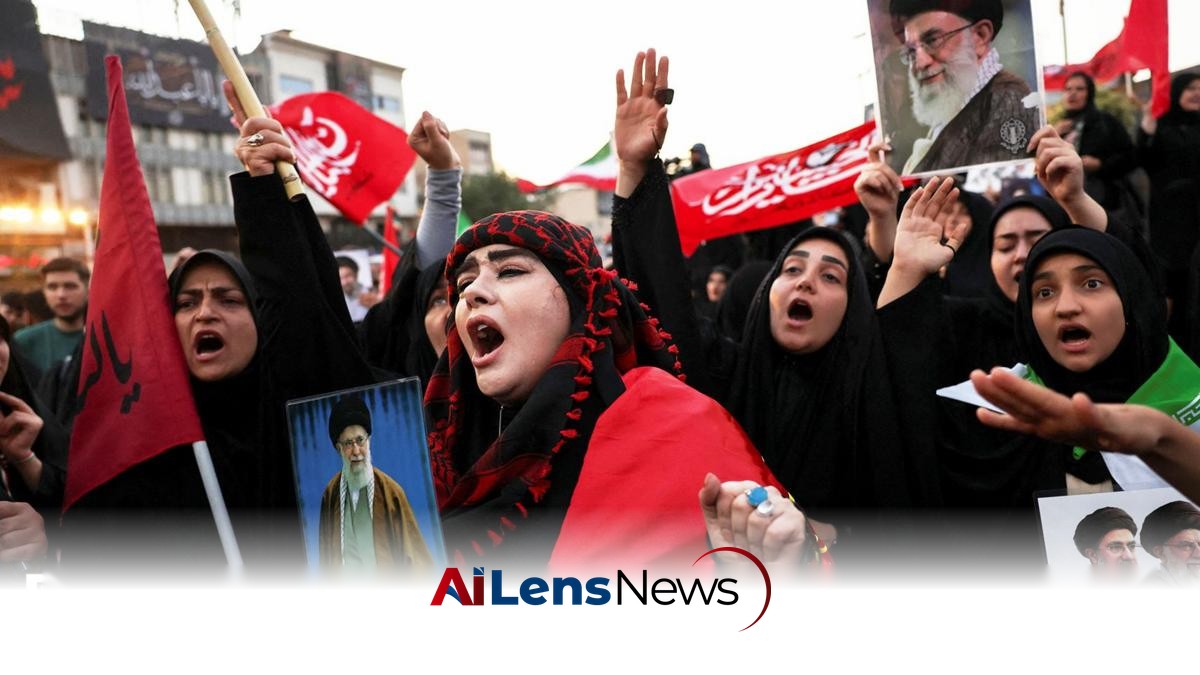


Iran's public mourning for Ayatollah Khamenei showcased political messaging amid widespread discontent. The funeral highlighted both loyalty and dissent within the nation.
New Delhi, India Jul 7, 2026 ALN: Three days of public mourning in Tehran for its slain supreme leader ended with a major political spectacle the men now in charge wanted the to see.
The hulking funeral cortège, carrying the coffins of Ayatollah Ali Khamenei and four family members, inched along a 10km route – slowed, and often stopped, by millions of mourners in one of the largest public gatherings in many years. This procession not only commemorated the life of Khamenei but also served as a demonstration of the regime's resilience and the loyalty of its supporters amid significant national turmoil.
The funeral events were meticulously planned, with Monday's march being the most significant in a week filled with ceremonies steeped in political messaging of resistance and revenge. The Iranian government aimed to portray Khamenei as a martyr and a symbol of enduring strength against perceived external threats, particularly from the United States and Israel. This narrative is crucial for the current leadership as they navigate a country facing multiple crises.
However, despite the massive turnout, many Iranians chose to stay away from the events, reflecting the widespread discontent among the populace. The country has been grappling with two wars in less than a year, soaring inflation rates estimated at around 80%, and the lingering pain from the anti-government protests that erupted in January. Many citizens associate Khamenei with the security crackdown during these protests, which resulted in thousands of deaths and injuries. This sentiment has created a complex atmosphere during the mourning period, where grief is intertwined with resentment.
"Of course I'm not going to the funeral," one man told us outside one of the many "mookebs," rest stations set up in the city and on its outskirts to provide free food and water, most of it from private donations. "Many people don't have work and are so unhappy," he explained, encapsulating the frustrations felt by many who feel disconnected from the political elite.
Aerial footage from Monday's procession showed one of Tehran's main arteries chock-full of loyalists consumed by grief and chanting the Islamic Republic's signature slogans of "death to America" and "death to Israel." These chants are not merely expressions of anger but are deeply rooted in the ideological framework of the Iranian state, which has long positioned itself in opposition to these perceived adversaries. The government uses such events to reinforce national unity and distract from domestic issues.
"Tears arise from the pain and sorrow that surges within a person, and the sees this truth," declared Iran's President Masoud Pezeshkian, rebutting U.S. President Donald Trump's claim that these were "fake tears." Such statements highlight the ongoing narrative battle between Iran and the United States, with both sides seeking to frame the narrative in a way that serves their interests.
The commemorations now move to some of the most sacred sites for Shia Muslims, including Qom, south of Tehran, on Tuesday, and then to Najaf and Karbala in neighboring Iraq. These locations are significant not only for their religious importance but also for their historical ties to Iran's revolutionary ideology. The final burial is scheduled for Thursday at the sprawling Imam Reza Shrine in Mashhad, the ayatollah's birthplace and Iran's holiest city. This choice of burial site is symbolic, further elevating Khamenei's status to that of a martyr in the eyes of his supporters.
"The funeral proceedings are designed to frame him as more than a national leader but a transcendent religious and political figure whose authority extended across the Muslim , and particularly Shia Islam," observed Mohammad Eslami, a research fellow at Tehran University. This framing is essential for the regime as it seeks to solidify its legitimacy both domestically and in the broader Islamic community.
However, there is a harsher view of Khamenei's legacy. "The revolution he preserved was for a society that no longer exists," assesses Karim Sadjadpour, author of Reading Khamenei: the View of Iran's Most Powerful Leader. This perspective underscores the challenges facing the new leadership as they attempt to resonate with a younger generation that may not share the same ideological fervor as their predecessors.
In Tehran, a flatbed truck, decorated with intricate latticework and Arabic Islamic script, carried five caskets painted in the green, red, and white of Iran's flag, including the smallest for Khamenei's 14-month-old granddaughter Zara. All were killed by Israeli-American air strikes on February 28, in the first hours of the war. The presence of a child among the deceased adds a layer of tragedy to the narrative, invoking sympathy and anger toward perceived aggressors.
Red was the loudest color in the huge crowds of bereaved wearing black. Religious flags symbolizing blood and martyrdom amplified calls to avenge the supreme leader's assassination. This emphasis on martyrdom is a crucial aspect of Iranian political culture, where the sacrifice of individuals is often glorified to foster a sense of collective identity and purpose.
Posters in English singling out Trump as the main target were held high for the hundreds of foreign journalists given rare access to cover this funeral. This direct targeting of foreign leaders is indicative of Iran's strategy to externalize blame for its internal problems, framing its struggles as part of a larger geopolitical conflict.
An Iranian messaging app had advised government supporters to use slogans such as "Our revenge is inevitable," and "They will pay. Hard." This coordinated messaging indicates a concerted effort by the regime to channel public sentiment into a unified call for retaliation against perceived enemies. The rhetoric surrounding revenge is not only a reflection of anger but also serves to rally support for the government during a time of crisis.
"I want to say one sentence to President Trump and the ," declared a grey-haired man named Mojtaba, who approached us with a message. "Soon, very soon you will see signs of revenge at the top of the White House, and soon the color of the White House will be the color of my red flag." This declaration embodies the fierce nationalism that the regime seeks to cultivate among its supporters.
"Some of these calls are just ritualistic," a government official told me. "But the anger is real among hardline critics within the system who oppose the new deal with the United States which killed our leader." This internal dissent highlights the fractures within the Iranian political landscape, where differing factions may have conflicting views on how to respond to external pressures.
To address a dire financial situation, Iran's new leaders, after surviving weeks of war, must now keep negotiating if they wish to see badly needed relief through the easing of sanctions and unfreezing of assets. The economic crisis has been exacerbated by the conflict, and the new leadership faces the dual challenge of maintaining internal stability while navigating complex international relations.
Government supporters in what were welcoming crowds kept approaching foreigners - including what the government says were 400 social media influencers - to ask "where are you from?" They often urged visiting media to "tell the truth." This outreach reflects the regime's desire to shape international perceptions and counter narratives that may portray Iran negatively.
But even in this throng, there were other voices too. Two young Iranian women, clad in the black cloaks of most female mourners, pulled us aside to whisper that the "real voices of revolution" had been heard in the protests just months ago on these same streets. Their perspective highlights the generational divide in Iran and the ongoing struggle for political expression among those who feel marginalized by the current regime.
The road ahead is still uncertain as Iran buries the last of the first-generation founders of its 1979 revolution. The transition to leadership under 56-year-old Mojtaba Khamenei marks a significant shift, as he is still not been seen in public since the air strikes which killed his father severely injured him. The absence of a clear successor raises questions about the future direction of the Islamic Republic and its ability to navigate the challenges it faces.
The sight of his three brothers at the open-air Grand Musalla mosque compound, where their father lay in state made his absence all the more conspicuous. Iranian officials point to Israel's continuing threats to assassinate him too. This atmosphere of fear and uncertainty surrounding Mojtaba's safety further complicates the political landscape and may impact the decisions made by the new leadership.
"He's in my heart and I hope he is safe from Trump and Netanyahu," insisted one woman who had traveled with her family from Hamadan, a four-hour drive away, to join the procession. This sentiment reflects the deep-rooted fears among the Iranian populace regarding external threats and the desire for a leader who can protect their interests.
But the organizers of what they've called the "event of the century" have tried to maximize other symbols. The biggest of all is the colossal statue of a clenched fist that now towers over Enqelab or Revolution Square – the "fist of defiance" meant to send a message to enemies outside and inside Iran that their Islamic Republic cannot be defeated. This symbolic representation is a part of the regime's broader strategy to foster a sense of unity and resilience among its supporters.
As Iran embarks on this new chapter following the death of Khamenei, the implications for both domestic and international politics remain profound. The leadership must navigate the delicate balance between maintaining power and addressing the legitimate grievances of a populace that is increasingly vocal about their dissatisfaction. The legacy of Khamenei will undoubtedly continue to shape the political landscape, but the future direction of the Islamic Republic remains uncertain as it faces both internal and external pressures.
To learn more about the latest developments in International Politics, stay updated with our exclusive reports and analyses on AiLensNews.

