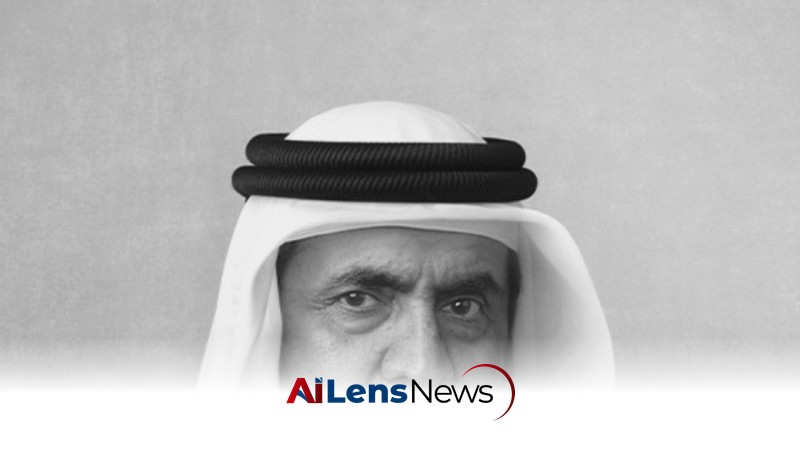


Father Amir Sheikh Hamad bin Khalifa al-Thani transformed Qatar into a global player, emphasizing education, diplomacy, and national pride.
Doha, Qatar Jul 15, 2026 ALN: Nations, like men, are measured not by what they inherit but by what they dare to imagine. His Highness the late Father Amir Sheikh Hamad bin Khalifa al-Thani imagined more for Qatar than geography or history had any right to promise — and then, with a builder’s patience and a visionary’s impatience, he delivered it. Sheikh Hamad’s reign marked a transformative era for Qatar, a small peninsula nation that had largely existed in the shadows of its larger neighbors. His tenure as the leader of Qatar is often seen as a period of remarkable change and development, shaping the nation into a key player on the global stage.
Consider the country he assumed in June 1995: oil output in decline, a peninsula on the margins of the world’s attention. At that time, Qatar was grappling with the challenges of a fluctuating oil market and a lack of international recognition. The nation’s economy was heavily reliant on oil revenues, and the limited diversification posed a significant risk to its future stability. Sheikh Hamad recognized the untapped potential of Qatar’s vast natural gas reserves, which would later become the cornerstone of the nation’s economic resurgence. His foresight in capitalizing on these resources laid the groundwork for Qatar's transformation into one of the wealthiest nations in the world.
Now, consider the country he handed over on June 25, 2013: the world’s largest exporter of liquefied natural gas, its GDP multiplied 24-fold, its voice carried into every Arab home by a broadcaster he willed into being, its flag destined to fly over the first World Cup on Arab and Muslim soil. Eighteen years — one lifetime’s ambition compressed into less than a generation. The transformation was not merely economic; it was also cultural and social, as Sheikh Hamad sought to elevate Qatar’s status on the global stage. He understood that true progress involves not just economic metrics but also the development of a nation’s identity and cultural heritage.
The figures are staggering, but figures were never the point. Sheikh Hamad understood that gas beneath the seabed is merely potential; it becomes destiny only when converted into schools, hospitals, museums, and moral standing. Ras Laffan was one monument. Education City another. The Museum of Islamic Art, rising from the water like a prayer in stone, a third. These projects not only showcased Qatar’s wealth but also its commitment to education, culture, and the arts, reflecting Sheikh Hamad’s vision of a well-rounded society. His investments in infrastructure were not simply about building physical structures but about creating environments that fostered learning, creativity, and cultural exchange.
Education City, established in 1997, has become a beacon of knowledge and innovation, housing branch campuses of prestigious international universities and fostering a new generation of thinkers and leaders. This initiative was part of Sheikh Hamad’s broader strategy to diversify the economy and reduce reliance on fossil fuels by investing in human capital and research. The presence of global educational institutions has not only elevated Qatar’s educational standards but has also attracted international talent, creating a multicultural environment that enriches the local society. Meanwhile, the Museum of Islamic Art, designed by renowned architect I.M. Pei, stands as a testament to Qatar’s rich cultural heritage and its role as a hub for artistic expression, drawing visitors from around the world and showcasing the depth and diversity of Islamic art.
He understood something rarer: that a small state’s greatest export can be its conscience. The Doha Agreement that pulled Lebanon back from the abyss in 2008. The patient diplomacy between Djibouti and Eritrea, between Palestinian factions, between the Taliban and Washington. Sheikh Hamad’s foreign policy was characterized by a commitment to mediation and dialogue, positioning Qatar as a neutral ground for conflict resolution. His approach was rooted in the belief that small states could wield significant influence on the international stage by promoting peace and stability. This diplomatic strategy not only enhanced Qatar’s international standing but also established it as a vital player in regional politics.
In October 2012, when Gaza suffocated under siege and the world averted its gaze, he became the first head of state to walk its broken streets. This act of solidarity with the Palestinian people not only highlighted the humanitarian crisis but also underscored Sheikh Hamad’s willingness to take bold steps to advocate for justice and human rights. His leadership style was marked by a deep sense of empathy and a desire to uplift those who were suffering. Such actions resonated deeply within the Arab world, where leaders often grapple with the balance between political pragmatism and moral responsibility.
Today the flags hang heavy, and grief sits in every Qatari majlis. The passing of Sheikh Hamad is not merely the loss of a leader; it is the loss of a visionary who dared to dream big and inspire a nation. But grief must share the room with gratitude. The towers of West Bay, the trains beneath Doha, the very confidence with which this nation carries itself — all of it bears his signature. His legacy is evident in the rapid modernization of Qatar’s infrastructure, the development of world-class facilities, and the flourishing of a vibrant society. The urban landscape of Qatar has transformed dramatically, with skyscrapers, cultural institutions, and public amenities reflecting the ambitions of a nation that has embraced its potential.
The nation he taught to dream now owes him its finest tribute: to keep dreaming, and to keep building, exactly as he showed us how. The challenges that lie ahead are significant, including navigating the complexities of a rapidly changing geopolitical landscape and addressing the social and environmental issues that accompany rapid development. However, Sheikh Hamad’s vision serves as a guiding light for future generations, reminding them that with ambition, creativity, and collaboration, even the most daunting obstacles can be overcome. The importance of sustainability and social responsibility in development is now more relevant than ever, as Qatar continues to grow and evolve.
May Allah rest his soul in eternal peace. As Qatar moves forward, it will continue to honor Sheikh Hamad’s legacy by striving for excellence and fostering a spirit of innovation and inclusivity. The journey he embarked upon has set the foundation for a prosperous future, one where Qatar can play a pivotal role in the global community, not just as a resource-rich nation, but as a leader in education, culture, and diplomacy. The principles he championed — resilience, openness, and a commitment to progress — will remain integral to Qatar’s identity as it steps confidently into the future.
To learn more about the latest developments in Regions & Countries, stay updated with our exclusive reports and analyses on AiLensNews.

