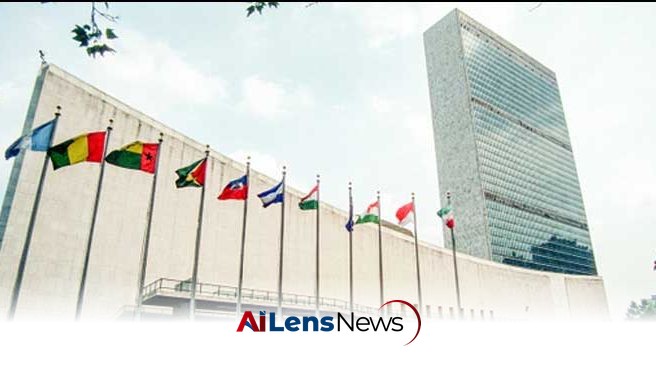


Six candidates for the UN Secretary-General position will debate in the General Assembly Hall, addressing pressing global issues and reforms.
Islamabad, Pakistan Jul 23, 2026 ALN: The six candidates for United Nations secretary-general will debate Thursday in the symbolic General Assembly Hall, one week before the formal start of a selection process crucial to an organization in deep crisis.
With the campaign lacking a clear favorite and struggling to generate real enthusiasm, the hopefuls will face 90 minutes of questions from diplomats, UN employees, and civil society representatives at an event starting at 5:00 pm (2100 GMT) and broadcast by Bloomberg.
Chile’s Michelle Bachelet, Ecuador’s Maria Fernanda Espinosa, Rafael Grossi of Argentina, Costa Rican Rebeca Grynspan, Guyana’s Carolyn Rodrigues-Birkett, and Macky Sall of Senegal are all in the running to succeed outgoing Secretary-General Antonio Guterres.
“This UN town hall will … provide a rare opportunity to engage with the ideas, priorities, and leadership vision of the candidates for one of the world’s most important positions,” General Assembly President Annalena Baerbock said.
“In an increasingly fragmented world, the United Nations needs not only an exceptional chief administrator who will make the organization fit for the 21st century but also the leadership and integrity of someone willing to vigorously defend the UN Charter and all its three pillars,” she added.
The United Nations is facing a profound financial and confidence crisis, with US President Donald Trump’s administration accusing it of spending recklessly, spreading itself too thin, and failing to deliver satisfactory results. This situation has led to a critical examination of the UN's structure and its ability to fulfill its mission effectively.
The United States is therefore demanding a return to the organization’s fundamental purposes of peace and security, while other states stress the equal importance of its other two pillars: human rights and development. This divergence in priorities reflects broader geopolitical tensions and differing national interests among member states.
No missteps
The candidates have already faced three hours of questioning each from representatives of the 193 UN member states. This rigorous vetting process is designed to ensure that the next secretary-general possesses the necessary qualifications and vision to lead the organization at a time when it is grappling with multiple crises, including climate change, armed conflict, and global health challenges.
Most candidates have stressed the need to continue the organization’s ongoing reforms to make it more efficient, as well as the importance of greater involvement by the secretary-general in peace efforts around the world. Such reforms are seen as essential for restoring trust in the UN and enhancing its effectiveness in addressing global issues.
On July 30, the 15 members of the Security Council are due to hold their first closed-door, anonymous vote on their preferences among the candidates. This initial “straw poll” is a significant milestone in the selection process, as it offers insights into the candidates' standing among the powerful Security Council members.
That first “straw poll” will be followed by an unspecified number of similar votes until one candidate can secure the required nine votes without a veto from any of the five permanent members. The name of the selected candidate will then be sent to the General Assembly for the formal appointment to the position. This voting process underscores the intricate balance of power within the UN system and the influence of major powers in determining its leadership.
He or she will take office on January 1, 2027. The new secretary-general will inherit a complex landscape marked by ongoing conflicts, humanitarian crises, and the urgent need for global cooperation to tackle issues such as poverty, inequality, and environmental degradation.
Several diplomats interviewed by AFP were cautious about the outcome of the race, saying a number of capitals had yet to make their choice. This uncertainty reflects the high stakes involved in the selection of the next secretary-general and the various political dynamics at play among member states.
“I find that Grossi is still the mostly frequently mentioned front-runner, but he has not locked the race up. Other candidates like Grynspan and Rodrigues-Birkett also have significant numbers of admirers,” Gowan said, noting that a dark horse candidate could still emerge. The unpredictability of the process highlights the importance of diplomatic maneuvering and coalition-building in the lead-up to the final decision.
Many names are still circulating in UN corridors and the media, notably that of FIFA president Gianni Infantino, whom Trump would reportedly like to see take the helm of the UN, according to the New York Post. The potential candidacy of Infantino raises questions about the intersection of sports and international diplomacy, as well as the broader implications of his leadership style for the UN.
Under a tradition of geographic rotation that is not always followed, Latin America is making a claim to the post this time. This reflects a growing recognition of the need for diverse representation within the UN leadership, particularly as the organization seeks to address global challenges that disproportionately affect different regions.
Many states are also calling for a woman to hold the position for the first time. This push for gender representation in leadership roles is part of a broader movement advocating for women's rights and empowerment on the global stage. The appointment of a female secretary-general would symbolize a significant step forward in promoting gender equality within international institutions.
The upcoming debate is expected to provide a platform for the candidates to articulate their visions and priorities, as well as to engage directly with the concerns of member states and civil society. It represents an opportunity for the candidates to differentiate themselves in a crowded field and to demonstrate their readiness to tackle the complex challenges facing the UN.
As the debate approaches, the stakes are high not only for the candidates but for the future of the United Nations itself. The next secretary-general will play a crucial role in shaping the organization's response to pressing global issues, and their leadership will be instrumental in restoring confidence in the UN's ability to fulfill its mandate. The outcome of this selection process will have lasting implications for international cooperation and the effectiveness of the UN in addressing the challenges of the 21st century.
To learn more about the latest developments in Culture & Society, stay updated with our exclusive reports and analyses on AiLensNews.

