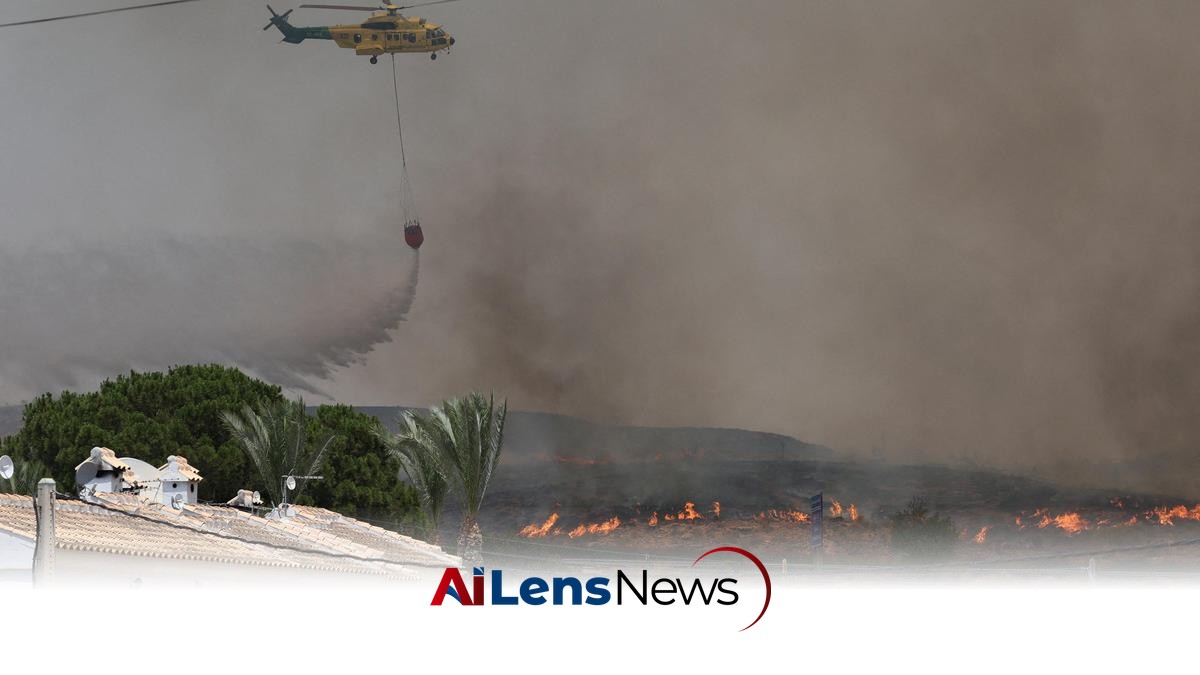


A deadly wildfire in Almeria, Spain, has claimed 12 lives, leaving 23 missing amid extreme heat and rapid spread.
Spain, Spain Jul 11, 2026 ALN: One of Spain's deadliest wildfires on record has tragically claimed the lives of at least 12 individuals, with authorities confirming that 23 others are currently unaccounted for. The devastating fire erupted overnight into Friday, July 10, 2026, in the southern province of Almeria, an area known for its scenic beauty and popularity as a holiday destination. The inferno has been exacerbated by soaring temperatures that have gripped much of the country, creating a perilous situation for both residents and tourists.
According to reports from local authorities, several victims were discovered inside burnt-out vehicles, believed to have succumbed to the flames while attempting to escape. The harrowing nature of their deaths underscores the urgency and chaos that often accompany such natural disasters. In addition to the fatalities, eight individuals have sustained injuries, and the search continues for the 23 missing persons, as confirmed by Juan Manuel Moreno, the regional leader of Andalusia.
In response to the escalating crisis, a significant deployment of resources has been mobilized to combat the blaze. Approximately 150 firefighters, supported by 220 soldiers from Spain's military emergency unit, are currently engaged in firefighting efforts. Their work is critical, as the fire has already ravaged more than 3,200 hectares of forest and farmland, threatening local ecosystems and communities alike.
Emergency authorities have indicated that among the deceased are four British nationals, along with other unidentified foreign nationals, highlighting the international impact of this tragedy. The presence of foreign victims serves as a stark reminder of the global nature of tourism and how natural disasters can affect people from diverse backgrounds.
The wildfire originated in a hamlet situated in a semi-arid region near the Sierra de Los Filabres mountains. While the precise cause of the fire remains under investigation, initial reports suggest that a fallen power line may have ignited the blaze, which quickly spread to nearby forested areas. This rapid expansion of the fire is characteristic of wildfires, which can grow uncontrollably under the right conditions.
Tragically, many victims died while attempting to flee the fire, often disregarding shelter-in-place instructions issued by authorities. Antonio Sanz, the president of Andalusia's emergency services, reported that one group of individuals attempted to escape via a dry riverbed, which ultimately turned into a “death trap.” This highlights the critical importance of adhering to safety protocols during emergencies, as panic can lead to dangerous decisions.
In a particularly heartbreaking account, Sanz noted that seven individuals perished while on foot after abandoning their vehicles in search of safety. The chaotic circumstances of the fire's outbreak likely contributed to the confusion and desperation felt by those trying to escape. Sanz remarked, “The consequences have been terrible. Everything seems to indicate that, in the case of the deceased ... we are dealing for the most part, if not entirely, with foreign nationals.” This statement emphasizes the tragic loss of life and the need for heightened awareness and preparedness in the face of such disasters.
In the wake of the tragedy, Spanish Prime Minister Pedro Sanchez expressed his condolences, stating, “Immense sadness and desolation in the face of the terrible consequences of the fire affecting the province of Almeria.” His message resonates with many who are grappling with the aftermath of this disaster, as communities come together to mourn the loss of life and support those affected.
Spain is currently facing severe heat waves, a phenomenon that has become increasingly common in recent years. Temperatures frequently exceed 40 degrees Celsius, creating ideal conditions for wildfires to ignite and spread. The combination of high winds, elevated temperatures, and minimal rainfall has proven to be a recipe for disaster, as small wildfires can quickly escalate into uncontrollable blazes.
In June 2026, Spain experienced record-setting heat, with over 1,000 excess deaths attributed to the extreme temperatures. This alarming statistic underscores the serious health risks associated with prolonged heat waves, particularly for vulnerable populations. The situation in Spain is reflective of broader trends across Europe, which is currently grappling with the effects of climate change. According to the European Union's Copernicus Climate Change Service, Europe is the fastest-warming continent, with temperatures rising at twice the global average since the 1980s.
As parts of Western Europe endure their third heat wave in just six weeks, neighboring countries like France are also experiencing extreme conditions. Reports indicate that temperatures in France have reached 40 degrees Celsius in various regions, including western and central areas, with Paris recording around 37 degrees Celsius. French authorities have issued warnings about the heightened risk of wildfires, as large blazes in the southern parts of the country have already scorched thousands of hectares and strained firefighting resources.
The largest wildfire in France, which broke out in the eastern Pyrenees near the Spanish border, has decreased in intensity but has already forced the evacuation of over 10,000 people from nearly villages. These evacuations highlight the ongoing threat posed by wildfires, as communities must remain vigilant and prepared for potential emergencies. Last month was recorded as France's hottest June, with mortality rates surging by nearly a third during the hottest week, further illustrating the severe impact of climate-related events on public health.
Scientists and climate experts warn that climate change, driven in part by the burning of fossil fuels such as gasoline, oil, and coal, is exacerbating the frequency and intensity of heat waves and droughts. These conditions significantly increase the vulnerability of certain regions to wildfires, necessitating urgent action to address the underlying causes of climate change and to improve fire management strategies.
Spain has a long history of wildfires, with the previous year's fire season burning over 393,000 hectares, an area more than twice the size of London. This devastating statistic serves as a reminder of the ongoing challenges faced by the country in managing wildfires and protecting its natural resources. In 2025, four individuals lost their lives in wildfires, underscoring the human cost associated with these disasters.
Portugal, Spain's neighbor, has also experienced its share of deadly wildfires. In 2017, a catastrophic blaze in Pedrogao Grande, located approximately 200 kilometers northeast of Lisbon, resulted in the tragic deaths of 66 people. This incident was particularly devastating, as 47 individuals lost their lives on a single road while attempting to escape the flames in their vehicles. Such tragedies highlight the importance of effective emergency response protocols and community preparedness in mitigating the impact of wildfires.
As Spain and Portugal continue to grapple with the realities of wildfires exacerbated by climate change, the need for comprehensive strategies to address fire prevention, response, and recovery has never been more urgent. The tragic events in Almeria serve as a somber reminder of the potential consequences of inaction and the importance of collective efforts to safeguard lives and the environment.
To learn more about the latest developments in Climate & Environment, stay updated with our exclusive reports and analyses on AiLensNews.

