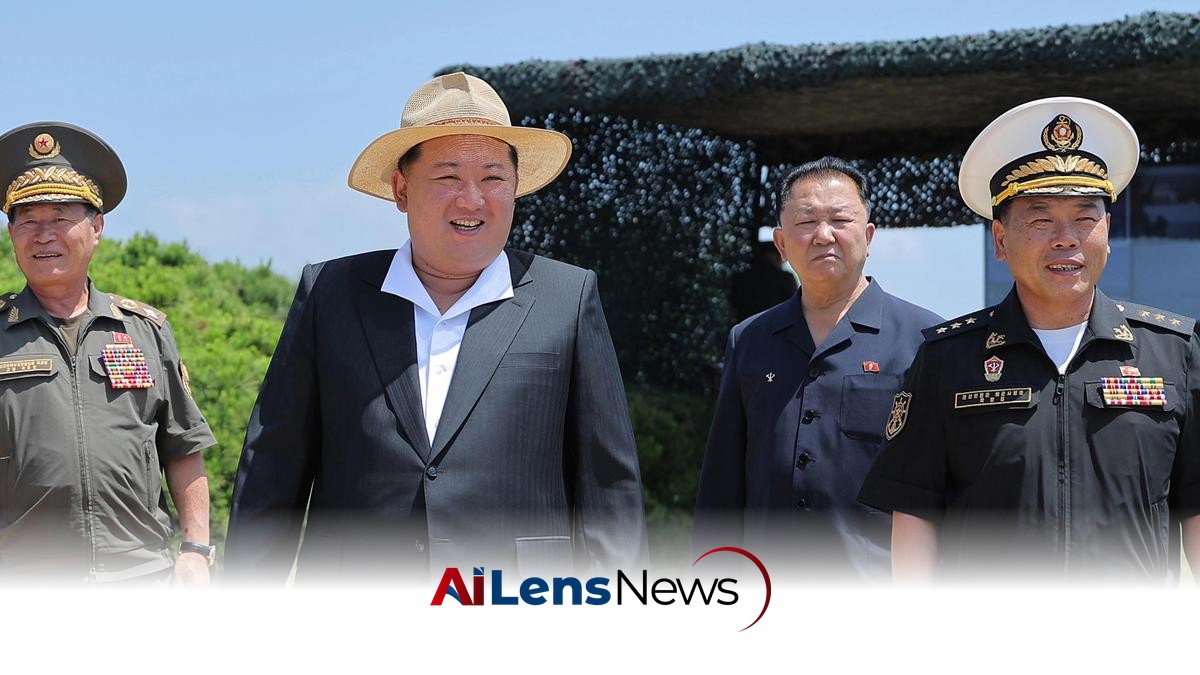


Kim Jong Un supervises missile tests aboard the Kang Kon destroyer, highlighting North Korea's military advancements and naval capabilities.
New Delhi, India Jul 5, 2026 ALN: North Korean leader Kim Jong Un has taken a significant step in enhancing the military capabilities of his nation by overseeing tests of a nuclear-capable cruise missile and other weaponry aboard the newly repaired destroyer, the Kang Kon. This event, reported by state media on July 5, 2026, is indicative of Kim's ongoing efforts to bolster North Korea's naval power, particularly in the context of its nuclear capabilities.
The official Korean Central News Agency (KCNA) reported that the tests, which took place on July 3, 2026, included the firing of a strategic cruise missile, alongside assessments of the Kang Kon’s main gun and automatic cannons. The trials also evaluated the destroyer's electronic warfare systems, as well as its capabilities for target detection and information processing. Such advancements are crucial for enhancing the operational effectiveness of North Korea's naval fleet, which has historically lagged behind that of its regional rivals.
Following the tests, Kim ordered military officials to finalize the destroyer's trials and prepare the vessel for active duty within two months. This directive highlights Kim's urgency in advancing North Korea's naval capabilities, reflecting a broader military strategy aimed at establishing a formidable presence in regional waters. The emphasis on naval power is particularly notable given the historical context of North Korea’s military development, which has traditionally focused more on land-based forces and ballistic missile capabilities.
The missile tests came shortly after the commissioning of North Korea's first 5,000-ton destroyer, the Choe Hyon, in late June. Kim celebrated this milestone with a grand ceremony, underscoring the importance of naval nuclear armament in his military agenda. The Choe Hyon, unveiled in April 2025, was portrayed by Kim as a critical advancement in expanding North Korea's military operational reach and preemptive strike capabilities. According to the KCNA, the warship is equipped with a variety of systems, including anti-aircraft and anti-ship weapons, as well as nuclear-capable ballistic and cruise missiles.
In recent years, Kim Jong Un has shifted the focus of North Korea’s military development strategy from primarily land-based ballistic missile programs to enhancing naval capabilities. This pivot includes ambitious plans for the construction of a nuclear-powered submarine, which would represent a significant leap in North Korea's military technology. During a Workers’ Party congress in February, Kim outlined a five-year military strategy that emphasizes the development of intercontinental ballistic missiles capable of underwater launches, further indicating a strategic shift towards a more diversified military posture.
Analysts have noted that the Kang Kon was likely constructed with assistance from Russia, reflecting the deepening military ties between the two nations. This partnership is particularly significant in the context of international sanctions and isolation faced by North Korea, which has prompted the regime to seek closer ties with allies such as Russia. However, despite the apparent advancements, some military experts have raised concerns regarding the effectiveness of the vessel once it is fully operational. Questions about the ship's design, combat readiness, and overall performance remain critical as North Korea continues to develop its naval capabilities.
The Kang Kon was initially unveiled in May 2025 but suffered damage during a failed launch ceremony at the northern port of Chongjin, prompting a strong response from Kim. Following repairs, the ship was reportedly relaunched in June, but external experts have expressed skepticism regarding its readiness for active duty. This skepticism is compounded by the challenges that North Korea faces in maintaining and operating advanced naval vessels, particularly given the country's limited resources and technological capabilities.
In his ongoing military expansion efforts, Kim has also called for the construction of two new 5,000-ton warships annually over the next five years, alongside plans to develop a larger 10,000-ton destroyer. This ambitious shipbuilding program is indicative of Kim's broader strategy to modernize North Korea's military forces and enhance its deterrent capabilities against perceived threats from adversaries, particularly the United States and South Korea.
The implications of these developments are manifold. The enhancement of North Korea's naval capabilities could alter the balance of power in the region, prompting neighboring countries to reassess their military strategies and defense postures. South Korea, in particular, has expressed concerns over North Korea's expanding military capabilities, leading to increased military cooperation with the United States and other allies in the region.
Furthermore, the focus on naval power may also signal a shift in the nature of potential conflicts in the region, with naval engagements becoming more prominent in the event of hostilities. As North Korea continues to develop its naval forces, it could also increase its ability to project power beyond its territorial waters, potentially leading to heightened tensions in maritime disputes.
In conclusion, Kim Jong Un's supervision of weapons tests aboard the Kang Kon marks a significant milestone in North Korea's military development, particularly in the realm of naval capabilities. As the regime continues to pursue its ambitious military agenda, the implications for regional security and stability remain a critical area of concern for policymakers and analysts alike. The evolving dynamics of military power in Northeast Asia will require careful monitoring as North Korea seeks to assert its influence and deter perceived threats through enhanced military capabilities.
In addition to the immediate military implications, the recent tests and developments also reflect a broader trend of militarization in the region. The strategic landscape of Northeast Asia is characterized by rising tensions, particularly between North Korea and its neighbors, including South Korea and Japan. The increasing sophistication of North Korea's naval assets could compel these countries to enhance their own naval capabilities, leading to an arms race in the region.
Moreover, the focus on naval strength is indicative of North Korea's recognition of the importance of maritime operations in modern warfare. Control of sea lanes and the ability to project power at sea are critical components of contemporary military strategies. As North Korea seeks to enhance its naval capabilities, it is also likely to invest in anti-access/area denial (A2/AD) strategies, which would complicate any military intervention by adversaries.
Furthermore, the international community's response to North Korea's military advancements will be crucial. The United Nations and various countries have imposed sanctions on North Korea in response to its nuclear weapons program, and the continued development of naval capabilities could lead to calls for tighter sanctions or increased diplomatic efforts to curb North Korea's military ambitions. The balancing act of maintaining regional stability while addressing North Korea's military developments will pose significant challenges for policymakers in the coming years.
The evolving situation in North Korea also highlights the complex interplay between military development and domestic politics. Kim Jong Un's focus on military advancements can be seen as a way to consolidate his power domestically, projecting strength both to the North Korean populace and to potential adversaries. By showcasing military achievements, Kim aims to bolster national pride and reinforce the legitimacy of his regime.
In summary, the recent weapons tests conducted by Kim Jong Un aboard the Kang Kon not only signify a critical development in North Korea's military capabilities but also underscore the broader implications for regional security dynamics. As North Korea continues to navigate its military ambitions against a backdrop of international sanctions and geopolitical tensions, the actions taken by Kim and the North Korean regime will be closely scrutinized by regional and global stakeholders.
To learn more about the latest developments in Wars & Conflicts, stay updated with our exclusive reports and analyses on AiLensNews.

