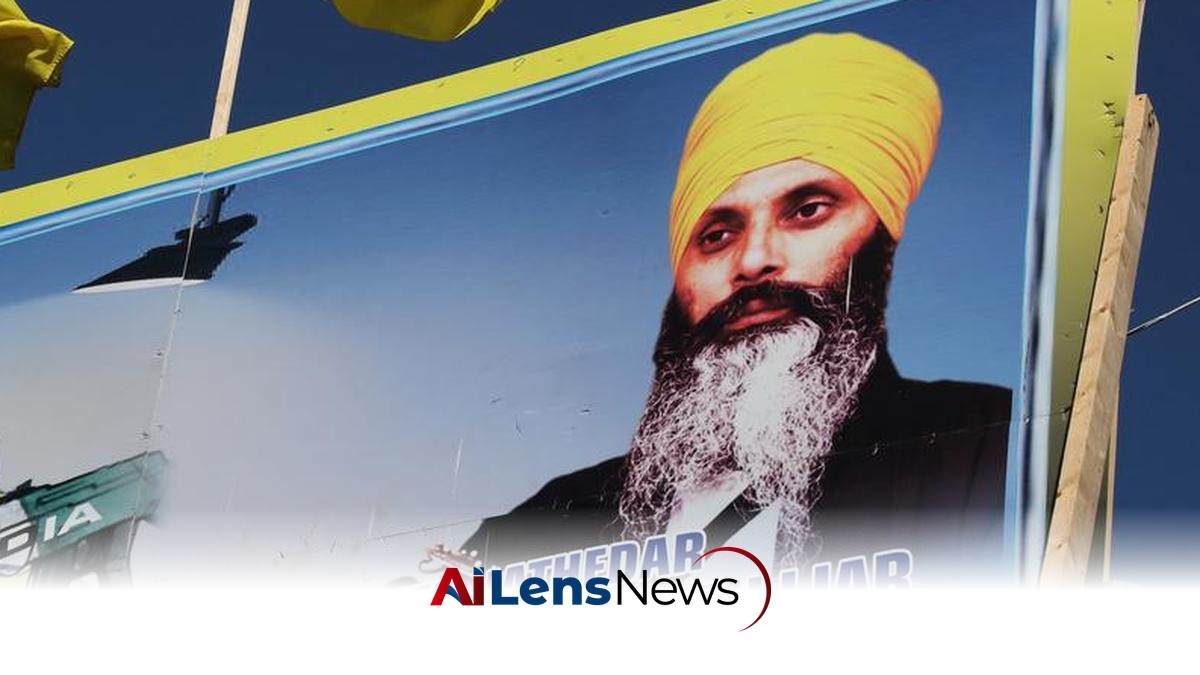


Canadian police found no evidence linking the Indian government to the murder of Sikh separatist Hardeep Singh Nijjar, contradicting Trudeau's claims.
New Delhi, India Jul 9, 2026 ALN: Investigators have found no evidence, through the latest ‘Operation Hard Ball’, linking Indian government officials to the 2023 killing of Sikh separatist Hardeep Singh Nijjar in Canada, a senior Canadian police official said, contradicting previous allegations by the then Prime Minister Justin Trudeau that severely strained bilateral ties. This development comes amidst a complex backdrop of international relations and organized crime, highlighting the intricate web of geopolitical tensions and domestic security issues.
The remarks by Lisa Moreland, the Deputy Commissioner of the Royal Canadian Mounted Police (RCMP), came hours after U.S. authorities charged jailed gangster Lawrence Bishnoi and his aide Satinderjeet Singh, alias Goldy Brar, with ordering Nijjar's assassination. These charges are part of a broader investigation into organized crime that has implications not only for Canada and India but also for the United States and other countries involved in the investigation.
Under a coordinated hunt named 'Operation Hardball', the law enforcement agencies of the U.S., Canada, and Europe arrested 24 people for their alleged links to three India-based organized crime groups, including the Bishnoi gang. The operation was a significant law enforcement effort aimed at dismantling networks involved in serious criminal activities, including extortion and drug trafficking, which have crossed international borders.
The charges against these individuals included orchestrating Nijjar's murder as well as various other cross-border organized crimes. This highlights the ongoing issue of transnational crime, which poses challenges to law enforcement agencies around the . As crime syndicates become more sophisticated, their operations often span multiple jurisdictions, complicating efforts to bring them to justice.
Sharing details of the probe, Ms. Moreland told Canada's CBC News that investigators found no evidence that Indian officials were involved in Nijjar's killing. "There's no evidence to suggest through this organized crime investigation and the charges and the indictment laid forward that Indian officials were charged or involved," she said, responding to a specific question on Trudeau's charges. This statement has significant implications for Canada-India relations, as it may alleviate some of the tensions that arose following the allegations made by Trudeau.
Ms. Moreland also noted that the Indian government extended cooperation to the investigation, which is an important aspect of international law enforcement collaboration. Cooperation between nations is crucial in tackling organized crime, as it often requires sharing intelligence and resources to effectively address the challenges posed by criminal networks.
Weeks after Nijjar's killing outside a Gurudwara in British Columbia, Mr. Trudeau made a sensational allegation linking the Indian government to the Sikh separatist's murder. This accusation was met with a furious response from New Delhi, which categorically dismissed the charges as "absurd." The fallout from these allegations led to a significant deterioration in diplomatic relations between Canada and India, two countries that share a complex history and a significant diaspora community.
As relations hit rock bottom following Trudeau's allegations, India accused Ottawa of allowing pro-Khalistani elements to operate from Canadian soil. The Khalistani movement seeks to create an independent Sikh state in India, and has been a source of tension between the Indian government and the Sikh diaspora, particularly in Canada, where there is a sizable Sikh population. The accusations from India highlighted the sensitive nature of the geopolitical landscape, where issues of national security, diaspora politics, and international relations intersect.
In October 2024, India recalled its high commissioner and five other diplomats after Ottawa attempted to link them to the Nijjar case. India also expelled an equal number of Canadian diplomats, further escalating the diplomatic crisis. However, the political landscape began to shift following the election of Liberal Party leader Mark Carney, whose victory in the parliamentary election in April last year helped to rebuild relations between the two countries.
Subsequently, both sides posted their high commissioners in each other's capitals, signaling a willingness to mend ties. The two countries also agreed to revive several mechanisms to advance relations in a range of areas, including trade, security, and cultural exchange. This revival of diplomatic relations is crucial, as both countries have significant interests in maintaining a constructive dialogue, especially given the complexities of their respective domestic and international challenges.
In her remarks, Ms. Moreland stated that the investigation has found that the Bishnoi gang has been involved in extortions, drug trafficking, kidnapping, and violence in Canada and elsewhere. This underscores the broad scope of activities undertaken by organized crime groups, which often engage in a variety of illegal enterprises to fund their operations and expand their influence.
While Bishnoi has been in jail in India since 2015, the FBI announced a reward of USD 50,000 for information leading to the arrest of 'Brar'. This highlights the ongoing efforts by law enforcement agencies to dismantle organized crime networks and bring their leaders to justice, regardless of their location. The collaboration between U.S. and Canadian authorities is indicative of a unified approach to tackling organized crime that transcends national borders.
The crackdown on the crime networks of Lawrence Bishnoi, Ravinder Dhanda, and Jaggu Bhagwanpuria was part of a years-long federal investigation into Indian crime syndicates engaged in targeted killings, shootings, extortion, drugs trafficking, and other crimes, the U.S. Justice Department said. This extensive investigation reflects the seriousness with which law enforcement agencies are treating the threat posed by organized crime, particularly as it relates to violent acts and the safety of communities.
In total, 37 defendants — including two defendants who ran their global criminal syndicates while imprisoned in India — are charged across three indictments unsealed today, it said. The scale of the indictments suggests a significant level of organized criminal activity and a well-coordinated effort to disrupt these networks. The implications of these charges extend beyond individual arrests, as they may lead to further investigations and a broader understanding of the interconnected nature of organized crime.
"The charges set forth in the indictment include allegations that Lawrence Bishnoi and Goldy Brar directed the 2023 assassination of a prominent Sikh leader in Canada identified by his initials HSN (Nijjar) in the indictment," Bilal A. Essay, First Assistant U.S. Attorney, said on Tuesday. These allegations serve as a reminder of the potential for violence that can arise from organized crime and the need for ongoing vigilance by law enforcement agencies.
RCMP commissioner Mike Duheme said the agencies disrupted the operations of "organized criminals who used murder, cruelty, and fear to extort and control people in both Canada and the United States." His comments reflect the broader societal impact of organized crime, which often extends beyond the immediate victims to affect entire communities and societies. "We won't pause for long to reflect on the work it took to get this job done; we'll keep doing what we do best to preserve public safety in Canada, in the United States, and around the ," Mr. Duheme said. This commitment to public safety is critical in the face of the ongoing challenges posed by organized crime.
Nijjar was the chief of the banned Khalistan Tiger Force (KTF) and was designated as a terrorist by India. His designation as a terrorist and the circumstances surrounding his assassination have drawn attention to the complexities of the Sikh separatist movement and the broader geopolitical implications of such movements. The intersection of national security, diaspora politics, and international relations continues to shape the discourse surrounding Nijjar's killing and the ongoing investigations into organized crime.
To learn more about the latest developments in International Politics, stay updated with our exclusive reports and analyses on AiLensNews.

