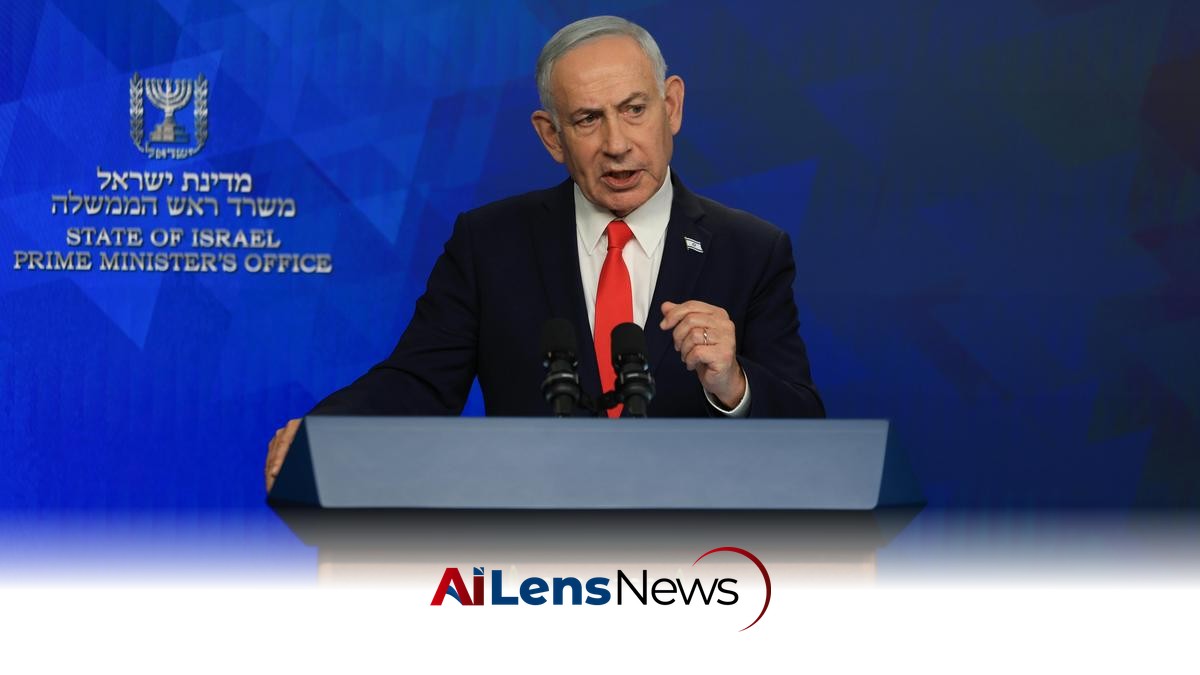


Israeli Prime Minister Benjamin Netanyahu emphasizes India's backing for Israel, countering U.S. Vice President J.D. Vance's claims of exclusive American support.
Washington DC, United States Jul 6, 2026 ALN: Israeli Prime Minister Benjamin Netanyahu recently underscored the importance of India's support for Israel, responding to remarks made by U.S. Vice President J.D. Vance, who suggested that the United States was Israel's only powerful ally. During an interview on Fox News, Netanyahu highlighted the significance of India's backing, referring to it as a 'small country' with a population of 1.4 billion. This emphasis on India's role in Israel's diplomatic landscape comes at a time when the geopolitical dynamics in the Middle East are increasingly complex and fraught with tension.
Netanyahu stated, "We have some other friends, like a small country called India, you know, it has 1.4 billion people and, boy, do we have tremendous support there." This statement comes in the context of rising tensions regarding U.S.-Iran relations, which have led to criticisms from Israeli officials about the American approach to peace talks. The relationship between the U.S. and Iran has been strained for decades, particularly following the U.S. withdrawal from the Joint Comprehensive Plan of Action (JCPOA) in 2018. This agreement, aimed at curbing Iran's nuclear ambitions, has been a point of contention in U.S.-Israeli relations, with Israel expressing concerns over Iran's regional influence and military capabilities.
In a previous briefing, Vice President Vance had advised Israeli leaders to respect the ongoing U.S.-Iran negotiations, implying that Israel should not jeopardize its relationship with the U.S. by criticizing the agreement. Vance remarked, "If I was in the Cabinet of the Israeli government, I might not be attacking the only powerful ally that I have anywhere left in the entire ." This comment underscores the delicate balance Israel must maintain in its foreign policy, particularly as it navigates its relationship with the U.S., which has historically been one of its strongest allies.
In response, Netanyahu emphasized the breadth of Israel's international relationships, asserting that many nations are seeking Israel's expertise, particularly in cybersecurity. He mentioned receiving substantial support from India through social media platforms like Facebook, saying, "You know, I have this Facebook thing, and I have overwhelming support there. I may have many others." This assertion highlights the growing importance of social media as a tool for diplomacy and public engagement, allowing leaders to connect with citizens and garner support on a global scale.
Netanyahu further elaborated on the nature of Israel's alliances, indicating that leaders from various countries often reach out to him for assistance. He stated, "Many leaders, you know, call me up and say, ‘Hey, look, I’ve got this problem with public opinion, but I want you to know we respect you, and can we make some deals, and can you teach us some of the things that your military does, and can we have some of your AI and cyber expertise?’" This statement reflects Israel's growing reputation as a leader in technological innovation and military strategy, particularly in areas such as artificial intelligence and cybersecurity, which have become critical components of modern defense and national security.
He also highlighted Israel's prowess in cybersecurity, noting, "Israel is the number two country in cyber in the , and our technology is so good. So the relations are not quite as they appear." This assertion aims to counter the narrative that Israel is isolated in the international arena. In fact, Israel has cultivated strong ties with several countries beyond the United States, including India, which has emerged as a key partner in various sectors, including defense, technology, and agriculture. The relationship between Israel and India has been characterized by increasing cooperation, particularly in defense procurement and technology transfer, as both nations seek to enhance their security capabilities.
The strategic partnership between Israel and India has been further solidified through high-level visits and agreements aimed at fostering collaboration in defense, counter-terrorism, and economic development. India's growing interest in Israel's advanced military technology has led to numerous defense contracts, reinforcing the notion that Israel's alliances extend well beyond its traditional partners. This dynamic is particularly significant given India's own security concerns in the region, including its relationship with Pakistan and China.
Furthermore, Netanyahu's comments come against the backdrop of shifting geopolitical alliances in the Middle East. As tensions between the U.S. and Iran escalate, countries in the region are reassessing their foreign policy strategies and alliances. For instance, the Abraham Accords, which normalized relations between Israel and several Arab nations, have created new opportunities for cooperation and collaboration that were previously unthinkable. These developments indicate a broader trend towards realignment in the region, where countries are increasingly willing to engage with Israel despite historical animosities.
The implications of Netanyahu's remarks extend beyond mere diplomatic niceties. The emphasis on India's support reflects a strategic pivot for Israel as it seeks to diversify its international partnerships in light of uncertainties surrounding U.S. foreign policy. With the Biden administration's approach to Iran being markedly different from that of its predecessor, Israel may feel a pressing need to strengthen its ties with other nations to ensure its security and regional standing.
Moreover, India's role as a significant player in global geopolitics cannot be understated. As one of the 's largest democracies and an emerging economic powerhouse, India's alignment with Israel could reshape regional dynamics. Both nations share concerns over terrorism and instability in their respective neighborhoods, making their cooperation in defense and intelligence particularly pertinent. The collaboration not only enhances their security posture but also contributes to broader stability in the region.
In summary, Netanyahu's comments reflect a strategic effort to reaffirm Israel's global alliances, particularly with India, amidst ongoing tensions with the United States regarding diplomatic relations with Iran. The emphasis on India's support serves to highlight the diversification of Israel's foreign relations, showcasing its ability to forge meaningful partnerships beyond its traditional allies. As the geopolitical landscape continues to evolve, Israel's diplomatic strategy will likely focus on strengthening these relationships while navigating the complexities of its interactions with major powers like the United States and Iran. The implications of these developments could have far-reaching effects on regional stability, security cooperation, and the future of international diplomacy in the Middle East.
To learn more about the latest developments in International Politics, stay updated with our exclusive reports and analyses on AiLensNews.

