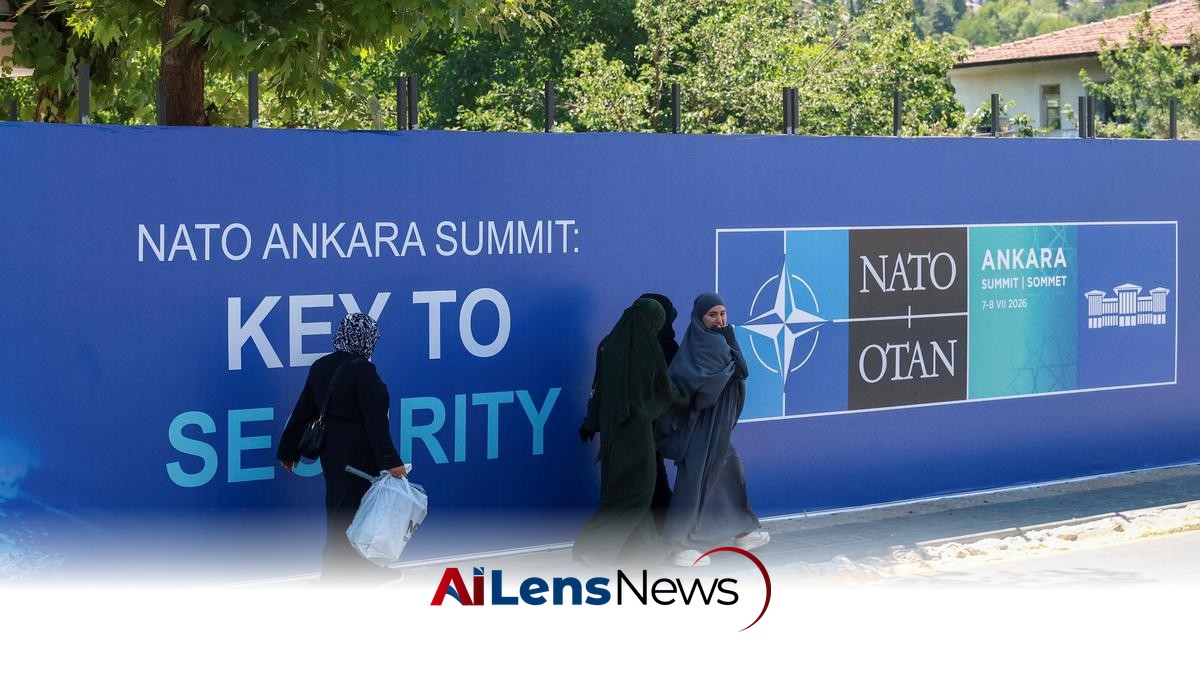


NATO leaders meet in Ankara to address tensions with Trump and reaffirm commitments to defense spending and European security.
Turkey, Turkey Jul 3, 2026 ALN: NATO leaders are set to convene next week in Ankara, where European officials aim to set aside tensions with U.S. President Donald Trump regarding issues such as Iran and Greenland. The summit will also serve as a platform to demonstrate Europe's commitment to defending the continent as Washington reduces its commitments to the alliance.
The North Atlantic Treaty Organization (NATO), established in 1949, is a military alliance formed for mutual defense against aggression. The alliance was initially created in the context of the Cold War, primarily to counter the threat posed by the Soviet Union. Over the decades, NATO has evolved and expanded, incorporating numerous Eastern European nations after the dissolution of the USSR. However, the alliance has faced challenges in recent years, particularly regarding defense spending, military commitments, and geopolitical tensions, especially with Russia and the Middle East.
NATO Secretary General Mark Rutte has emphasized that the gathering, scheduled for July 7 and 8, will highlight European efforts to fulfill pledges to increase defense spending. This move is intended to deter potential Russian aggression, with significant arms deals worth billions of dollars expected to be finalized during the summit. The rising threat from Russia, particularly following its annexation of Crimea in 2014 and ongoing military involvement in Eastern Ukraine, has prompted NATO members to reassess their defense strategies and capabilities.
Leaders are also anticipated to reaffirm their support for Ukraine in its ongoing conflict with Russia. Ukrainian President Volodymyr Zelenskyy is expected to attend a dinner hosted by Turkish President Tayyip Erdogan, who will also engage in bilateral discussions with President Trump. Ukraine's struggle against Russian aggression has become a focal point for NATO, as the alliance seeks to demonstrate solidarity with non-member states that face external threats.
European officials express hope that Trump's strong relationships with both Erdogan and Rutte will facilitate a smooth summit. However, they remain cautious due to the lingering transatlantic tensions stemming from the Iran conflict and Trump's frequent criticisms of NATO. The dynamics of the summit are particularly complex, as they are influenced not only by military considerations but also by political relationships and the broader geopolitical landscape.
In a recent post on Truth Social, Trump criticized the U.S. for spending resources to protect NATO members without receiving adequate benefits in return. This sentiment reflects a broader skepticism that has emerged in U.S. politics regarding international alliances and the perceived burden of military commitments. Rutte and other NATO leaders contend that the alliance is crucial for U.S. security and that European nations are responding to Trump's calls for increased defense spending. They argue that a strong NATO is not only beneficial for Europe but also enhances the security of the United States.
Rutte stated that the upcoming summit will focus on transforming additional spending into combat-ready capabilities and significantly enhancing defense industries. He noted that NATO's European members and Canada increased their defense spending by $90 billion in 2025, reaching a total of over $570 billion. This increase is part of a broader strategy to ensure NATO can effectively respond to modern threats, including cyber warfare and hybrid conflicts, which have become increasingly prevalent in recent years.
During a previous summit in The Hague, NATO leaders agreed to allocate 3.5% of their GDP to core defense items, such as weapons and troops, by 2035. This marks an increase from the earlier target of 2%. Additionally, they committed to investing another 1.5% of GDP in broader defense-related initiatives, including cybersecurity enhancements. Such commitments are crucial as they reflect the alliance's recognition of the need to adapt to a rapidly changing security environment.
European officials are optimistic for a repeat of last year's summit, where Trump reaffirmed the U.S. commitment to NATO's mutual defense pact, Article 5, and praised fellow leaders. Article 5 is the cornerstone of NATO, stating that an attack on one member is considered an attack on all. However, the past year has seen significant strains on the alliance, with Trump threatening to take Greenland from Denmark and engaging in military actions against Iran without consulting European allies. These actions have raised concerns about the reliability of U.S. leadership within NATO and the potential for unilateral decisions that could undermine collective security.
The U.S. has also announced troop withdrawals from Europe and reduced its military contributions to NATO's defense plans, including the withdrawal of an aircraft carrier and other military assets. This has raised concerns among European leaders about the future of the alliance. The shifting U.S. military posture has led to calls for European nations to take greater responsibility for their own defense, which some argue could lead to a more autonomous European defense capability, potentially diminishing the transatlantic link that has been a hallmark of NATO since its inception.
As the summit approaches, European officials worry that the ongoing conflict in Iran could overshadow discussions, particularly if tensions escalate or if Trump expresses frustration with European nations for not contributing more to U.S. military operations. The Iran conflict has been a point of contention, with differing views on how to approach Tehran's nuclear ambitions and regional influence. European leaders have generally favored diplomatic solutions, while the U.S. has taken a more confrontational stance, complicating the alliance's unified response.
Despite these challenges, NATO officials assert that the majority of allies have honored their commitments to allow U.S. military operations to utilize their airspace and bases, even amidst widespread opposition to the Iran war in Europe. This willingness to cooperate reflects a recognition of the strategic importance of NATO and the need for collective action in addressing global security challenges. The conflict has also strained personal relationships between Trump and several European leaders, including Italian Prime Minister Giorgia Meloni and outgoing British Prime Minister Keir Starmer, raising concerns that these tensions may resurface during the summit.
Ultimately, the upcoming NATO summit in Ankara represents a critical juncture for the alliance as it navigates the complexities of transatlantic relations, defense commitments, and geopolitical challenges. The decisions made during this gathering will have implications not only for NATO's future but also for the broader security landscape in Europe and beyond. As Europe grapples with its defense posture in an era of uncertainty, the outcomes of the summit will be closely watched by both allies and adversaries alike, shaping the trajectory of international relations in the years to come.
To learn more about the latest developments in International Politics, stay updated with our exclusive reports and analyses on AiLensNews.

