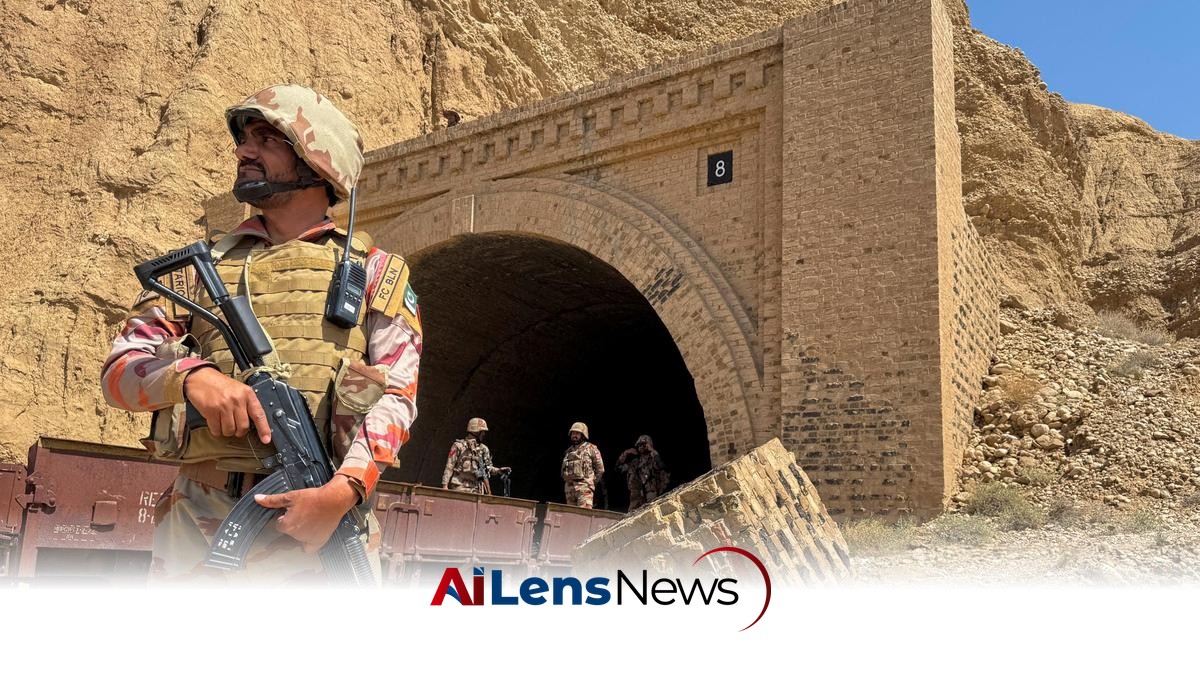


A militant assault on a police post in Balochistan, Pakistan, results in the deaths of nine officers, highlighting the escalating violence in the region.
Islamabad, Pakistan Jul 7, 2026 ALN: Dozens of militants attacked a police post overnight in southwestern Pakistan, triggering an intense gun battle that killed nine police officers and wounded several others, officials reported on July 7, 2026. This incident marks a significant escalation of militant violence in a region where insurgents have increasingly targeted security forces. The Balochistan province, where this attack occurred, has been a flashpoint for violence due to its complex political landscape and ongoing insurgency.
The attack took place in a remote area of Ziarat district in Balochistan province, according to police, who did not provide further details. The assailants also abducted eight police officers, but all were later recovered by security forces, as confirmed by Shahid Rind, a spokesman for the Balochistan government. This swift recovery of the officers indicates a level of preparedness and response from security forces, although the initial attack itself raises serious concerns about their effectiveness in preventing such incidents.
No group immediately claimed responsibility for this latest assault, although suspicion is likely to fall on the outlawed Baloch Liberation Army (BLA). The BLA has a history of targeting security personnel and has been involved in a long-standing insurgency against the Pakistani state, seeking greater autonomy and control over the region's natural resources. The BLA had previously claimed responsibility for a weekend suicide attack on a security post in the coastal town of Jiwani, although the government has neither confirmed nor denied this claim. This pattern of violence highlights the ongoing struggle between the BLA and state forces, as well as the broader implications for governance and security in the region.
Authorities acknowledged that armed men attacked civilians on the outskirts of Quetta city over the weekend. In response, villagers staged a sit-in near Quetta, demanding improved security and protection against future attacks. This grassroots response points to a growing frustration among local populations who feel increasingly vulnerable to violence and are demanding more effective action from the government to ensure their safety. Such protests reflect a broader sentiment in Balochistan, where many residents feel abandoned by the state and are calling for accountability and support in the face of rising militant threats.
Interior Minister Mohsin Naqvi attributed the latest attack to what he described as Indian-backed militants, although he provided no evidence to support this allegation. The Pakistani government's frequent claims of Indian involvement in Balochistan's insurgency are part of a longstanding narrative that seeks to frame domestic unrest as influenced by external forces. India has consistently denied Pakistan's accusations of supporting separatists in Balochistan or Pakistani Taliban militants, which adds a layer of complexity to the already fraught relations between the two countries. This assertion by the Interior Minister may also serve to divert attention from domestic issues and failures in security policy.
Naqvi also paid tribute to the officers who lost their lives, offering condolences to their families and asserting that such attacks "cannot sabotage peace." This statement underscores the government's commitment to maintaining stability in the region, despite the ongoing violence. However, it also raises questions about the effectiveness of current strategies in dealing with militant groups and ensuring the safety of security personnel and civilians alike.
The Pakistani Taliban, known as Tehrik-e-Taliban Pakistan (TTP), also maintains a strong presence in Balochistan and has carried out numerous attacks in the region. The TTP's activities have often intersected with those of separatist groups, creating a complex security environment where multiple factions vie for influence and control. The TTP, which has been responsible for some of the deadliest attacks in Pakistan's recent history, poses a significant challenge to the state’s efforts to restore order and security.
Balochistan, Pakistan’s largest but least populous province, has long been the scene of an insurgency by separatist groups, as well as attacks by the Pakistani Taliban. The BLA, designated a foreign terrorist organization by the United States in 2019, has been responsible for numerous attacks targeting security forces and civilians across the province in recent years. The province is rich in natural resources, including gas and minerals, which have fueled both local grievances and external interests. The struggle for control over these resources often exacerbates tensions between the state and local populations, leading to a cycle of violence and retaliation.
The implications of this attack extend beyond the immediate loss of life. It raises critical questions about the security policies in place in Balochistan and the effectiveness of the government’s counterinsurgency efforts. As violence escalates, there are fears that public trust in security forces may erode further, leading to increased civilian unrest and potential for wider instability in the region. Additionally, the international community is likely to pay closer attention to the situation in Balochistan, particularly given the implications for regional stability and the ongoing conflict between India and Pakistan.
In conclusion, the recent attack on the police post in Ziarat district is a stark reminder of the ongoing challenges faced by security forces in Balochistan and the broader implications for peace and stability in Pakistan. As the government grapples with these security threats, the need for a comprehensive strategy that addresses the root causes of insurgency and violence becomes increasingly urgent. The situation in Balochistan is emblematic of the complex interplay between local grievances, national security, and international dynamics, necessitating a nuanced approach to conflict resolution and governance in the region.
To learn more about the latest developments in Wars & Conflicts, stay updated with our exclusive reports and analyses on AiLensNews.

