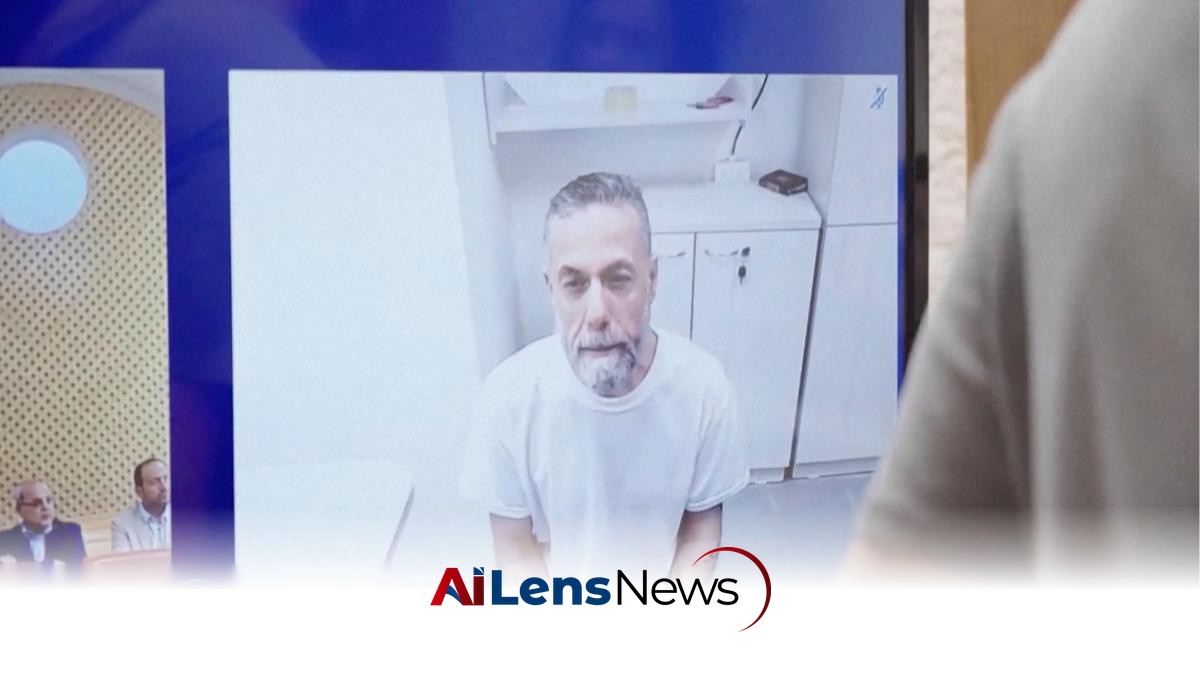


Dr. Hussam Abu Safiya's lawyer claims he was severely beaten while detained in Israel, raising concerns over his treatment and health.
New Delhi, India Jul 7, 2026 ALN: The lawyer for a prominent Palestinian medic from Gaza who has been detained by Israeli authorities without charge for over 18 months has told the BBC he fears for his client's life.
Nasser Odeh, the legal representative of Dr. Hussam Abu Safiya, expressed grave concerns after visiting his client at Rakefet, a facility known for its interrogation practices. According to Odeh, Dr. Abu Safiya appeared so severely beaten that he was nearly unrecognizable. The meeting, which took place last Thursday, left Odeh shaken, as he reported that his client was on the verge of losing consciousness multiple times during their conversation.
"He nearly lost consciousness several times," Odeh recounted. "He told us that he was subjected to severe violence inside the prison, especially on the day of the visit." These alarming claims have raised significant questions about the treatment of detainees in Israeli prisons, particularly those held under contentious legal frameworks.
In a statement to the BBC, the Israel Prison Service (IPS) categorically denied Odeh's allegations, labeling them as false. The IPS has faced scrutiny in the past for its treatment of Palestinian prisoners, with numerous human rights organizations raising concerns about conditions in Israeli jails.
Israel's Supreme Court has mandated the government to respond by Tuesday to a petition that seeks the release of Dr. Abu Safiya alongside 13 other Palestinian doctors from Gaza who are similarly detained without charge. This legal action signifies a growing movement among human rights advocates to challenge the legality and ethics of such detentions.
According to Odeh, Dr. Abu Safiya disclosed that he was physically assaulted by more than five prison guards who used their hands, batons, and even hammers during the attack. This violence reportedly occurred following an appeal against his detention at the Supreme Court in Jerusalem last month. Odeh emphasized that Dr. Abu Safiya has not received any medical treatment since his detention, which raises serious concerns about the rights and welfare of detainees.
"I had difficulty recognizing his features. Bruises covered his face, around his eyes, on his neck, and on his ears. Signs of beatings and torture were clearly visible on his face. He was exhausted and unable to breathe, in a difficult physical, psychological, and mental state," Odeh described, painting a grim picture of the conditions faced by Dr. Abu Safiya.
During their meeting, Dr. Abu Safiya reportedly expressed his despair, stating, "I'm living in hell. The mind can't imagine what I go through every day. I think someone has decided to kill me." These statements highlight the psychological toll of prolonged detention without charge, particularly in an environment characterized by alleged abuse and neglect.
Despite the dire circumstances, Odeh remains hopeful for his client's release. "I hope to see him soon out of prison," he said. "His place is outside prison; his place is in the hospital." However, he struggled to relay Dr. Abu Safiya's poignant words: "Thank you, Nasser, but I think it will be the last time we will meet." This sentiment underscores the precarious nature of Dr. Abu Safiya's situation.
Dr. Hussam Abu Safiya previously served as the director of Kamal Adwan Hospital in northern Gaza, where he was responsible for providing medical care during a period of intense conflict and a near-total siege imposed by Israeli forces. His detention in December 2024 occurred when the Israeli military ordered the evacuation of patients and medical staff from the hospital, labeling it as a "Hamas terrorist stronghold." This designation has been contested by various health organizations that advocate for the protection of medical facilities during armed conflicts.
Images from the time of his detention depict Dr. Abu Safiya, clad in his white doctor's coat, walking toward an Israeli armored vehicle amidst the rubble of Gaza. This visual narrative serves as a stark reminder of the challenges faced by medical personnel in conflict zones, where their roles are often compromised by military actions.
A spokesperson for the Israel Defense Forces (IDF) asserted that Dr. Abu Safiya was apprehended due to suspected involvement in terrorist activities and for holding a rank within Hamas. Notably, he held the rank of colonel in the health department of Gaza's Hamas-run interior ministry, an agency that provided medical treatment to security personnel and their families. However, medical staff and international aid organizations that have worked with Dr. Abu Safiya vehemently deny any collaboration with Hamas, emphasizing his commitment to humanitarian care.
Dr. Abu Safiya is currently detained under the Unlawful Combatants Law, which allows the Israeli military to hold individuals from Gaza suspected of posing a security risk without charge for an indefinite period. This law has been a focal point of criticism from human rights advocates who argue that it undermines due process and facilitates arbitrary detention.
The treatment of Palestinian prisoners and detainees in Israeli custody has drawn severe criticism from various international bodies. In November 2025, the United Nations Committee against Torture expressed deep concern over reports indicating a "de facto state policy of organized and widespread torture and ill-treatment" of Palestinian detainees in Israeli prisons. This statement reflects a broader pattern of concern regarding the treatment of individuals held in detention, particularly those from marginalized communities.
Furthermore, the Israel-based human rights group Physicians for Human Rights Israel (PHRI) reported that at least 94 Palestinian prisoners and detainees had died in Israeli custody within a span of less than two years. These statistics highlight the urgent need for accountability and transparency regarding the treatment of detainees.
The IPS responded to the allegations regarding Dr. Abu Safiya's treatment by asserting that they are false and lack factual basis. They refrained from disclosing specific details about his detention status, place of detention, or medical condition, citing privacy and security concerns. However, they stated that all prisoners and detainees are held in accordance with the law and receive medical care based on the guidelines set forth by the Ministry of Health.
The IPS further rejected claims of abuse, torture, starvation, or denial of medical treatment, which raises questions about the credibility of their statements in light of the numerous reports from human rights organizations.
Human rights groups, including Amnesty International, have issued statements calling for action on Dr. Abu Safiya's case, describing the situation as "truly horrifying." PHRI has urged for his immediate transfer to receive urgent medical treatment and has called for judicial oversight of his detention. This call for action reflects a growing concern among civil society organizations regarding the treatment of detainees and the need for legal protections.
In April, PHRI filed a petition with the Supreme Court seeking the release of Dr. Abu Safiya and the 13 other Palestinian doctors held in Israel without charge. This legal challenge is part of a broader effort to address the rights of detainees and ensure that individuals are not held without due process.
Recently, the UN Working Group on Arbitrary Detention adopted an opinion declaring Israel's detention of Dr. Abu Safiya to be arbitrary and urging his immediate release. This opinion from a panel of independent experts indicates that his case may be part of a larger pattern of arbitrary detention practices in Israel, raising significant human rights concerns.
The BBC has reached out to the Israel Prison Service for comments regarding the findings of the working group, underscoring the ongoing dialogue about the treatment of detainees and the legal frameworks that govern such detentions. The implications of Dr. Abu Safiya's case extend beyond his individual circumstances, as it highlights broader issues surrounding human rights, legal accountability, and the treatment of medical professionals in conflict zones.
To learn more about the latest developments in Wars & Conflicts, stay updated with our exclusive reports and analyses on AiLensNews.

